


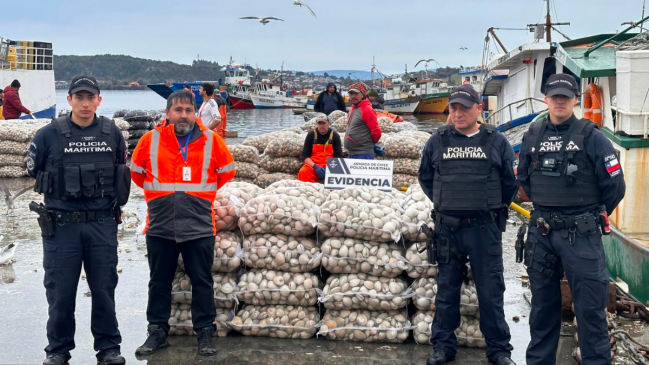
1,500 kilos of red tide clams seized in Quellón
Translated from Spanish, summarized and contextualized by DistantNews.
At a glance
News
Sources not specified
Outcome reported
- Authorities in Quellón, Chile, seized 1,500 kilograms of clams contaminated with paralytic shellfish poisoning (red tide).
- Laboratory analysis revealed toxin levels significantly exceeding the permitted limit, making the clams unsafe for human consumption.
- The operation involved the Port Captaincy of Quellón and the Seremi de Salud of Chiloé, highlighting ongoing efforts to ensure food safety.
A significant haul of contaminated shellfish was intercepted in Quellón, Chile, as authorities seized 1,500 kilograms of clams affected by red tide. The operation, a joint effort by the Port Captaincy of Quellón and the Seremi de Salud of Chiloé, aimed to prevent the distribution of unsafe seafood.
The discovery was made during a routine inspection of the fishing boat "Nautilus" at the Quellón artisanal pier. Officials found 50 nets filled with clams, which were immediately flagged for laboratory testing to determine their suitability for human consumption. The results confirmed the presence of dangerous levels of toxins.
Cristian Monanares, head of the provincial office for the Seremi de Salud in Chiloé, detailed the alarming findings. The clams exhibited paralytic shellfish poisoning with toxin levels reaching 131 micrograms per 100 grams of meat. This figure substantially surpasses the legal limit of 80 micrograms, rendering the product unfit for consumption and posing a serious health risk.
The seizure underscores the critical importance of ongoing monitoring and enforcement to protect public health from natural phenomena like red tide, which can contaminate marine life with potent neurotoxins.
DistantNews Editorial
Originally published by Cooperativa in Spanish. Translated, summarized, and contextualized by our editorial team with added local perspective. Read our editorial standards.
More Stories


From Our Blog

What Gets Lost (and Found) When News Is Translated

The Critical Role of Diaspora Media in Global News

What Travellers Should Know About Countries with Restricted Press

A Digital Nomad's Guide to Following Local News

How the Same Story Looks Different in Different Countries
