


1,500-year-old sealed sarcophagus unearthed in Croatia
Summarized and contextualized by DistantNews.
At a glance
News
Sources not specified
Outcome reported
- Archaeologists in Croatia unearthed a 1,500-year-old, 5-ton sarcophagus.
- The sarcophagus, found sealed in Cavtat, dates back to Late Antiquity (4th-6th centuries A.D.).
- The discovery offers a rare glimpse into Roman-era burial practices and local craftsmanship.
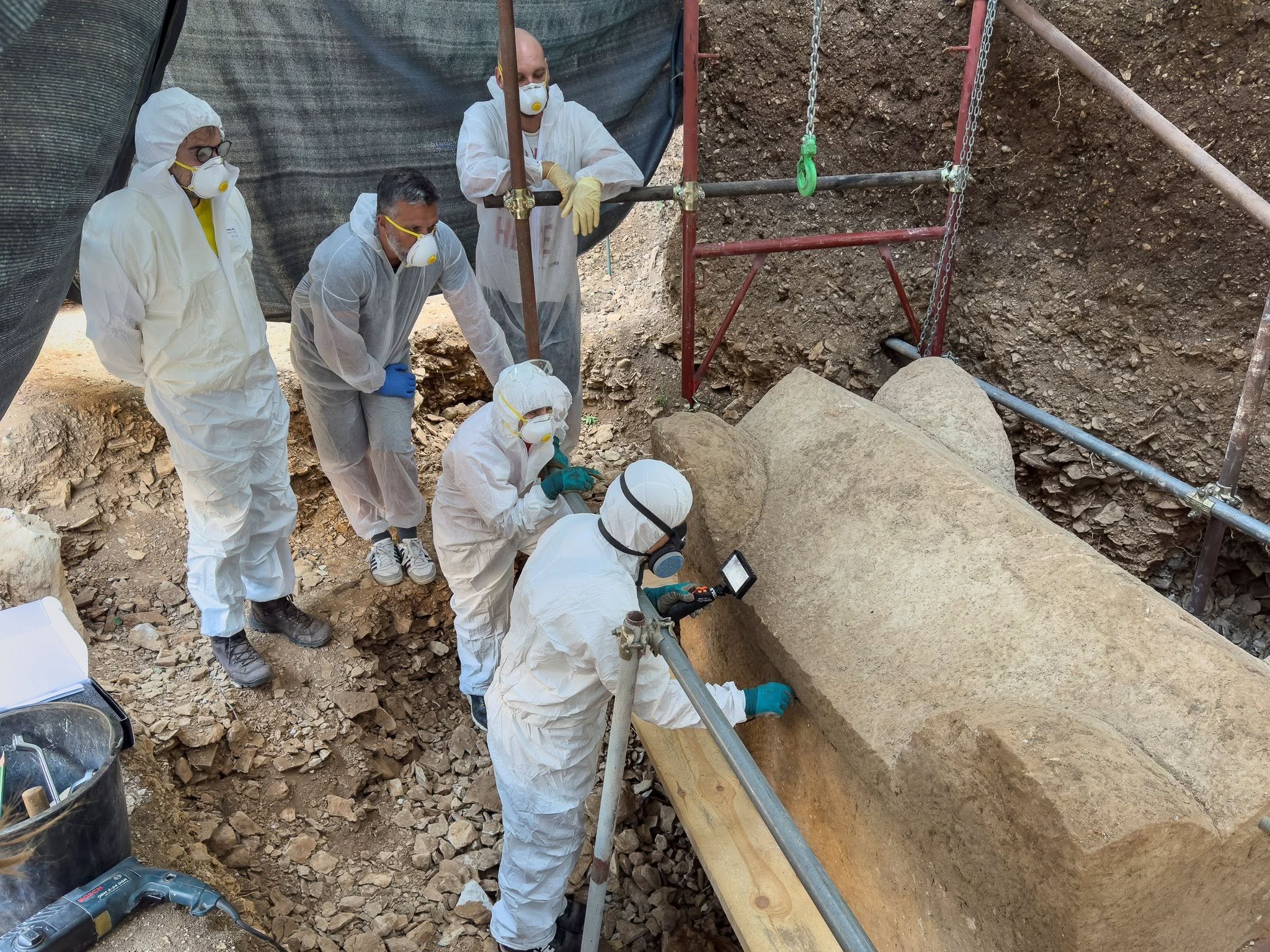
A massive 5-ton sarcophagus, sealed for approximately 1,500 years, has been discovered in the coastal town of Cavtat, Croatia. The remarkable find, dating from Late Antiquity (roughly the fourth to sixth centuries A.D.), offers archaeologists a rare window into burial customs from the twilight of the Roman era.
The sarcophagus was unearthed about 3 meters (10 feet) below ground in a necropolis, within the boundaries of the ancient Roman colony of Epidaurum. Its significance lies in its state of preservation; the tomb appears to have remained sealed and undisturbed for centuries. The lime mortar between the stone body and its double lid was found in excellent condition, which helped protect the interior from external elements and prevent looting.
After careful opening by archaeologists and conservators, the sarcophagus revealed the remains of a single individual. Although the bones have deteriorated significantly over time, researchers recovered organic deposits and other materials for detailed laboratory analysis. These examinations are expected to provide insights into the identity of the person interred, as well as the living conditions and funerary traditions of the region during Late Antiquity.
The sarcophagus has been identified as belonging to the "Salona type," a form common in the Roman province of Dalmatia. Distinctive architectural decoration adorns its corners, and the limestone used in its construction was traced to local origins. This suggests the presence of established stoneworking workshops and skilled artisans in the area during that period.
Moving the enormous artifact presented a considerable challenge. A multidisciplinary team, including archaeologists, anthropologists, and conservators, collaborated to lift the lid and carefully extract the 5-ton structure. Following this meticulous operation, the sarcophagus was transported to an open area in Cavtat, where it is now accessible for residents and visitors to view this ancient archaeological treasure.
DistantNews Editorial
Originally published by Daily Sabah. Summarized and contextualized by our editorial team with added local perspective. Read our editorial standards.
More Stories
From Our Blog

What Gets Lost (and Found) When News Is Translated

The Critical Role of Diaspora Media in Global News

What Travellers Should Know About Countries with Restricted Press

A Digital Nomad's Guide to Following Local News

How the Same Story Looks Different in Different Countries
