


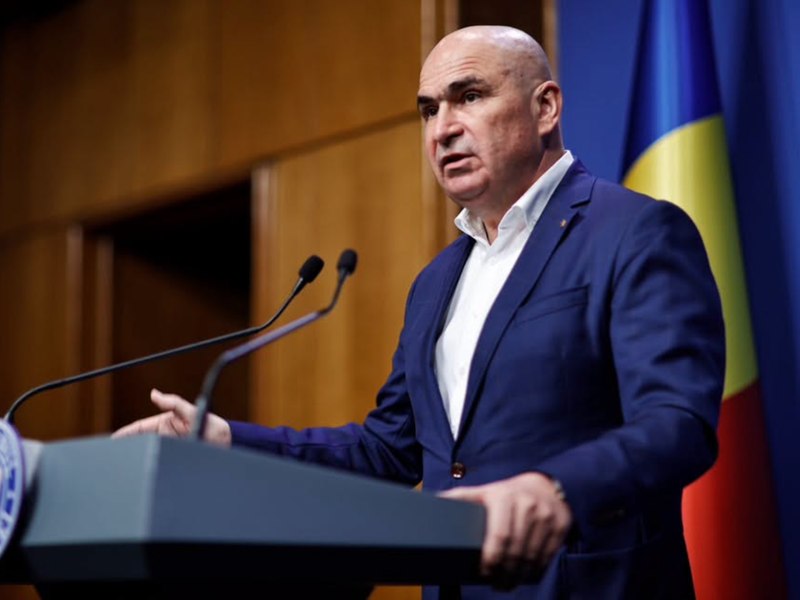
100 days in which the Bolojan Government kept Romania on the right track
Translated from Romanian, summarized and contextualized by DistantNews.
At a glance
Analysis
Sources not specified
Context piece
- The article argues that the Bolojan government has kept Romania on the right track during its first 100 days, despite parliamentary opposition and external pressures.
- It highlights the government's success in maintaining economic and financial stability, with major rating agencies keeping Romania investment-grade.
- The piece notes a reduction in the budget deficit, though acknowledging inflation remains a significant challenge for citizens.
The Bolojan government has navigated Romania through its first 100 days, maintaining a "correct direction" despite significant challenges, according to the article's perspective. The author, drawing on experience managing a large community, emphasizes that true governance is tested during difficult times, not when things are running smoothly.
A government is judged mostly on difficult days. When everything goes well, it is very easy to pretend to be skilled and responsible. And to praise yourself, in the PSD style.
The government operated for much of this period with limited authority, facing an uncooperative Parliament that often prioritized obstruction over solutions. Despite this, the article asserts that Romania did not falter. A key achievement cited is the preservation of economic and financial stability, evidenced by major rating agencies like Fitch, S&P, and Moody's maintaining Romania's investment-grade status. This stability is crucial for controlling financing costs and signaling credibility to international investors, indicating Romania's commitment to reforms and budgetary discipline.
True governance is done with unvarnished figures, with necessary decisions made on time, with strong nerves, but also with the patience to repair what others have broken for years.
While acknowledging that political stability and continued reforms are essential, the article points to a positive trajectory in reducing the budget deficit. After a record 9.3% of GDP in 2024, the estimate for 2026 is approaching 6.2%. Although still high, the shift in direction is considered significant, supported by budget execution figures showing a deficit of approximately 2% of GDP in the first semester, nearly half that of the previous year. The author attributes these results to a refusal to continue past "lying" promises and wasteful spending, contrasting it with previous administrations.
The Bolojan government has functioned for a good part of this period with limited powers. This must be remembered.
However, the article concedes that inflation remains a "difficult problem" impacting families, businesses, pensioners, and individuals at the grocery store or when paying bills. The piece suggests that inflation has passed its peak, influenced by various shocks, but does not elaborate further on this point.
Nobody received a blank check, and the respective agencies warned that political stability and the continuation of reforms are essential.
DistantNews Editorial
Originally published by Adevărul in Romanian. Translated, summarized, and contextualized by our editorial team with added local perspective. Read our editorial standards.
More Stories



From Our Blog

What Gets Lost (and Found) When News Is Translated

The Critical Role of Diaspora Media in Global News

What Travellers Should Know About Countries with Restricted Press

A Digital Nomad's Guide to Following Local News

How the Same Story Looks Different in Different Countries
