


150 Years of Festival: Daring Success: Jubilation for Bayreuth's "Rienzi"
Translated from German, summarized and contextualized by DistantNews.
At a glance
News
Sources not specified
Context piece
- Bayreuth Festival premiered Richard Wagner's early opera "Rienzi" for the first time in its history, marking its 150th anniversary.
- The production, set in a dystopian future where social media aids a dictator's rise and fall, received standing ovations, particularly for conductor Nathalie Stutzmann and tenor Andreas Schager.
- "Rienzi" has historical ties to Adolf Hitler, who reportedly saw it as a teenager and was inspired by it, and its overture was used at Nazi Party rallies.
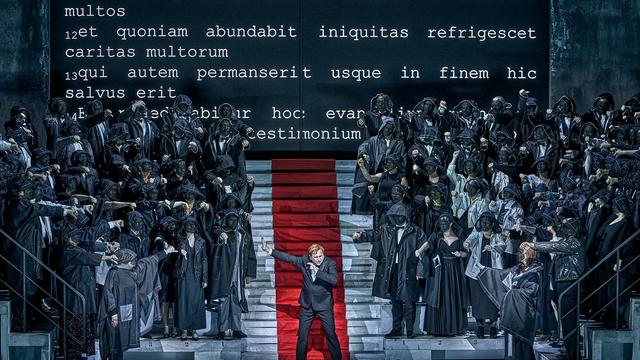
The Bayreuth Festival celebrated its 150th anniversary with a daring premiere of Richard Wagner's early opera "Rienzi," a work never before staged at the festival venue. The production, directed by Alexandra Szemerédy and Magdolna Parditka, transforms the story of a Roman tribune's rise and fall into a cautionary tale against forgetting and taking democracy for granted.
Conductor Nathalie Stutzmann led the orchestra to a powerful performance, earning enthusiastic applause and some standing ovations, despite the opera's challenging acoustics within the Festspielhaus. The new production updates the narrative to a dystopian present or future, where social media empowers the dictator Rienzi, portrayed by Andreas Schager, to seize power and lead his people to ruin.
Andreas Schager's portrayal of Rienzi, a figure promising freedom and an end to elite power, was a highlight. His performance captured the character's descent into war, death, and destruction, with Schager's commanding voice often overpowering the chorus in mass scenes. The production also featured strong performances from Jennifer Holloway as Adriano and Gabriela Scherer as Irene.
The opera's controversial association with Adolf Hitler, who allegedly cited it as a significant inspiration, and its use of the overture at Nazi Party rallies, had led to critical voices. However, the festival proceeded with the premiere, presenting a modern interpretation that resonated with the audience.
DistantNews Editorial
Originally published by Die Zeit in German. Translated, summarized, and contextualized by our editorial team with added local perspective. Read our editorial standards.
More Stories


From Our Blog

What Gets Lost (and Found) When News Is Translated

How the Same Story Looks Different in Different Countries

The Critical Role of Diaspora Media in Global News

What Travellers Should Know About Countries with Restricted Press

A Digital Nomad's Guide to Following Local News
