


1835 'Moon Hoax' boosted newspaper circulation, foreshadowing today's clickbait
Translated from Croatian and summarized by DistantNews. Read the original for the full story.
At a glance
In-depth
Sources not specified
Context piece
- In 1835, The New York Sun published a sensational series of articles detailing astronomical discoveries on the Moon.
- The articles, attributed to astronomer Sir John Herschel, described fantastical lunar landscapes and inhabitants.
- This fabricated news story significantly increased the newspaper's circulation, serving as an early example of sensationalism driving readership.
In August 1835, readers of The New York Sun were captivated by a series of articles reporting groundbreaking discoveries made by the renowned British astronomer Sir John Herschel. Using a powerful new telescope from the Cape of Good Hope, Herschel purportedly observed incredible phenomena on the Moon.
On the Moon, it wrote, there are forests, oceans the color of amethyst, and beaches of white sand.
The newspaper, in installments over six days, detailed these supposed findings, which were allegedly relayed from a respected Edinburgh scientific journal. The reports described lush forests, amethyst-colored oceans, and beaches of white sand on the lunar surface. Even more astonishing were the accounts of bison-like creatures grazing, grayish unicorns leaping, and large, bipedal beavers carrying their young and living in huts with smoking chimneys.
There graze herds of animals similar to bison, leap grayish unicorns, and on the shores crawl giant bipedal beavers who carry their young in their arms and live in huts from which smoke rises.
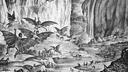
The climax of the series revealed Herschel's alleged sighting of beings approximately four feet tall, covered in copper-colored hair, with membranous wings on their backs. These creatures, dubbed "Vespertilio-homo" or bat-men, were described as flying, communicating, and building temples.
Herschel claimed to have seen beings about a meter and twenty centimeters tall, covered in copper-red hair, with membranous wings on their backs.
This elaborate fabrication, known as the Great Moon Hoax, dramatically boosted The Sun's circulation to unprecedented levels. It stands as a historical precursor to modern sensationalist journalism and the pursuit of clicks through exaggerated or invented content, demonstrating how fabricated stories can capture public attention and drive media success.
They flew, talked among themselves, and built temples.
About this summary
Originally published by Večernji List in Croatian. Translated, summarized, and contextualized automatically by DistantNews, with a note on how the source frames the story. Not individually reviewed before publishing. How this works.
More Stories



From Our Blog

What Gets Lost (and Found) When News Is Translated

The Critical Role of Diaspora Media in Global News

What Travellers Should Know About Countries with Restricted Press

A Digital Nomad's Guide to Following Local News

How the Same Story Looks Different in Different Countries
