


1904 Olympic Marathon: A Bizarre Race Marked by Dehydration Experiment and Cheating
Translated from Croatian, summarized and contextualized by DistantNews.
At a glance
In-depth
Sources not specified
Context piece
- The 1904 Olympic marathon in St. Louis was marked by bizarre circumstances and unconventional participants.
- Organizer Dr. James Sullivan used the race as a scientific experiment on dehydration, limiting water access.
- The event featured a mix of athletes, including a bricklayer and a Cuban postman, and became one of the most grotesque Olympic moments.
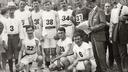
The 1904 Olympic marathon in St. Louis remains etched in history as one of the most peculiar and grotesque events ever staged. On August 30, 1904, under a scorching 35-degree Celsius (95 degrees Fahrenheit) heat, 32 men lined up for a grueling 40-kilometer race across unpaved, dusty roads. The field was far from elite, comprising individuals like ten Greeks who had never run a marathon, two Tswana tribesmen from South Africa who ran barefoot, a Cuban postman in cut-off trousers, an American bricklayer, and a British laborer.
Adding to the race's strangeness, organizer Dr. James Sullivan conceived it as a scientific experiment. His goal was to observe the human body's response to deliberate dehydration. To this end, only one water stop was provided along the entire course – a well located 11 kilometers into the race.
The race took a surreal turn when Fred Lorz, an American bricklayer, entered the stadium three hours after the start, seemingly fresh and smiling. He was greeted by cheers, and Alice Roosevelt Longworth, daughter of the President, even placed a laurel wreath around his neck for a photograph. However, word soon reached organizers that Lorz had not completed the entire race on foot, having hitched a ride in a car for a significant portion of the course.
This incident, coupled with the extreme conditions and the unusual mix of participants, cemented the 1904 marathon's reputation. It became a stark example of the unconventional and often chaotic nature of early Olympic Games, highlighting a period where athletic competition sometimes blurred with bizarre spectacle and questionable scientific inquiry.
DistantNews Editorial
Originally published by Večernji List in Croatian. Translated, summarized, and contextualized by our editorial team with added local perspective. Read our editorial standards.
More Stories



From Our Blog

What Gets Lost (and Found) When News Is Translated

The Critical Role of Diaspora Media in Global News

What Travellers Should Know About Countries with Restricted Press

A Digital Nomad's Guide to Following Local News

How the Same Story Looks Different in Different Countries
