


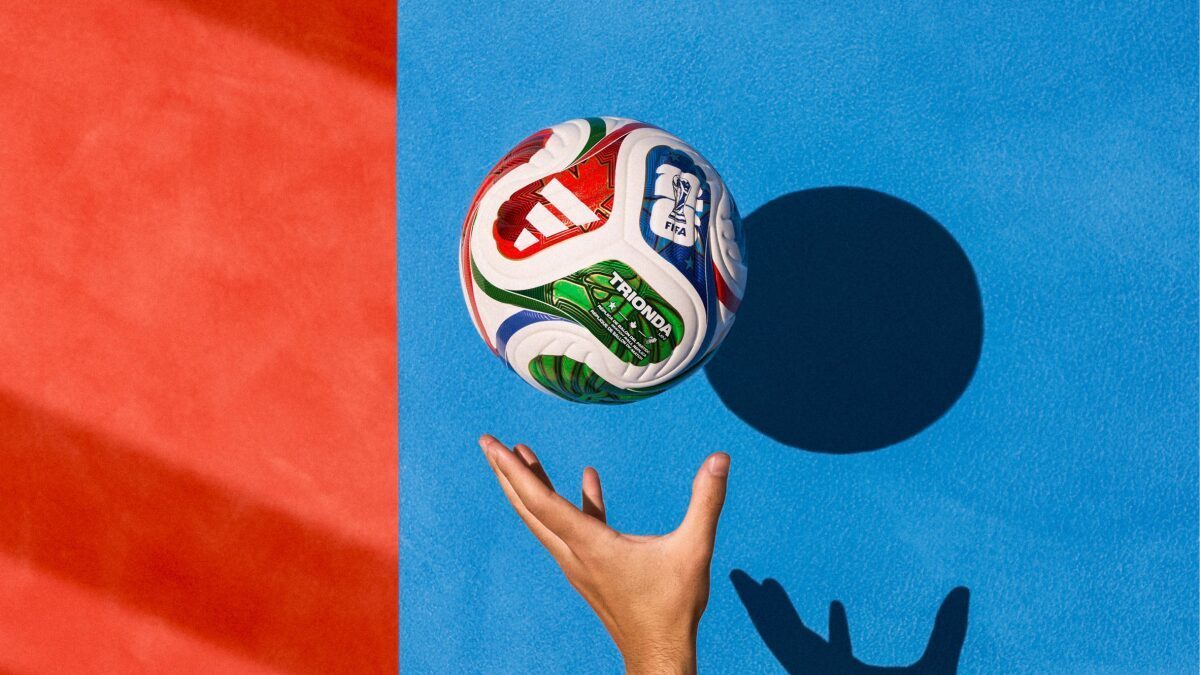
2026 World Cup ball 'Trionda' uses internal sensor for VAR, features advanced aerodynamics
Translated from Korean, summarized and contextualized by DistantNews.
At a glance
In-depth
Sources not specified
Context piece
- The official ball for the 2026 North, Central America, and Caribbean (CONCACAF) World Cup, named 'Trionda,' features an internal sensor to aid video review, particularly for offside calls.
- Trionda utilizes a new design with only four panels, optimizing aerodynamics for greater flight stability and reduced unpredictable trajectories compared to previous balls.
- The article also details the scientific challenges of managing diverse turf conditions across the 16 host venues in the three countries and the technology used to ensure consistent playing surfaces.
The 2026 North, Central America, and Caribbean (CONCACAF) World Cup is generating excitement, with attention turning to its official match ball, 'Trionda.' This ball incorporates an internal sensor that measures its movement 500 times per second, transmitting data to the video assistant referee (VAR) system. When combined with player tracking technology and AI analysis, this system aims to assist in crucial decisions like offside and handball calls.
Trionda, meaning 'three waves' in Spanish, features a vibrant design symbolizing the three host nations: Canada, Mexico, and the United States. However, its most significant innovation lies in its construction. Unlike previous World Cup balls, Trionda is made with only four panels, the fewest in the history of the men's World Cup ball design. This streamlined structure, combined with precisely calculated surface textures and grooves, is engineered to control airflow, enhance aerodynamic stability, and reduce unpredictable ball movements, a common issue with balls like the 2010 Jabulani.
The ball's design aims to achieve a balance between stability and responsiveness. Aerodynamic testing indicates that Trionda experiences a 'drag crisis' – a point where air resistance changes rapidly – at approximately 43 km/h. This is lower than previous balls like Brazuca (50-65 km/h) and Jabulani (79-97 km/h), suggesting greater flight stability. However, researchers anticipate that Trionda might lose speed faster at higher velocities, potentially resulting in shorter long-ball flights than expected.
Beyond the ball, the article highlights the complex science behind managing the diverse turf conditions across the 16 host venues in the U.S., Canada, and Mexico. With varying climates and stadium types, ensuring consistent playing surfaces is a major challenge. FIFA has commissioned research into turf management, focusing on grass species, cutting heights, root structures, and irrigation methods. The length of the grass, even a 5mm difference, can drastically alter the playing surface, affecting ball roll, bounce, and player traction. The article details experiments measuring ball speed and bounce, and testing player footing and slippage on different turf conditions. Additionally, the ball's sensor placement has been updated from the Qatar 2022 ball, moving from the center to within one of the panels for improved data capture.
DistantNews Editorial
Originally published by Dong-A Ilbo in Korean. Translated, summarized, and contextualized by our editorial team with added local perspective. Read our editorial standards.
More Stories


From Our Blog

What Gets Lost (and Found) When News Is Translated

The Critical Role of Diaspora Media in Global News

What Travellers Should Know About Countries with Restricted Press

A Digital Nomad's Guide to Following Local News

How the Same Story Looks Different in Different Countries
