


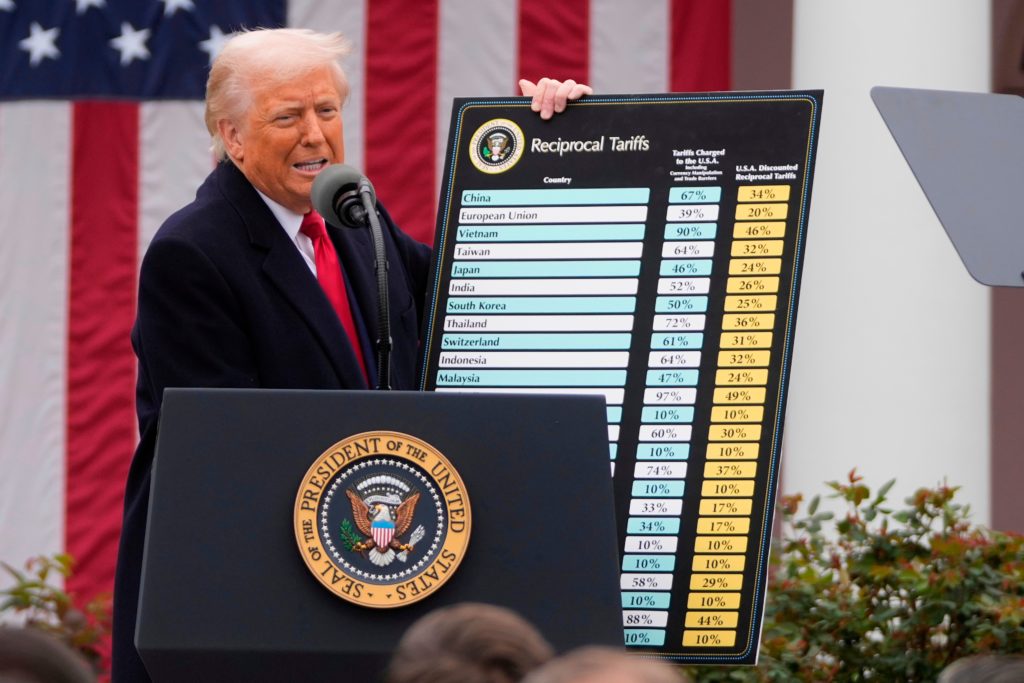
25 states sue Trump administration over new tariffs, citing Supreme Court ruling
Translated from English, summarized and contextualized by DistantNews.
At a glance
News
Named sources
New plan
- Twenty-five states are suing the Trump administration over new tariffs, arguing they are an illegal attempt to replace import taxes struck down by the Supreme Court.
- The administration claims the new tariffs, imposed under Section 301 of the Trade Act of 1974, are a legally durable tool to address unfair trade practices, specifically forced labor.
- The lawsuit highlights a conflict between states challenging federal tariff policy and the administration's efforts to revive domestic manufacturing through trade measures.
Twenty-five states have filed a lawsuit against the Trump administration, challenging the legality of its latest tariffs. The states contend these tariffs are a pretext to replace import taxes previously invalidated by the Supreme Court. The administration had imposed double-digit tariffs on 59 countries and the European Union, citing their failure to curb imports produced by forced labor.
After losing at the Supreme Court, the administration is once again trying to illegally raise taxes on families and businesses with a new round of tariffs.
New York Attorney General Letitia James stated, "After losing at the Supreme Court, the administration is once again trying to illegally raise taxes on families and businesses with a new round of tariffs." This move comes as President Trump seeks to revive American manufacturing, overturning decades of U.S. policy favoring lower tariffs and freer trade.
The United States is using its lawful authority to obtain the elimination of unreasonable acts, policies, and practices that burden U.S. commerce.
The administration invoked the International Emergency Economic Powers Act (IEEPA) for the initial tariffs, but the Supreme Court ruled it did not authorize such measures, leading to refunds for importers. To compensate for lost revenue, Trump then turned to temporary 10% worldwide tariffs, which expired July 24. The current tariffs are being imposed under Section 301 of the Trade Act of 1974, a provision previously used successfully against China, which allows the president to impose import taxes and sanctions against countries engaging in unfair trade practices.
A foreign country's failure to impose and effectively enforce a prohibition on the importation of goods produced with forced labor is unreasonable and burdens U.S. commerce, including American workers, and must be addressed.
White House spokesman Kush Desai defended the tariffs, asserting, "The United States is using its lawful authority to obtain the elimination of unreasonable acts, policies, and practices that burden U.S. commerce." He added that Section 301 tariffs have proven to be a legally durable tool. The new tariffs, ranging from 10% to 12.5%, target countries responsible for 99% of American imports.
Section 301 tariffs have proven to be a legally durable tool since the President's first term, and they remain so now.
DistantNews Editorial
Originally published by PBS NewsHour in English. Translated, summarized, and contextualized by our editorial team with added local perspective. Read our editorial standards.
More Stories


From Our Blog

How the Same Story Looks Different in Different Countries

What Gets Lost (and Found) When News Is Translated

The Critical Role of Diaspora Media in Global News

What Travellers Should Know About Countries with Restricted Press

A Digital Nomad's Guide to Following Local News
