


25-year concession limits FG’s direct action on Benin-Onitsha Road, Says Umahi
Summarized and contextualized by DistantNews.
At a glance
News
Named sources
Context piece
- Nigeria's Minister of Works, David Umahi, stated that the Benin-Onitsha road project is under a 25-year concession, limiting the government's direct intervention.
- Umahi explained that the government is engaging with the concessionaire to expedite work while adhering to contractual obligations.
- He clarified that the road's condition predates the current administration and that terminating the concession would involve significant legal and financial consequences.
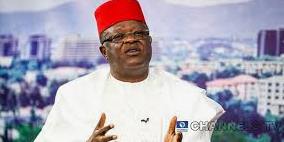
Nigeria's Minister of Works, David Umahi, has defended the Federal Government's approach to the Benin-Onitsha road, explaining that a 25-year concession agreement significantly restricts the government's ability to directly manage or terminate the project. Umahi emphasized that any intervention must align with existing contractual and legal frameworks.
The debate over the condition of the Benin–Onitsha corridor is legitimate. Nigerians have every right to demand good roads, safe journeys and value for public investment. But legitimate concern must not be distorted into a narrative that ignores history, contractual obligations, and the substantial road infrastructure intervention currently taking place across the South-East.
Responding to criticisms labeling the Benin-Onitsha corridor as a "monument to neglect," Umahi clarified that the road's current condition predates the Bola Tinubu administration. He noted that the government inherited numerous deteriorating federal roads and stalled projects across the country. Umahi stressed that while Nigerians have a right to demand good infrastructure, legitimate concerns should not overshadow historical context, contractual obligations, and ongoing infrastructure development in the Southeast.
The minister highlighted the legal complexities involved, stating, "Government is bound by law. It is bound by contract, and it must observe due process." Arbitrarily terminating the concession agreement, he warned, could lead to significant legal battles and substantial financial claims against the Federal Government.
Government is bound by law. It is bound by contract, and it must observe due process. Also, it cannot arbitrarily terminate an existing concession agreement without considering the legal and financial consequences, including the possibility of litigation and humongous claims against the Federal Government.
Umahi further explained that the Benin-Asaba Expressway is part of the Federal Government's Highway Development and Management Initiative as a Value-Added Concession. Under this model, the concessionaire is responsible for both the development and management of the road and its right-of-way, making the situation more intricate than a standard construction contract. He assured that the Federal Ministry of Works is actively pressing the concessionaire to fulfill its obligations, emphasizing that the concession does not signify the government's abandonment of the road.
Under the Value-Added Concession model, the road pavement and the entire Right-of-Way are concessioned for development and management by the concessionaire. This diminishes the simplistic argument that the Minister of Works can simply wake up one morning, terminate the arrangement and award another contract.
DistantNews Editorial
Originally published by The Punch. Summarized and contextualized by our editorial team with added local perspective. Read our editorial standards.
More Stories


From Our Blog

How the Same Story Looks Different in Different Countries

What Gets Lost (and Found) When News Is Translated

The Critical Role of Diaspora Media in Global News

What Travellers Should Know About Countries with Restricted Press

A Digital Nomad's Guide to Following Local News
