


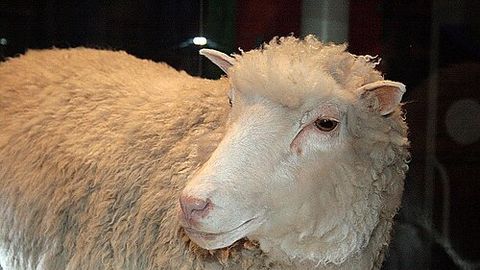
30 years after Dolly the sheep: What has cloning achieved?
Translated from Estonian, summarized and contextualized by DistantNews.
At a glance
In-depth
Sources not specified
Context piece
- Thirty years ago, Dolly the sheep, the first cloned mammal, was born, sparking predictions of widespread cloning.
- Cloning has proven more complex than initially anticipated, with practical applications mainly in medicine, agriculture, and conservation.
- The article explores how cloning technology works and why human cloning remains largely in the realm of science fiction.
Thirty years ago, the birth of Dolly the sheep, the first mammal to be cloned, heralded a new era in biotechnology. At the time, Dolly's existence fueled predictions of a future where cloned pets and even resurrected extinct species would become commonplace.
However, the reality of cloning has turned out to be far more intricate than those early visions suggested. The process of "copying" living organisms is technically demanding and expensive. Today, cloning has evolved into a practical, albeit costly, tool utilized in specific fields such as medicine, agriculture, and conservation efforts.
This article delves into the mechanisms behind cloning technology, explaining its scientific underpinnings. It also addresses the persistent question of why human cloning, despite the advancements, largely remains confined to the domain of science fiction, exploring the ethical, technical, and societal barriers that prevent its realization.
DistantNews Editorial
Originally published by Postimees in Estonian. Translated, summarized, and contextualized by our editorial team with added local perspective. Read our editorial standards.
More Stories
/nginx/o/2026/07/07/17768542t1h9c17.jpg)
/nginx/o/2026/07/03/17758777t1h54fd.jpg)
From Our Blog

What Gets Lost (and Found) When News Is Translated

The Critical Role of Diaspora Media in Global News

What Travellers Should Know About Countries with Restricted Press

A Digital Nomad's Guide to Following Local News

How the Same Story Looks Different in Different Countries
