


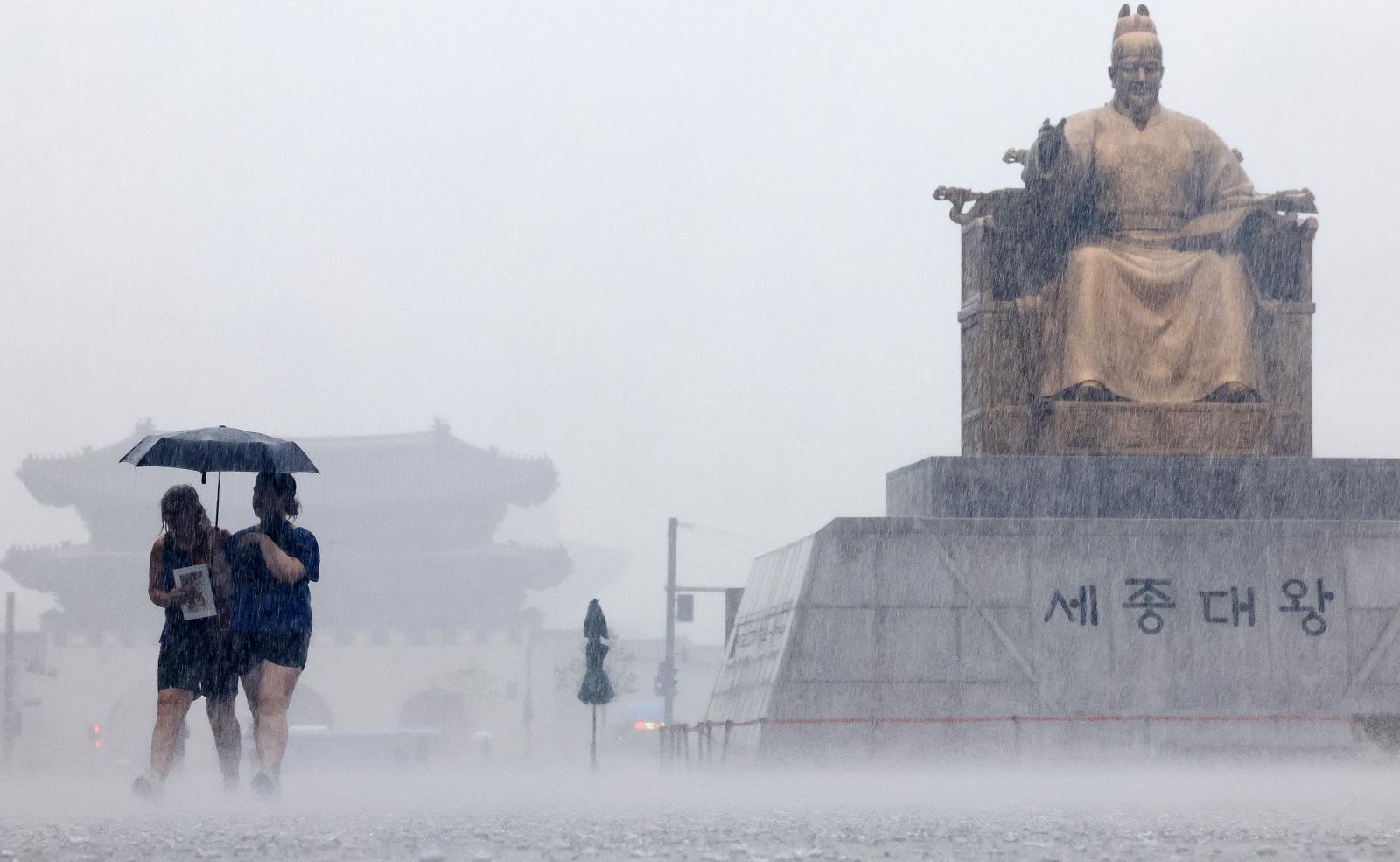
4 in 10 South Korean Workers Cannot Adjust Schedules for Heavy Rain or Heatwaves
Translated from Korean, summarized and contextualized by DistantNews.
At a glance
News
Documents & data
Context piece
- Approximately 43.8% of South Korean workers do not have guaranteed remote work or flexible hours during natural disasters, according to a survey.
- The rate is higher for non-regular workers, women, and non-office workers, with over half in these groups lacking such provisions.
- Experts call for legal clarity on disaster-related absences and enhanced worker rights to refuse hazardous work.
A significant portion of South Korea's workforce faces challenges commuting and working during natural disasters, with nearly four in 10 employees unable to adjust their schedules or work remotely. The survey by the civic group Workplace Gabjil 119, conducted by Global Research on 1,000 adults, revealed that 43.8% of respondents reported no guaranteed flexibility during events like heavy rain or heatwaves.
This lack of accommodation disproportionately affects vulnerable worker groups. Non-regular employees were more likely to report no flexibility at 49.8%, compared to regular workers at 39.8%. The situation is even more pronounced for daily laborers (58.5%), dispatched or subcontracted workers (58.3%), and freelancers or specially employed individuals (55.3%), all exceeding 50%.
Women (53.4%) and non-office workers (50.6%) also reported more than half of their cohorts lacking flexible work arrangements. Furthermore, 38.4% of workers have experienced or witnessed colleagues facing disadvantages, such as disciplinary action or negative consequences, for being late due to natural disasters, despite government recommendations for remote work or schedule adjustments.
I endured it for years, taking medication, while the hospital told me to work while moving between air-conditioned spaces.
Compounding these issues, some workers endure harsh conditions. One hospital radiologist reported working in a room exceeding 30 degrees Celsius for years, enduring the heat with medication while the hospital only allowed movement between air-conditioned areas. Other cases involved working in offices with broken air conditioning for three years or in windowless logistics centers.
Existing legal frameworks offer limited protection. While the National Civil Service Regulations allow for special leave during natural disasters, the Labor Standards Act lacks specific provisions for lateness or absence under such circumstances. The right to stop work under the Occupational Safety and Health Act is also unclear regarding the definition of 'imminent danger' and does not apply to platform or specially employed workers.
In response, 65.4% of surveyed workers believe they should have the right to independently assess disaster risks and choose their work arrangements or refuse work. Labor attorney Nam Da-hyun emphasizes the need to legally define standards for disaster-related absences and enhance the effectiveness of the right to stop work.
We need to legally specify the criteria for lateness, absence, and paid leave during natural disasters and increase the effectiveness of the right to stop work.
DistantNews Editorial
Originally published by Dong-A Ilbo in Korean. Translated, summarized, and contextualized by our editorial team with added local perspective. Read our editorial standards.
More Stories


From Our Blog

What Gets Lost (and Found) When News Is Translated

The Critical Role of Diaspora Media in Global News

What Travellers Should Know About Countries with Restricted Press

A Digital Nomad's Guide to Following Local News

How the Same Story Looks Different in Different Countries
