


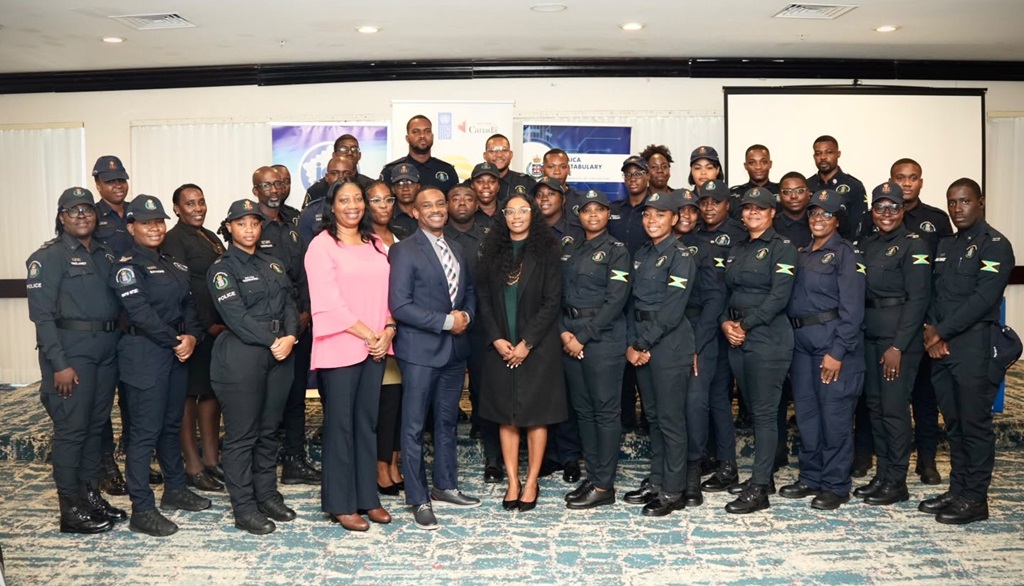
43 JCF members graduate from Jamaican Sign Language and Deaf Culture Training Programne
Summarized and contextualized by DistantNews.
At a glance
News
Named sources
New plan
- Forty-three members of the Jamaica Constabulary Force (JCF) graduated from a Jamaican Sign Language and Deaf Culture Training Programme.
- The seven-week program aimed to improve communication and understanding with the deaf community.
- Officials stated the training will enhance investigations, facilitate access to justice, and foster a more inclusive society.
Forty-three members of the Jamaica Constabulary Force (JCF) have completed a seven-week training program in Jamaican Sign Language and Deaf Culture. The graduation ceremony, held at the Jamaica Pegasus hotel, marked a significant step towards more inclusive policing in the island nation.
This ceremony marks an important achievement for every participant gathered here. The completion of any programme of study requires commitment, discipline and a willingness to learn. Those qualities are worthy of recognition in any setting. They carry particular significance within law enforcement, where learning has a direct impact on our ability to serve, protect and support the people of Jamaica.
Senior Superintendent Dennis Brooks, representing Commissioner of Police Dr. Kevin Blake, lauded the graduates for their dedication. He emphasized that the skills acquired will directly impact the JCF's ability to serve and protect all Jamaicans. Brooks highlighted that the training strengthens communication, deepens understanding, and improves engagement with members of the deaf community, which is often considered a disadvantaged group.
The officers being recognised today have acquired practical skills that strengthen communication, deepen understanding and improve engagement with members of the deaf community.
The program's practical skills are expected to influence interactions in various settings, including police stations, crime scenes, and during crises. Brooks stated that reducing communication barriers is crucial for ensuring the deaf community has better access to justice and increased confidence in public institutions.
Those skills will influence interactions in police stations, during investigations, at crime scenes, in moments of crisis and in the countless daily encounters that define the relationship between the police and the public.
This initiative was a collaborative effort involving the Jamaica Association for the Deaf, the Social Justice Programme, the United Nations Development Programme (UNDP), and the Government of Canada. The training equips officers with the necessary cultural awareness and communication skills to effectively interact with the deaf community, contributing to a safer, fairer, and more inclusive Jamaican society.
For members of the deaf community, communication barriers can create additional challenges when seeking assistance, reporting incidents or navigating elements of the justice system.
DistantNews Editorial
Originally published by Jamaica Observer. Summarized and contextualized by our editorial team with added local perspective. Read our editorial standards.
More Stories


From Our Blog

What Gets Lost (and Found) When News Is Translated

The Critical Role of Diaspora Media in Global News

What Travellers Should Know About Countries with Restricted Press

A Digital Nomad's Guide to Following Local News

How the Same Story Looks Different in Different Countries
