


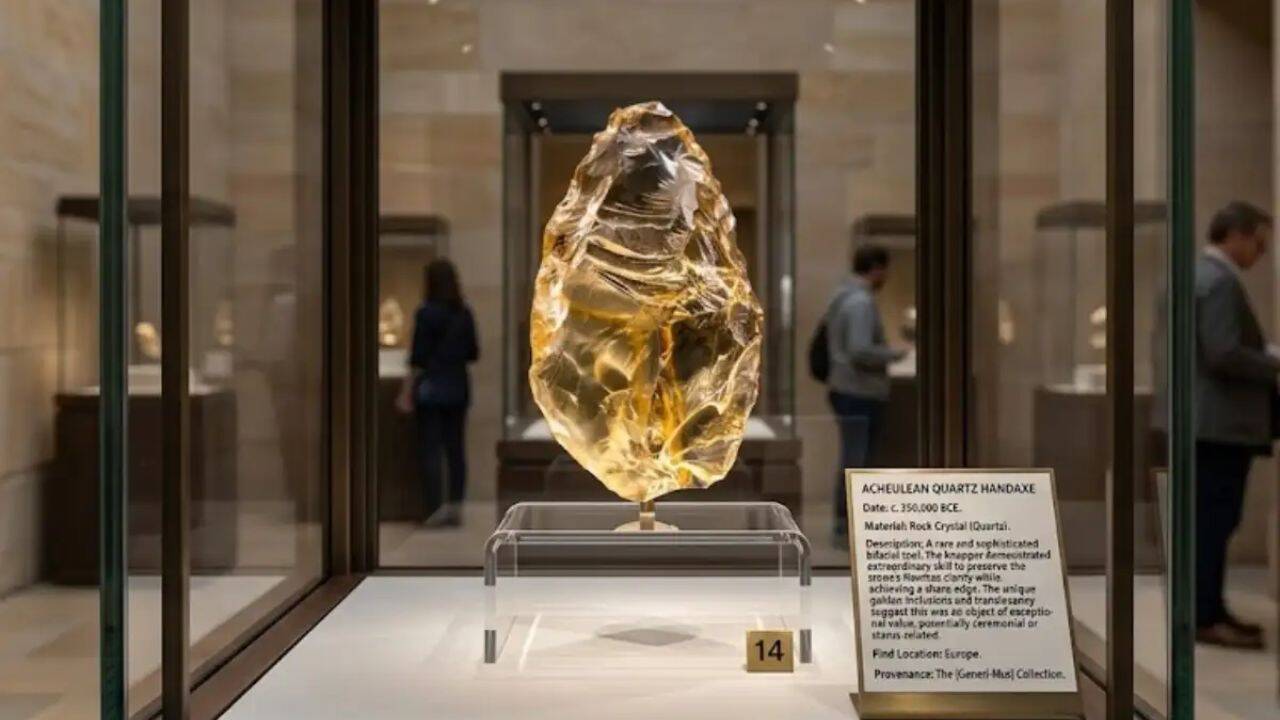
45,000-year-old crystal tool suggests Neanderthals valued beauty, craftsmanship
Translated from English, summarized and contextualized by DistantNews.
At a glance
News
Sources not specified
Context piece
- A 45,000-year-old quartz scraper found in France suggests Neanderthals appreciated beauty and craftsmanship.
- The tool's sophisticated creation challenges previous notions of Neanderthals as purely primitive beings.
- This discovery offers new insights into Neanderthal culture, artistry, and their relationship with their environment.
An ancient crystal tool unearthed in France is reshaping our understanding of Neanderthals. The 45,000-year-old quartz scraper, discovered in a cave, indicates that these early humans possessed an appreciation for beauty and aesthetics, moving beyond the perception of them as solely primitive.
The tool's creation from rare rock crystal demonstrates a level of skill and cultural understanding previously underestimated. Its sophisticated design suggests Neanderthals were not just survivalists but also capable of artistry and thoughtful craftsmanship. This finding challenges the long-held narrative that Neanderthals lacked the capacity for aesthetic appreciation.
This remarkable artifact provides valuable insights into the daily lives and cultural practices of Neanderthals. It highlights their ability to skillfully manipulate their environment and suggests a deeper complexity to their society and cognitive abilities. The discovery prompts a re-evaluation of their place in human history and their potential for artistic expression.
DistantNews Editorial
Originally published by Times of India in English. Translated, summarized, and contextualized by our editorial team with added local perspective. Read our editorial standards.
More Stories



From Our Blog

What Press Freedom Means for the News You Read

What Gets Lost (and Found) When News Is Translated

The Critical Role of Diaspora Media in Global News

What Travellers Should Know About Countries with Restricted Press

A Digital Nomad's Guide to Following Local News
