


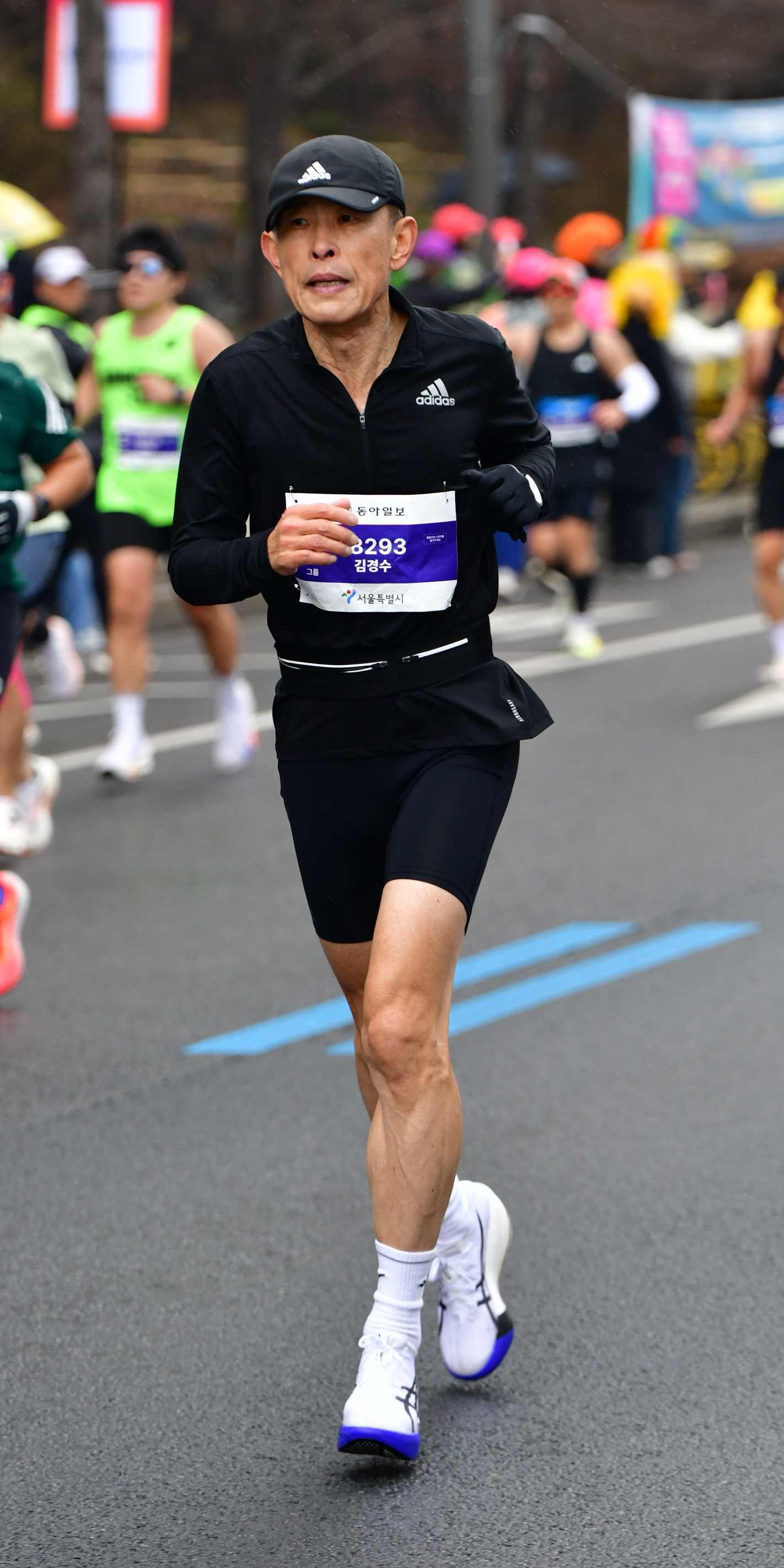
72-Year-Old Professor Runs After Neck Surgery: 'If You Lie Down, You Die; If You Run, You Live'
Translated from Korean, summarized and contextualized by DistantNews.
At a glance
In-depth
Named sources
Context piece
- Kim Kyung-soo, an emeritus professor at Inha University, defied doctors' orders to stop running after a severe neck injury and four surgeries, regaining his health through consistent exercise.
- Despite a serious car accident that caused paralysis in his left arm, the 72-year-old professor recovered and resumed his passion for marathon running, completing a full course in the 2025 Dong-A Marathon.
- Professor Kim advocates for movement as essential for health, living by the motto "If you lie down, you die; if you run, you live," and continues to train rigorously, including marathon running and trekking in the Alps.
Professor Kim Kyung-soo, a 72-year-old emeritus professor of Naval Architecture and Ocean Engineering at Inha University, embodies a philosophy of relentless movement, even after enduring a severe neck injury and undergoing his fourth surgery. In 2023, while returning from a 100km ultramarathon, he was involved in a traffic accident that fractured his neck and left his left arm completely paralyzed. Doctors advised him to abandon running and change his hobbies, but Kim's own experience during his recovery proved otherwise. He observed that his health indicators, including blood sugar and triglycerides, worsened significantly during periods of inactivity. This realization spurred him to defy medical advice and actively pursue rehabilitation through movement.
If you lie down, you die; if you run, you live.
His recovery journey was arduous. Kim engaged in self-directed rehabilitation for six months, eventually returning to a normal state. He began by walking over 30,000 steps daily, including rigorous 18km hikes on Mount Cheonggye in the Seoul metropolitan area. He also equipped his home with a treadmill, stationary bike, and rowing machine, incorporating them into his training regimen while wearing a neck brace. This persistent effort culminated in his successful completion of a full marathon at the 2025 Dong-A Marathon, an achievement that brought him to tears and reinforced his belief that "inactivity is the greatest risk to health."
Kim's dedication to running began in 2001 when he weighed 87kg and suffered from severe neck pain due to late-night research. A short run around a small park provided immediate relief and a restful night's sleep, igniting his passion for the sport. He has since completed over 80 full marathons and 20 ultramarathons, earning the nickname 'Iron Legs.' His personal best for a marathon is a remarkable 3 hours and 15 minutes, set in 2010. He continues to train systematically, running 70-80km per week and incorporating strength training to support his joints and muscles, emphasizing that "to run without injury, you must build up the muscles of each joint."
Inactivity is the greatest risk to health.
Beyond marathons, Kim finds rejuvenation in trekking the Alps annually with his wife. His experiences in Switzerland and Italy during his doctoral studies in Germany left a lasting impression. Since 2016, he has spent a month each year in the Alps, hiking without cable cars, covering distances of 10-30km daily with significant elevation gains. He views this as another crucial component of his health management, a way to "build stamina while enjoying the scenery and having a cup of coffee."
To run without injury, you must build up the muscles of each joint.
Looking ahead, Kim aims to complete the Dong-A Marathon until its 100th anniversary in 2030. He firmly believes that for humans to thrive in a 100-year lifespan, movement is paramount. "As long as I can move, I intend to keep running," he states. Even if full marathons become too challenging, he plans to continue hiking, which he considers the "best exercise that can be sustained for a long time."
As long as I can move, I intend to keep running.
DistantNews Editorial
Originally published by Dong-A Ilbo in Korean. Translated, summarized, and contextualized by our editorial team with added local perspective. Read our editorial standards.
More Stories



From Our Blog

What Gets Lost (and Found) When News Is Translated

The Critical Role of Diaspora Media in Global News

What Travellers Should Know About Countries with Restricted Press

A Digital Nomad's Guide to Following Local News

How the Same Story Looks Different in Different Countries
