


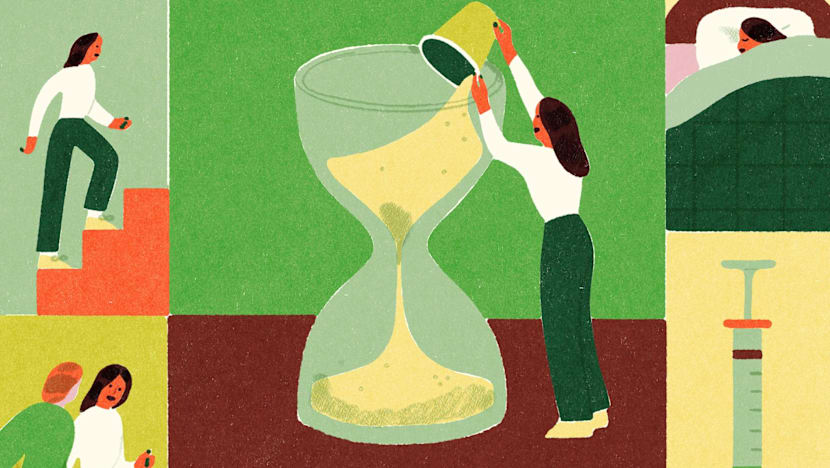
9 things health experts wish you’d do in midlife to increase longevity
Summarized and contextualized by DistantNews.
At a glance
In-depth
Named sources
Context piece
- Health experts recommend adopting healthy habits in midlife (ages 40-60) to promote longevity and healthy aging.
- Key recommendations include incorporating interval training, prioritizing social relationships, and consuming fermented foods.
- These practices can help prevent age-related diseases and improve overall well-being in later life.
Middle age, typically spanning from 40 to 60, presents a critical window for adopting habits that significantly influence how individuals age, according to health experts. The choices made during these years can sow the seeds for or help prevent many age-related diseases, including cardiovascular issues, diabetes, cancer, and dementia. "Midlife is the ideal time to make changes, not only to benefit you in the present but also in the future," said Margie Lachman, a psychology professor at Brandeis University.
Midlife is the ideal time to make changes, not only to benefit you in the present but also in the future.
Experts emphasize that longevity is built on a lifetime of healthy practices, not short-term efforts. One key recommendation is to incorporate interval training into workouts a few times a week. Dr. Guillem Gonzalez-Lomas, an associate professor at New York University's Grossman School of Medicine, notes that cardio-respiratory fitness is a strong predictor of longevity and mobility in later life. Interval training, which involves alternating high-intensity bursts with recovery periods, can be a more efficient way to boost this fitness.
What happens in midlife doesn’t stay in midlife.
Beyond physical activity, social connections are highlighted as a crucial wellness intervention. Dr. Ezekiel Emanuel, a professor at the University of Pennsylvania, suggests that social interaction may be the most important factor for long-term health. He advises a "two birds, one stone" approach, combining social time with necessary tasks, such as exercising or grocery shopping with a friend.
of longevity and being able to be active and mobile in the later years of your life.
Furthermore, the health of the gut microbiome is gaining attention for its role in healthy aging. Dr. John Beard, a professor at Columbia University Mailman School of Public Health, points out that a healthy gut is closely linked to the immune system and inflammation control, both vital for preventing age-related diseases. Experts are beginning to explore the benefits of consuming fermented foods, which can support a thriving gut microbiome.
You actually have to really push yourself.
DistantNews Editorial
Originally published by CNA. Summarized and contextualized by our editorial team with added local perspective. Read our editorial standards.
More Stories



From Our Blog

What Gets Lost (and Found) When News Is Translated

The Critical Role of Diaspora Media in Global News

What Travellers Should Know About Countries with Restricted Press

A Digital Nomad's Guide to Following Local News

How the Same Story Looks Different in Different Countries
