


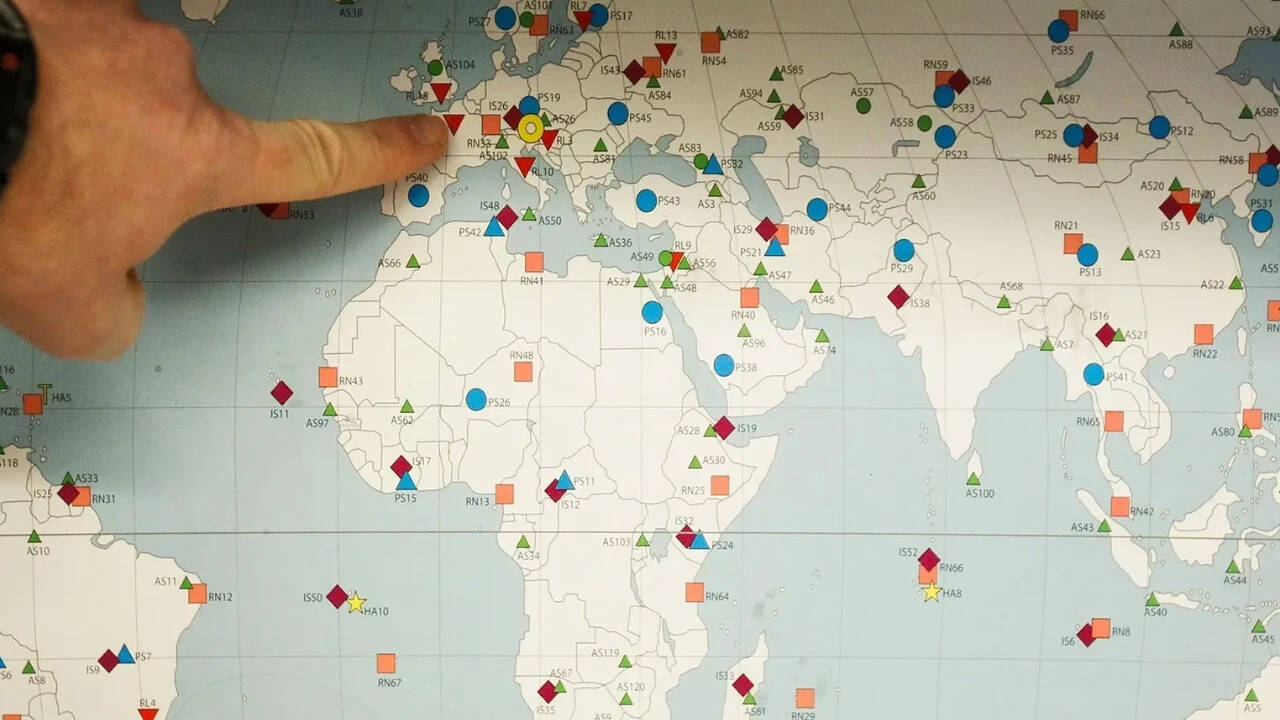

A bigger Africa and a smaller Europe: UN backs map showing continents more accurately
Translated from English and summarized by DistantNews. Read the original for the full story.
At a glance
News
From a news agency
Approved/passed
- The UN General Assembly endorsed a Togo-led resolution encouraging governments and institutions to consider using the Equal Earth projection instead of the traditional Mercator map.
- The resolution won support from 164 countries, while the United States voted against and six countries abstained.
- Equal Earth shows Africa at about 14 times Greenland’s size, but the resolution does not ban the Mercator projection or require its replacement.
A Togo-led campaign to correct the way the world appears on maps won backing from the United Nations General Assembly on Friday, with 164 countries supporting a resolution titled “Correct The Map.”
The United States voted against the resolution. Serbia, Estonia, Georgia, Lithuania, Moldova and Ukraine abstained. The campaign, backed by the African Union and advocacy groups, urges governments and institutions to move away from the Mercator projection and consider the Equal Earth projection instead.
The difference is most striking in the portrayal of Africa and Greenland. On Mercator maps, Greenland appears roughly comparable in size to Africa, even though it is far smaller. Equal Earth presents Africa as about 14 times larger than Greenland and shows continents in proportions closer to their actual size.
Maps shape our understanding of the world. They guide education, nourish the imagination, and influence collective perceptions.
The resolution does not prohibit Mercator maps or require institutions to replace them. A UN report says it simply encourages governments and institutions to consider Equal Earth. The newer projection, introduced in 2018, accounts for the Earth’s curvature. Under it, Europe appears smaller, Brazil larger and Greenland dramatically reduced, while Africa occupies a much greater share of the map.
“Maps shape our understanding of the world,” Togo’s Foreign Minister Robert Dussey said in remarks quoted by the UN before the vote. “They guide education, nourish the imagination, and influence collective perceptions.”
Africa No Filter, one of the campaign’s leading groups, called for accurate maps in schools, textbooks, newsrooms, businesses and digital platforms. French Foreign Minister Jean-Noël Barrot also welcomed the vote, saying, “Changing the map obviously doesn’t change the world. But correcting a representation that distorts it is already an act of truth.”
Changing the map obviously doesn’t change the world. But correcting a representation that distorts it is already an act of truth.
About this summary
Originally published by Times of India in English. Translated, summarized, and contextualized automatically by DistantNews, with a note on how the source frames the story. Not individually reviewed before publishing. How this works.
More Stories
From Our Blog

What Press Freedom Means for the News You Read

News in Translation: What Gets Lost, and How We Keep the Framing

Diaspora Media: How Communities Follow News From Home

Traveling Where the Press Is Not Free: How to Read the News There

The Digital Nomad's Guide to Local News
