


A Counter-Culture Center in the Heart of Athens: The Story of the Exarcheia Neighborhood
Translated from Turkish, summarized and contextualized by DistantNews.
At a glance
In-depth
Sources not specified
Context piece
- Exarcheia, a neighborhood in Athens, Greece, is known as a counter-culture hub attracting artists, students, and activists.
- The area has a history tied to political movements, including the 1973 Athens Polytechnic uprising and the 2008 killing of Alexandros Grigoropoulos.
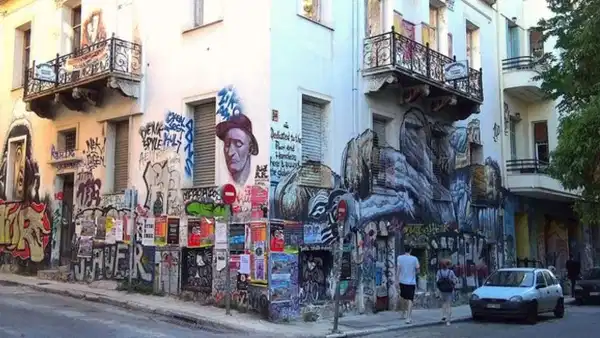
- Today, Exarcheia's walls are covered in graffiti, reflecting its vibrant and politically charged atmosphere.
Exarcheia, a neighborhood nestled just outside Athens's typical tourist routes, pulses with a distinct counter-cultural energy. Despite its central location, it stands apart from more traditional districts, serving as a vibrant meeting point for artists, students, activists, and free thinkers.
The neighborhood's history is deeply intertwined with anarchism, earning its name from a merchant named Exarchos who opened a shop there in the late 19th century. Initially a working-class area, Exarcheia evolved into an intellectual hub, particularly drawing students due to its proximity to universities. By the 1970s, it became a focal point for political movements.
A significant event in Exarcheia's political memory is the 1973 Athens Polytechnic uprising. This student-led movement against the military junta became a symbol of the demand for freedom and democracy. Though suppressed by the army, resulting in casualties, the uprising marked a turning point toward the end of military rule in Greece. The legacy of this event continues to shape Exarcheia's identity, with annual commemorations held each November.
Another pivotal moment occurred on December 6, 2008, when police fatally shot Alexandros Grigoropoulos in the Exarcheia area. This incident sparked widespread protests across Greece and drew international attention to the neighborhood, which had become a center for youth, activists, and social movements. Grigoropoulos's death ignited broad discussions on police brutality, the future of youth, and state-society relations. Today, his memory persists on Exarcheia's streets through graffiti and symbolic markings.
Graffiti is a defining characteristic of Exarcheia, transforming its walls into an open-air gallery. These artworks convey political messages, artistic expressions, and social critiques, embodying the neighborhood's dynamic and engaged spirit.
The neighborhood's walls are covered with political messages, artworks, and social critiques.
DistantNews Editorial
Originally published by Cumhuriyet in Turkish. Translated, summarized, and contextualized by our editorial team with added local perspective. Read our editorial standards.
More Stories

From Our Blog

What Gets Lost (and Found) When News Is Translated

The Critical Role of Diaspora Media in Global News

What Travellers Should Know About Countries with Restricted Press

A Digital Nomad's Guide to Following Local News

How the Same Story Looks Different in Different Countries
