


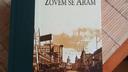
A forgotten literary gem: Reflecting on William Saroyan's 'My Name Is Aram'
Translated from Croatian, summarized and contextualized by DistantNews.
At a glance
Analysis
Sources not specified
Context piece
- The article recommends William Saroyan's short story collection "My Name Is Aram" as a formative work from the author's youth.
- The author reflects on gifting the book to classmates during his gymnasium years, highlighting its past popularity and the celebratory nature of birthdays then.
- The piece contrasts the book's past cultural significance with its current neglect, noting its importance in American literature and the author's personal literary development.
Miljenko Jergović recommends William Saroyan's "My Name Is Aram" as a "hilariously witty, moving, and all-encompassing short story saga" about an Armenian family in the United States. He describes it as a tale of epic and folkloric spirit, exploring the paradox of belonging and not belonging, and the thin line between reality and fairy tale. Jergović recalls gifting the book to classmates for birthdays during his third and fourth years of gymnasium. He paints a picture of a slower-paced time when birthdays were frequent and celebrated, and people looked towards the future with unreserved optimism. The edition he remembers was a canonical Belgrade publication, "Reč i misao," a red booklet translated by Radivoj Dinić. This translation, he notes, shaped the imagination of multiple generations, from those emerging from Stalinism to those before the next war. He recounts buying around fifty copies from a bookseller named Stipe at "Svjetlost," inscribing each with a dedication. He speculates that these copies might still exist in homes in Sarajevo or elsewhere, preserved by former classmates. Twenty years later, a Croatian edition was published, which he bought to reconcile with his past and urged others to read, though he felt it went largely unnoticed. Jergović laments that "My Name Is Aram," a text he considers one of the most formative in Croatian contemporary literary culture, is now largely ignored. He points out that the publisher was Ante Kostelić and the translator was the half-sister of Janičina and Ivičina, details he feels should have garnered more attention. He contrasts Aram Garoghlanian with Tom Sawyer and Holden Caulfield, three characters through whom American literature was often introduced to young readers. While Twain and Salinger remain prominent, Saroyan and his work have been sidelined, a phenomenon Jergović finds inexplicable.
Izdanje bilo je kanonsko: beogradska edicija Reč i misao, crvena knjižica, prevoditelj Radivoj Dinić. Jedan od onih prijevoda, objavljenih u bezbroj izdanja, koji su formirali imaginaciju više međusobno udaljenih naraštaja, od generacije koja je desetak godina nakon rata izlazila iz mentalnih okova staljinizma, sve do posljednjih naraštaja pred novi rat.
DistantNews Editorial
Originally published by Večernji List in Croatian. Translated, summarized, and contextualized by our editorial team with added local perspective. Read our editorial standards.
More Stories



From Our Blog

What Gets Lost (and Found) When News Is Translated

The Critical Role of Diaspora Media in Global News

What Travellers Should Know About Countries with Restricted Press

A Digital Nomad's Guide to Following Local News

How the Same Story Looks Different in Different Countries
