


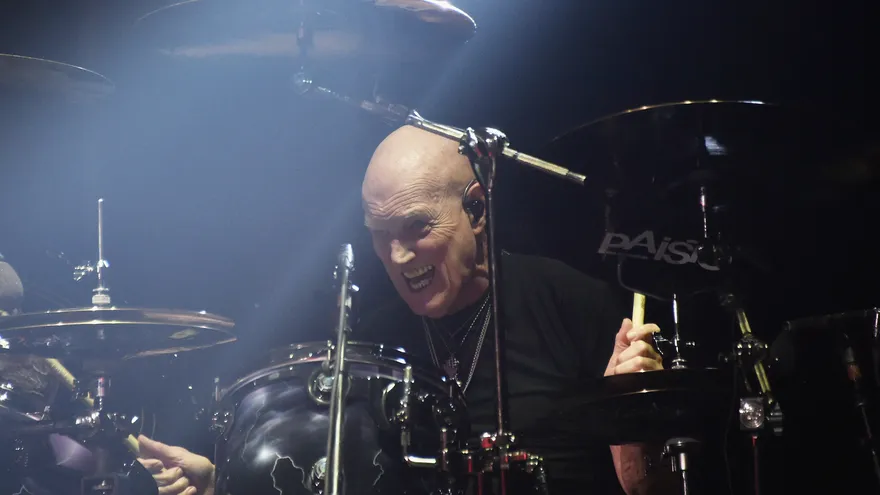
AC/DC drummer Chris Slade retires from the stage due to health
Translated from Spanish and summarized by DistantNews. Read the original for the full story.
At a glance
News
Official statement
Outcome reported
- AC/DC drummer Chris Slade is retiring from performing due to health issues.
- Slade, who turns 80 on October 30, cited progressive physical limitations from a stroke suffered seven years ago.
- The drummer has been a part of AC/DC's history across multiple tenures.
Chris Slade, the veteran drummer for the iconic rock band AC/DC, has announced his retirement from live performances due to ongoing health challenges. Slade, who will celebrate his 80th birthday on October 30, revealed that the lingering effects of a stroke he suffered approximately seven years ago have progressively impacted his physical capacity to drum.
In a statement, Slade explained that his condition has made it increasingly difficult to maintain the demanding physical requirements of playing drums at the level AC/DC fans expect. The stroke, while not immediately ending his career, has led to limitations that he can no longer overcome to perform on stage.
Slade has had a significant, albeit intermittent, presence in AC/DC's lineup. He first joined the band in 1989, replacing Simon Wright, and performed on the album "The Razors Edge." He later returned to the band in 2015, stepping in for Phil Rudd, and toured with them extensively.
His departure marks the end of an era for the band's live shows, as Slade brought a powerful and experienced drumming style to AC/DC's legendary sound. While the band has not yet announced a replacement, Slade's decision underscores the physical toll that a long career in rock music can take.
About this summary
Originally published by TVN Panamá in Spanish. Translated, summarized, and contextualized automatically by DistantNews, with a note on how the source frames the story. Not individually reviewed before publishing. How this works.
More Stories

From Our Blog

What Gets Lost (and Found) When News Is Translated

The Critical Role of Diaspora Media in Global News

What Travellers Should Know About Countries with Restricted Press

A Digital Nomad's Guide to Following Local News

How the Same Story Looks Different in Different Countries
