


Accelerating public education financing in Nepal
Summarized and contextualized by DistantNews.
At a glance
Analysis
Documents & data
Context piece
- Nepal's public education financing requires substantial increases at all government levels to meet 2030 Sustainable Development Goals.
- Poverty rates are significantly higher in rural areas and specific provinces, necessitating differentiated funding allocations.
- Education is crucial for poverty reduction and gender equality, with low schooling rates correlating to higher poverty and a significant gender gap in human development.
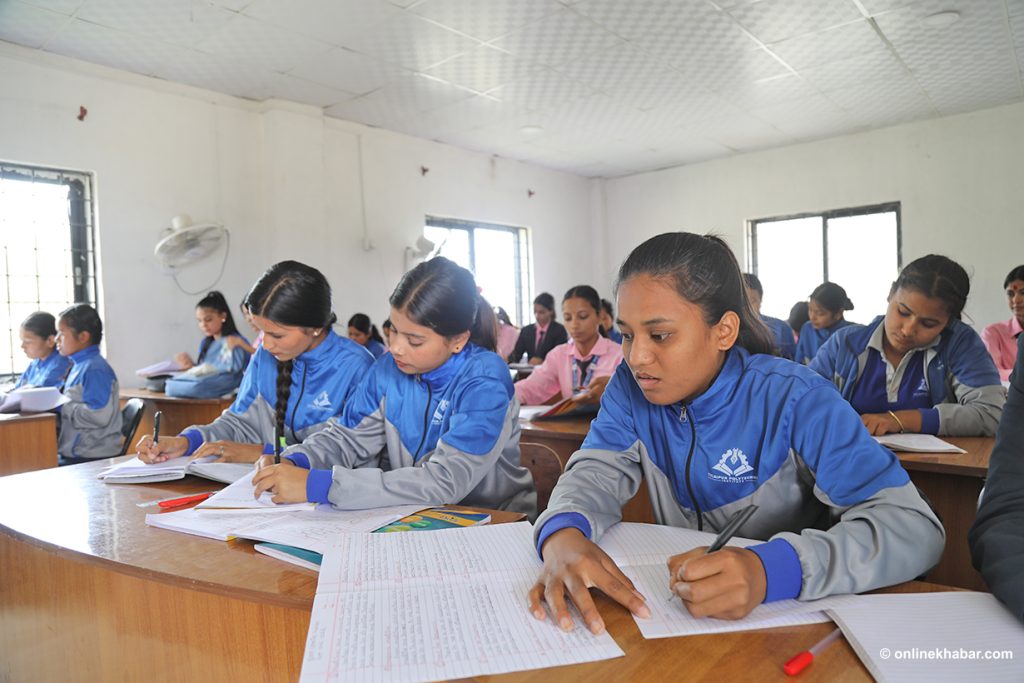
Investing in public education is not an expense but a crucial return for Nepal, especially as the nation strives to meet its 2030 Sustainable Development Goals. Government data reveals that without a deliberate and substantial increase in education financing across federal, provincial, and local levels, Nepal will fall short of these targets.
The country faces stark regional disparities in poverty, with the national rate at 20.27% but soaring to 24.66% in rural areas. The Sudurpaschim province bears the heaviest burden at 34.16%, while Gandaki province fares better at 11.88%. This uneven landscape demands differentiated, not uniform, financial strategies, with high-poverty regions requiring disproportionately higher per-student investment.
The link between poverty and education is undeniable: individuals without formal schooling face poverty rates 2.5 times higher than those with at least primary education. Addressing poverty reduction requires a serious commitment to keeping children in school, supported by strategically placed and timely budget allocations. Furthermore, Nepal's Human Development Index score of 0.622, ranking 145th globally, highlights a structural problem in gender inequality, with a notable gap between male (0.661) and female (0.567) HDI scores.
Education financing must directly tackle this gender disparity, which is further compounded by the invisibility of women's economic contributions in unpaid care work. Until this work is formally recognized and valued in national income accounting, poverty measurement will remain distorted, and public resources misallocated. While remittance inflows provide a superficial sense of stability, they are largely consumed daily and do not fund essential educational infrastructure or enrollment for marginalized children. Relying on remittances to cover education financing deficits is a deferred cost, not a sustainable strategy.
DistantNews Editorial
Originally published by OnlineKhabar English. Summarized and contextualized by our editorial team with added local perspective. Read our editorial standards.
More Stories


From Our Blog

What Gets Lost (and Found) When News Is Translated

The Critical Role of Diaspora Media in Global News

What Travellers Should Know About Countries with Restricted Press

A Digital Nomad's Guide to Following Local News

How the Same Story Looks Different in Different Countries
