

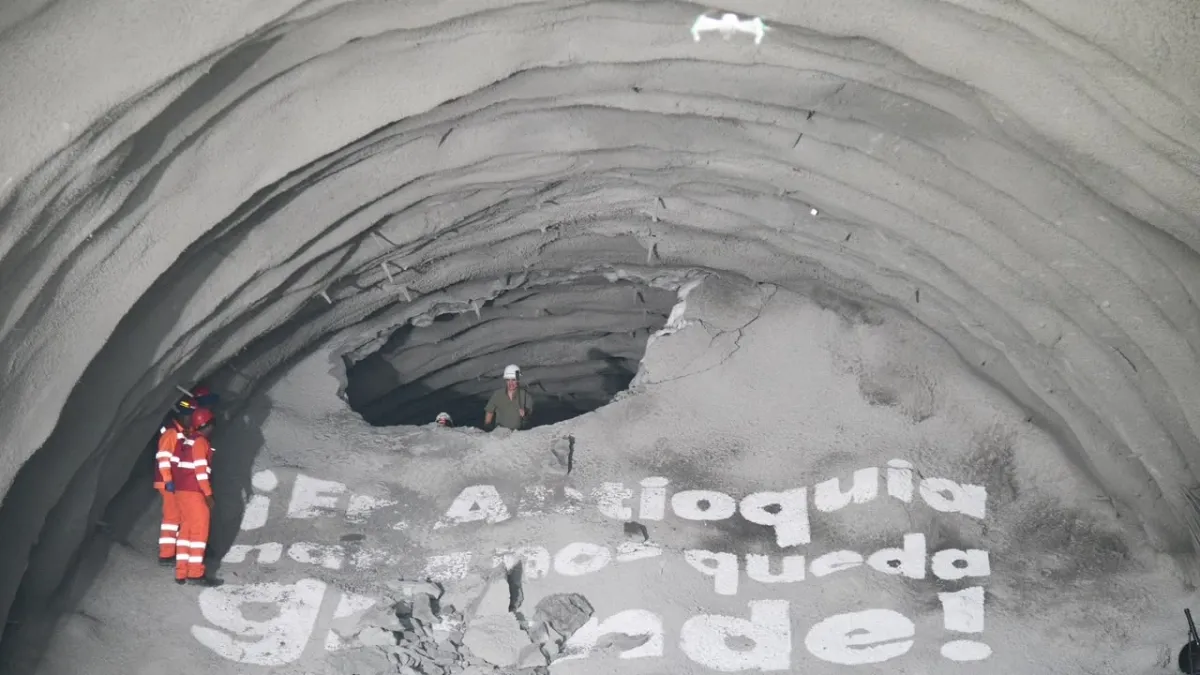

Advance Clocks by an Hour to Prevent Energy Rationing, Suggests Hidroituango Manager
Translated from Spanish, summarized and contextualized by DistantNews.
At a glance
News
Sources not specified
New plan
- The manager of Hidroituango proposed advancing clocks by one hour to prevent national energy rationing amid the looming El Niño phenomenon.
- President-elect Abelardo de la Espriella acknowledged the potential energy crisis and pledged his government's commitment to ensuring energy obligations are met.
- The proposal aims to conserve water resources for hydroelectric power generation, emphasizing the cost-effectiveness of hydraulic energy.
Alejandro Arbeláez, manager of Hidroituango, has put forward a striking proposal to avert a nationwide energy rationing crisis: advance all clocks by one hour. This suggestion comes in response to growing concerns over the country's energy situation and the anticipated arrival of the El Niño phenomenon, which typically brings drier conditions.
From Sociedad Hidroituango, which operates the hydroelectric plant at full capacity thanks to available water, we extend an invitation to the National Government to urgently establish a technical table involving the different actors of the country's energy ecosystem so that Colombia does not go dark.
President-elect Abelardo de la Espriúa had previously addressed the impending energy crisis, assuring energy generators and the financial sector that his administration would work to prevent rationing. Arbeláez welcomed these assurances and reiterated his earlier call for an urgent technical meeting involving key players in the energy sector. He stressed the need for collaborative solutions to prevent Colombia from facing widespread power outages.
Arbeláez explained that the core of his proposal involves conserving water for hydroelectric power generation. By running thermoelectric plants, the demand on hydroelectric dams can be reduced, allowing water levels to be maintained. He warned that relying solely on thermal power plants during a shortage would significantly increase energy tariffs, as hydraulic energy is the most economical source.
We have an 'El Niño' phenomenon around the corner and we are not prepared.
"From Sociedad Hidroituango, which operates the hydroelectric plant at full capacity thanks to available water, we extend an invitation to the National Government to urgently establish a technical table involving the different actors of the country's energy ecosystem so that Colombia does not go dark," Arbeláez stated previously. He emphasized that with the El Niño phenomenon on the horizon, the country is unprepared for the potential strain on its energy resources.
The cheapest energy is hydraulic, therefore, Colombia must strive to have the greatest possible hydraulic energy generation capacity at all times, including during the 'El Niño' phenomenon; if the hydroelectric plants are turned off and only the thermal ones operate, the tariff increase will be even greater.
DistantNews Editorial
Originally published by El Tiempo in Spanish. Translated, summarized, and contextualized by our editorial team with added local perspective. Read our editorial standards.
More Stories

From Our Blog

What Gets Lost (and Found) When News Is Translated

The Critical Role of Diaspora Media in Global News

What Travellers Should Know About Countries with Restricted Press

A Digital Nomad's Guide to Following Local News

How the Same Story Looks Different in Different Countries
