

AfD's Höcke sparks debate with East-West German identity remarks
Translated from German, summarized and contextualized by DistantNews.
At a glance
News
Sources not specified
Context piece
- AfD politician Björn Höcke's remarks about East and West Germans have sparked internal party debate.
- Höcke suggested East Germans are still
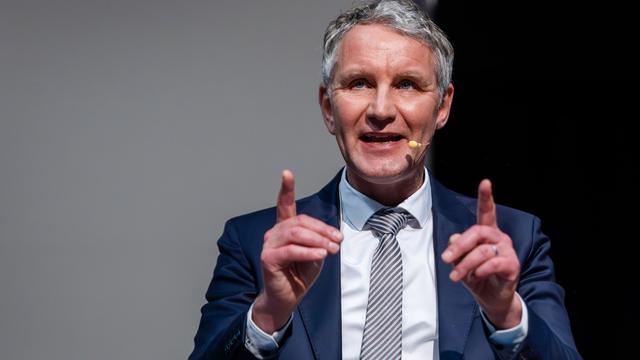
AfD politician Björn Höcke's recent remarks differentiating between East and West Germans have ignited a discussion within his own party. In an interview with Swiss publication "Weltwoche," Höcke stated that East Germans remain "German," while West Germans have adopted a "substitute identity" and been "completely usurped" by American culture.
Höcke, who is himself from West Germany, also cited an observation that "in the western republic there are German-speaking Americans or German-speaking Americans live there, and in the eastern republic, German-speaking Germans live." He further posited that "Americanism is an antithesis to Germanness."
The comments have drawn criticism from within the AfD. Beatrix von Storch, deputy leader of the AfD parliamentary group, emphasized the party's goal of German unity, stating, "We are one indivisible German nation. The completion of Germany's internal unity is our highest goal. We do not divide it, neither politically, intellectually, nor culturally."
Rüdiger Lucassen, the AfD's defense policy spokesperson, also criticized Höcke, calling his statement "absolutely wrong and foolish" and reminiscent of former East German propaganda. Bernd Baumann, the first parliamentary managing director of the AfD Bundestag group, suggested the remarks were part of election campaigning and exaggeration, noting that West Germans "received a different upbringing" and had an "approach of certain denationalization."
AfD Vice Chairman Kay Gottschalk responded to a question about feeling usurped by American culture by stating he views German unity as an opportunity for Germany to act as a mediator between Russia and the US. He described himself as a "healthy product of a then still intact West German school, which enabled independent thinking and conclusions."
DistantNews Editorial
Originally published by Die Zeit in German. Translated, summarized, and contextualized by our editorial team with added local perspective. Read our editorial standards.
More Stories

From Our Blog

What Gets Lost (and Found) When News Is Translated

How the Same Story Looks Different in Different Countries

The Critical Role of Diaspora Media in Global News

What Travellers Should Know About Countries with Restricted Press

A Digital Nomad's Guide to Following Local News
