


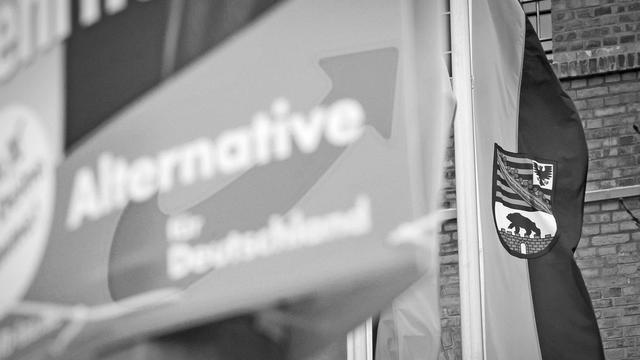
AfD's potential regional power: How will people in eastern Germany react?
Translated from German, summarized and contextualized by DistantNews.
At a glance
News
Sources not specified
Ongoing story
- The AfD party is polling strongly in the German states of Saxony-Anhalt and Mecklenburg-Vorpommern, potentially leading to its participation in regional governments.
- Residents in these states face the prospect of an AfD-led government, raising concerns about potential cuts to funding for social and cultural initiatives, and increased marginalization of minority groups.
- The article seeks to engage with residents about their feelings and potential actions regarding the upcoming elections and the possibility of an AfD government.
As autumn elections loom in Germany's states of Saxony-Anhalt and Mecklenburg-Vorpommern, millions of residents are confronting the concrete possibility of the Alternative for Germany (AfD) party participating in or leading regional governments. Current polling places the AfD at around 40 percent in Saxony-Anhalt and 35 percent in Mecklenburg-Vorpommern, making this once-theoretical question a pressing reality.
The potential implications extend beyond political appointments. For individuals in public service, such as police officers, the prospect of working under a government whose party is classified as extremist in Saxony-Anhalt raises significant ethical and professional dilemmas. Enrico Grube, a police officer in Saxony-Anhalt, stated in early 2025 that he would not want to serve under an AfD government.
Beyond law enforcement, concerns are mounting for those involved in social, political, and cultural engagement. The AfD's election platform in Saxony-Anhalt, for instance, suggests that organizations receiving state funding might be required to demonstrate a "patriotic stance." This has fueled fears among minority groups, including queer and migrant communities, of increased marginalization and hostility. Cultural funding and integration policies could also face drastic changes.
Reactions to a potential AfD government are varied. Some, like Grube, might consider leaving their professions or even the state. Others may intensify their activism in support of democratic values and against far-right extremism. There is also the possibility that some individuals might withdraw, feeling intimidated by the success of exclusionary political positions. The publication is soliciting personal accounts from residents in these states regarding their hopes, fears, and potential responses to the upcoming elections.
For me, it is clear: I would not want to be a police officer under an AfD government.
DistantNews Editorial
Originally published by Die Zeit in German. Translated, summarized, and contextualized by our editorial team with added local perspective. Read our editorial standards.
More Stories

From Our Blog

What Gets Lost (and Found) When News Is Translated

How the Same Story Looks Different in Different Countries

The Critical Role of Diaspora Media in Global News

What Travellers Should Know About Countries with Restricted Press

A Digital Nomad's Guide to Following Local News
