



After AfD Victory in State Election, Eastern Germany Commissioner Voices Concern
Translated from German and summarized by DistantNews. Read the original for the full story.
At a glance
Newswire
Named sources
Ongoing story
- Germany’s commissioner for eastern Germany, Elisabeth Kaiser, warned that the AfD’s election victory in Saxony-Anhalt could deter investment and skilled workers.
- She said stable political conditions were needed for continued economic growth, while the AfD seeks support for a stable majority after falling short of an absolute majority.
- Political scientist Jan Philipp Thomeczek said the party’s radical course could become difficult to sustain if it fails to meet voters’ expectations.
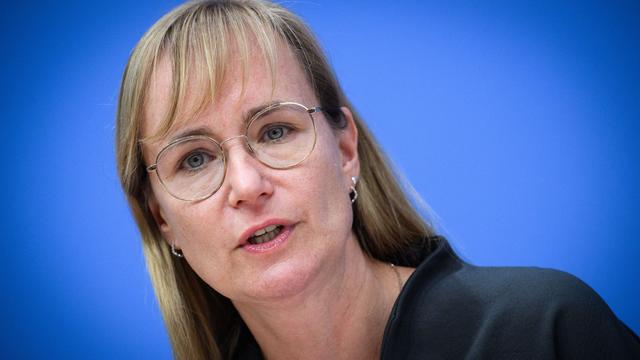
Elisabeth Kaiser, the German government’s commissioner for eastern Germany, fears the AfD’s strong performance in Saxony-Anhalt could damage the region’s economic prospects. Speaking at the East German Entrepreneurs’ Day in Potsdam, she said continued growth would require investment from Germany and abroad, along with well-trained workers.
That would depend on stable political conditions, Kaiser said. “When a party becomes the strongest force that so radically calls our democracy and the European single market into question, that scares off investors,” she said, according to a prepared manuscript. She added that the party’s “blatantly xenophobic slogans” were not an invitation to workers from abroad.
When a party becomes the strongest force that so radically calls our democracy and the European single market into question, that scares off investors.
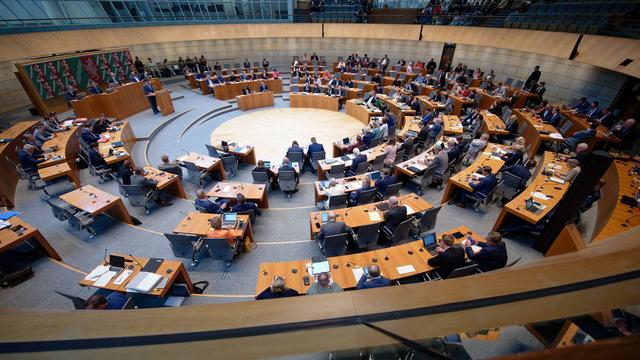
The AfD won Sunday’s state election in Saxony-Anhalt by a wide margin but failed to secure an absolute majority. Its lead candidate, Ulrich Siegmund, is seeking a stable majority and plans talks with other parliamentary groups and individual lawmakers. The party, which Germany’s domestic intelligence agency in Saxony-Anhalt classifies as confirmed far-right extremist, wants to restructure parts of the state.
The AfD has now put itself in a position, with a very radical course, where it has to meet expectations as the strongest force.
Brandenburg Premier Dietmar Woidke said Monday that he feared Saxony-Anhalt could face a long period of instability. CDU parliamentary group leader Steeven Bretz criticized the federal government, saying people were tired of politicians blaming one another and expected answers from Berlin. Chancellor Friedrich Merz has said he will discuss planned reforms with the Social Democrats while maintaining that the reforms are necessary.
Potsdam political scientist Jan Philipp Thomeczek questioned whether the AfD would become more radical nationwide after its result. “The AfD has now put itself in a position, with a very radical course, where it has to meet expectations as the strongest force,” he told dpa. “If it cannot fulfill them, the course of radicalization is more likely to fail.” He said the party may already be close to its maximum support, estimating that it could be “slowly fully mobilized” at 44 to 45 percent in a multiparty system.
If it cannot fulfill them, the course of radicalization is more likely to fail.
About this summary
Originally published by Die Zeit in German. Translated, summarized, and contextualized automatically by DistantNews, with a note on how the source frames the story. Not individually reviewed before publishing. How this works.
More Stories

From Our Blog

News in Translation: What Gets Lost, and How We Keep the Framing

The Same Story, Different Countries: How Coverage Changes at the Border

Diaspora Media: How Communities Follow News From Home

Traveling Where the Press Is Not Free: How to Read the News There

The Digital Nomad's Guide to Local News
