

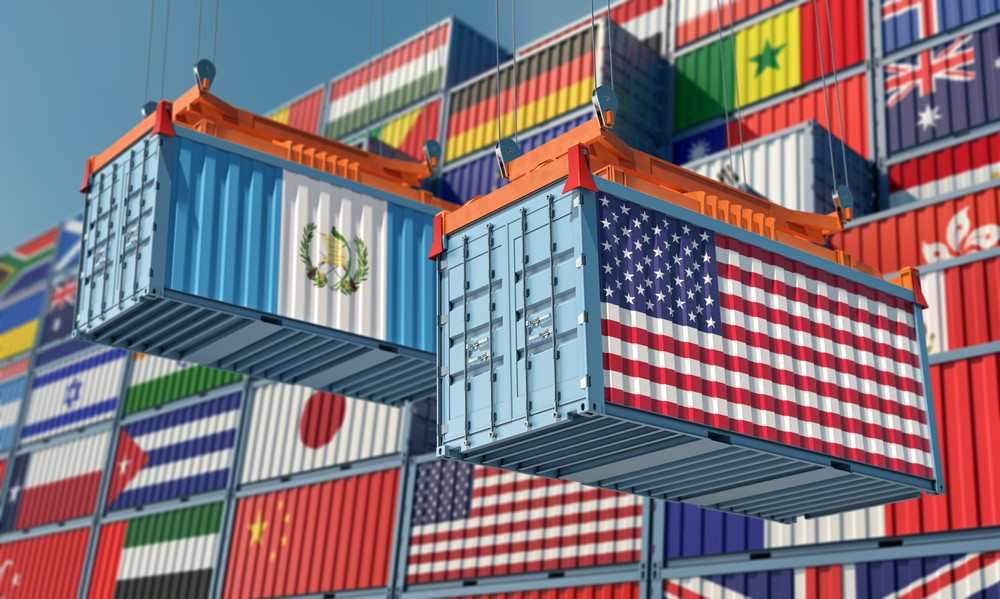
Agexport argues to the U.S. that eliminating the 10% tariff would strengthen the America First policy
Translated from Spanish, summarized and contextualized by DistantNews.
At a glance
News
Named sources
Context piece
- Agexport urged the U.S. Trade Representative's Office (USTR) to eliminate the 10% tariff on Guatemalan products and reinstate zero tariffs.
- The association argued that removing the tariff would strengthen the "America First" policy by enhancing competitiveness and regional supply chains.
- Agexport presented four key arguments, emphasizing Guatemala's role in complementing U.S. production, contributing to food security, and serving as a reliable, proximate supplier.
Guatemalan exporters are urging the United States to eliminate a 10% tariff on their products, arguing that reinstating zero tariffs would bolster the "America First" policy and benefit both nations.
The United States is holding Iran accountable for recent unjustified aggression against commercial vessels and civilian crews freely navigating a vital international waterway.
The Association of Guatemalan Exporters (Agexport) formally requested the Office of the U.S. Trade Representative (USTR) to remove the current 10% tariff and restore the previous zero-tariff status for Guatemalan goods. The organization presented its case through written technical comments and a public hearing in Washington D.C., asserting that the existing tariff does not strengthen U.S. production but instead increases costs for American importers, distributors, supermarkets, processors, restaurants, and consumers who rely on consistent and competitive supply.
Agexport outlined four primary arguments to support its petition. Firstly, they contend that Guatemalan fruits, vegetables, and aquaculture products primarily enter the U.S. market during periods when domestic production is low. Therefore, these imports complement, rather than substitute, U.S. producers, helping to ensure year-round food availability. Secondly, Guatemalan exports contribute to U.S. food security by reducing the risk of shortages, stabilizing prices, and expanding the availability of fresh, healthy, and high-quality products for American consumers.
For me it's over. I don't want to negotiate with them, because they are trash. They are sick people, led by sick, bad, violent people. If they had a nuclear weapon, they would use it.
Thirdly, Agexport highlighted that the agricultural, manufacturing, aquaculture, and fishing sectors maintain strong integration with U.S. companies in transportation, logistics, storage, processing, distribution, and marketing, thereby generating value and employment in both countries. This integration aligns with the "America First" initiative by strengthening regional supply chains. Finally, the association emphasized Guatemala's position as a reliable and proximate supplier, citing its geographic proximity, the framework of the CAFTA-DR agreement, traceability, international certifications, and compliance with sanitary, environmental, and labor standards as key advantages over more distant and vulnerable supply chains.
clear violation
DistantNews Editorial
Originally published by Prensa Libre in Spanish. Translated, summarized, and contextualized by our editorial team with added local perspective. Read our editorial standards.
More Stories


From Our Blog

What Gets Lost (and Found) When News Is Translated

The Critical Role of Diaspora Media in Global News

What Travellers Should Know About Countries with Restricted Press

A Digital Nomad's Guide to Following Local News

How the Same Story Looks Different in Different Countries
