

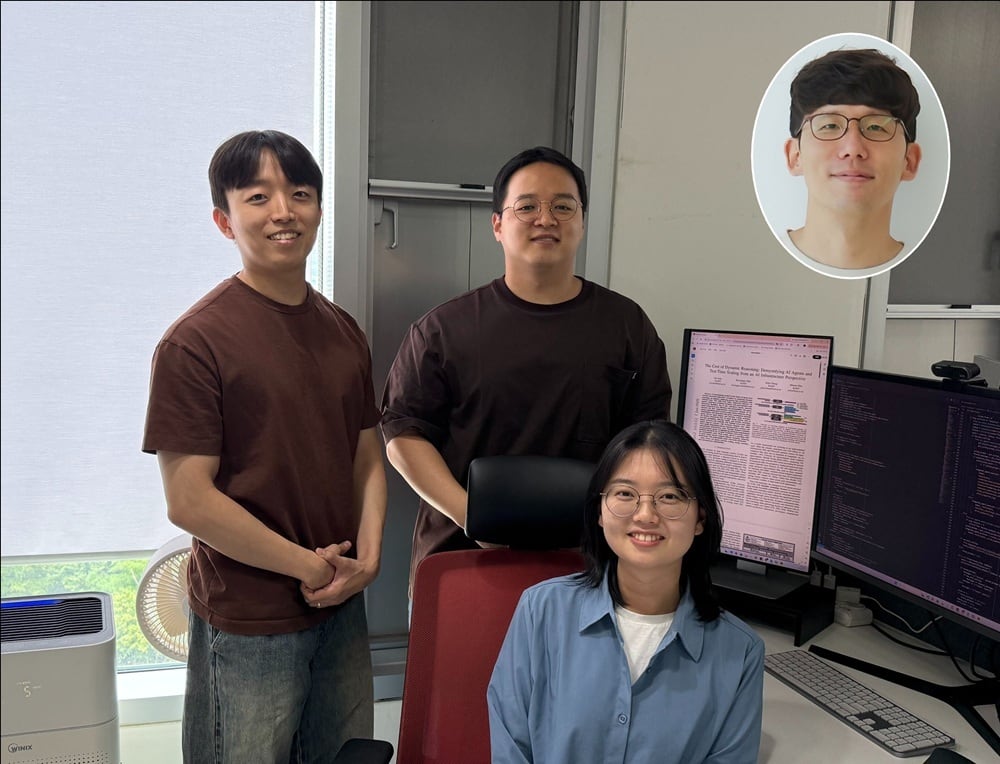

AI Agents Use 136 Times More Power Than Existing Generative AI; Are They Becoming Power Hogs?
Translated from Korean, summarized and contextualized by DistantNews.
At a glance
News
Named sources
Context piece
- AI agents that perform tasks using external tools consume significantly more power than conventional generative AI, using up to 136.5 times more energy per query.
- A KAIST research team found that AI agents, based on large language models with 70 billion parameters, consume an average of 348.41 watt-hours per query.
- This high energy consumption is partly due to frequent LLM calls and idle GPU time while external tools operate.
Artificial intelligence agents capable of autonomously using external tools to perform tasks are proving to be power-hungry, consuming vastly more electricity than traditional generative AI. Research from KAIST indicates that these advanced AI agents can use up to 136.5 times more energy for a single query.
A team led by Professor Yoo Min-soo from KAIST's Department of Electrical and Electronic Engineering analyzed the computational costs and energy consumption of AI agents. Their findings, released on the 5th, show that AI agents based on large language models (LLMs) with 70 billion parameters require an average of 348.41 watt-hours (Wh) to process one query. This amount of energy is equivalent to running a household refrigerator for over eight hours.
The significant energy demand stems from the AI agents' dynamic reasoning processes, which involve calling LLMs an average of 9.2 times more frequently than standard step-by-step reasoning methods. Furthermore, the response time can be up to 153.7 times longer. The study also highlighted that Graphics Processing Units (GPUs) often remain idle, consuming power without performing computations for up to 54.5% of the total execution time while external tools are active.
If an estimated 13.7 billion requests occur daily, the cumulative energy consumption of these AI agents could become a substantial environmental concern. This research points to a critical challenge in scaling AI technologies: balancing advanced capabilities with energy efficiency to mitigate their growing environmental footprint.
DistantNews Editorial
Originally published by Dong-A Ilbo in Korean. Translated, summarized, and contextualized by our editorial team with added local perspective. Read our editorial standards.
More Stories


From Our Blog

What Gets Lost (and Found) When News Is Translated

The Critical Role of Diaspora Media in Global News

What Travellers Should Know About Countries with Restricted Press

A Digital Nomad's Guide to Following Local News

How the Same Story Looks Different in Different Countries
