


AI cloud over writing prize
Summarized and contextualized by DistantNews.
At a glance
News
Named sources
New plan
- Literary magazine Granta will cease publishing winning entries of the Commonwealth Short Story prize due to controversy over AI-generated content.
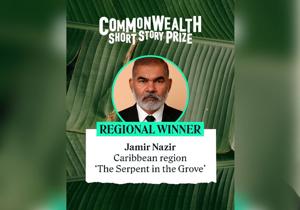
- Trinidad and Tobago writer Jamir Nazir faced accusations of using AI for his winning story, which he denied.
- Author Kevin Jared Hosein criticized the prize, calling it "dead" and lamenting the perceived decline in literary integrity.
Literary magazine Granta has announced it will no longer publish the winning entries of the annual Commonwealth Short Story prize following widespread accusations that a winning story was generated by artificial intelligence.
The 2026 selection of the regional winners of the Commonwealth prize caused a great deal of controversy, based on the speculation that one or more of the stories may have been at least partially AI-generated, accusations that were strongly rejected by the authors.
The controversy erupted after Trinidad and Tobago writer Jamir Nazir won the Caribbean category in 2026 with his story "The Serpent in the Grove." Nazir denied the allegations of AI use. Granta stated that it would withdraw from "external publishing partnerships" where it lacks editorial control, citing the 2026 prize selection as the reason for this decision. The magazine will, however, keep the shortlisted stories on its website for public interest.
For the sake of our own editorial integrity, the Granta Trust board has now taken the decision that we will no longer engage in external publishing partnerships.
Trinidadian author Kevin Jared Hosein, a previous overall winner of the Commonwealth Short Story Prize, declared the prize "dead." He described Nazir's story as the "first blow" and the Commonwealth Foundation's support for the writer and judges as the second. Hosein criticized the winning story's quality, stating its metaphors and similes did not serve the narrative. He argued that AI-assisted writing often lacks intentionality and exhibits a "disappointing linguistic homogeneity."
The Prize is Dead. This is such a terrible loss for emerging writers in so many regions. People who tried to defend the Serpent and criticise my stance on it ought to read the room. There is no appropriate response to this other than ferocious rejection.
Hosein further elaborated on his stance, calling for a "ferocious rejection" of AI-assisted works in literary competitions. He expressed bewilderment that the Commonwealth Foundation, a long-standing institution, appeared to be influenced by AI-generated content. He concluded that this situation serves as a critical lesson for literary institutions, highlighting the consequences of inaction and negligence.
Granta is correct to do this. It is still baffling to me how the Commonwealth Foundation, such a long-standing institution, let itself be routed by the likes of Zoongie (a character from Nazir’s story), ‘whose walking made benches become men’ and had ‘a smile like a sunrise over a sink’.
DistantNews Editorial
Originally published by Trinidad Express. Summarized and contextualized by our editorial team with added local perspective. Read our editorial standards.
More Stories



From Our Blog

What Gets Lost (and Found) When News Is Translated

The Critical Role of Diaspora Media in Global News

What Travellers Should Know About Countries with Restricted Press

A Digital Nomad's Guide to Following Local News

How the Same Story Looks Different in Different Countries
