


AI Coexistence Committee Launched in South Korea to Find Solutions on the Ground
Translated from Korean and summarized by DistantNews. Read the original for the full story.
At a glance
News
Named sources
New plan
- South Korea's Economic, Social and Labor Council (ESLC) has launched an 'AI Coexistence Committee' to address the impact of artificial intelligence on industries and the labor market.
- The committee, comprising 17 members from labor, management, government, and public interest groups, will operate for one year to discuss AI's effects and find solutions.
- Building on previous research, the AI Coexistence Committee aims to move beyond theoretical discussions and engage in practical, field-oriented discussions to understand the real changes occurring due to AI.
South Korea's Economic, Social and Labor Council (ESLC) has initiated a significant step towards navigating the complexities of artificial intelligence by establishing the 'AI Coexistence Committee.' This committee is designed to foster in-depth social dialogue, creating multiple forums for discussion, including issue-specific and industry-specific committees, as well as those focused on youth, women, and non-regular workers.
While the labor research group focused on experts to broaden consensus between labor and management, now is the time to proceed with full-fledged social negotiations based on that.
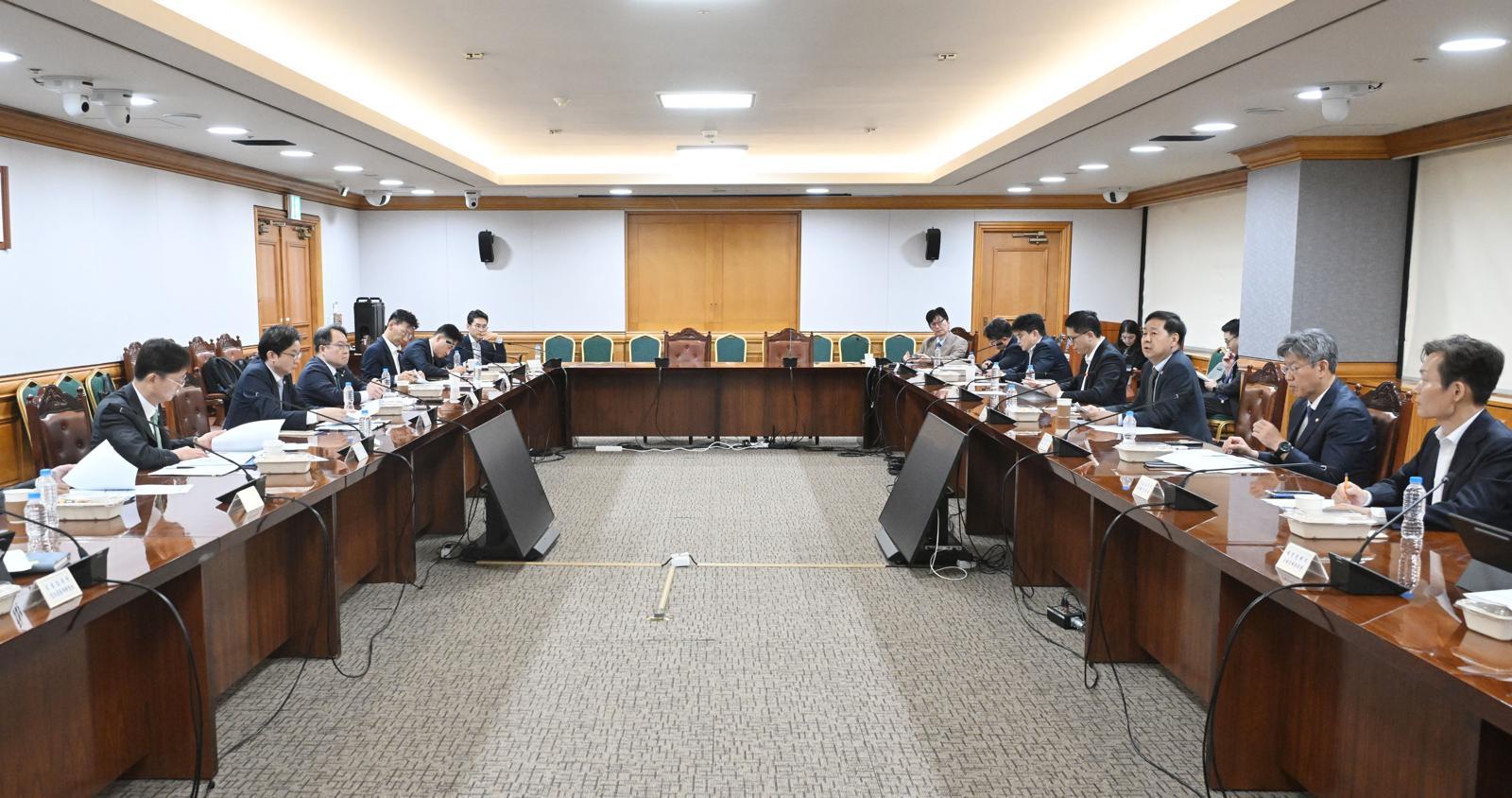
The newly formed AI Coexistence Committee, launched on May 22, brings together labor, management, and government representatives to proactively prepare for the shockwaves AI is expected to send through industries and the labor market. Chaired by Hwang Deok-soon, former president of the Korea Labor Institute and former Senior Secretary for 일자리 (Jobs) at the Moon Jae-in administration's Blue House, the committee consists of 17 members representing labor, management, government, and public interest. It is set to operate for one year.
This initiative builds upon the groundwork laid by the ESLC's 'AI and Labor Research Group,' which published a 'Green Paper' outlining "12 Questions Our Society Must Answer" late last year. The AI Coexistence Committee will commence its work based on these foundational questions. Hwang emphasized in a conversation with Hankyoreh that while the research group focused on building consensus among labor and management through expert discussions, the committee's role is to advance these discussions into full-fledged social negotiations.
The impact of AI technology is not yet determined. The future changes depending on the direction of technological development and the methods of introduction and utilization.
Hwang stressed that the future impact of AI technology is not predetermined. It can be shaped by the direction of technological development and the methods of its introduction and utilization. The committee plans to conduct field-based discussions to examine the actual implementation and use of AI, its effects on job roles and employment, and the support systems for education and training. "It is necessary to accurately grasp the actual changes occurring in the field, rather than vague fears or anxieties," Hwang stated, underscoring the committee's commitment to grounded, practical problem-solving.
It is necessary to accurately grasp the actual changes occurring in the field, rather than vague fears or anxieties.
About this summary
Originally published by Hankyoreh in Korean. Translated, summarized, and contextualized automatically by DistantNews, with a note on how the source frames the story. Not individually reviewed before publishing. How this works.
More Stories


From Our Blog

News in Translation: What Gets Lost, and How We Keep the Framing

Diaspora Media: How Communities Abroad Follow Home

Traveling Where the Press Is Not Free: How to Read the News There

The Digital Nomad's Guide to Local News

The Same Story, Different Countries: How Coverage Changes at the Border
