


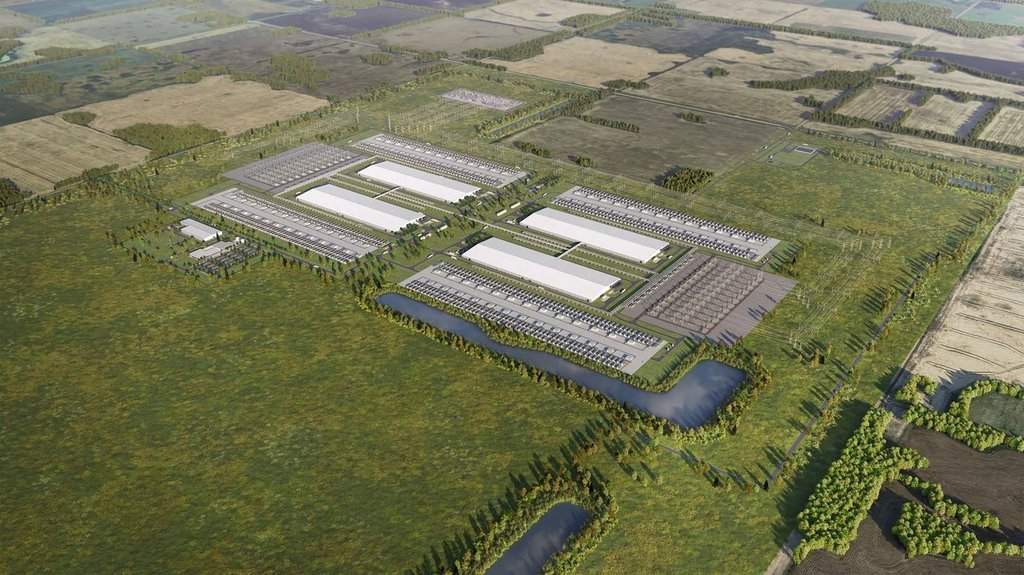
AI data centers spark environmental and cost concerns among Albertans: Poll
Translated from English, summarized and contextualized by DistantNews.
At a glance
News
Named sources
Context piece
- A new poll indicates that 81% of Albertans are concerned about potential increases in household electricity bills due to AI data centers.
- 79% of respondents are worried about the environmental impacts of these facilities.
- Despite concerns, Alberta is actively encouraging AI data center investment, with Meta recently announcing a major project.
A significant majority of Albertans, 81%, express concern over potential increases in their household electricity bills stemming from the development of AI data centers, according to a recent Leger poll. This apprehension is closely followed by worries about the environmental impacts, with 79% of respondents citing this as a concern. The poll surveyed 1,505 Canadian residents aged 18 and older between July 10 and 13, 2026.
On the data centres themselves, people are still trying to understand them better and what it all means.
These concerns are particularly pronounced in Alberta, where the provincial government is actively promoting AI data center investment. While 44% of Canadians would support such development in their province, 42% oppose it. The poll suggests that Albertans are still trying to fully understand the implications of these facilities. The concerns echo those seen in Manitoba, which recently rejected a hyperscale data center plan over environmental issues.
Despite public apprehension, Alberta aims to be a global leader in AI data center development. Technology and Innovation Minister Nate Glubish stated that the province is in talks with at least 60 proponents for projects of various sizes. Meta recently announced a $13 billion data center in Sturgeon County, north of Edmonton, described as its largest outside the U.S. Yize Chen, an assistant professor at the University of Alberta, noted that the province's energy capacity and cold climate, which reduces cooling costs, offer advantages.
We can definitely support more data centres in terms of the energy usage and our cold climate also gives us an advantage, because around half of the energy consumption from a data centre is around the cooling.
Minister Glubish acknowledged Albertans' concerns, attributing them partly to how other jurisdictions have managed data centers. He emphasized that Alberta has modernized its electricity legislation, introduced a new tax framework to ensure financial benefits for residents, and maintained strong water regulations. The government believes these measures will help address concerns as these developments become more common across Canada.
I understand that some Albertans have concerns with data centres, based largely on how other jurisdictions have managed them. We set out to be the smartest. Over the past two years, we modernized our electricity legislation, introduced a new tax framework to ensure Albertans see a financial benefit from these projects, and maintained strong water regulations.
DistantNews Editorial
Originally published by Global News in English. Translated, summarized, and contextualized by our editorial team with added local perspective. Read our editorial standards.
More Stories



From Our Blog

What Gets Lost (and Found) When News Is Translated

The Critical Role of Diaspora Media in Global News

What Travellers Should Know About Countries with Restricted Press

A Digital Nomad's Guide to Following Local News

How the Same Story Looks Different in Different Countries
