


AI for Scalp, Devices for Pelvis: Inside the 2026 Beauty & Healthcare Show
Translated from Korean, summarized and contextualized by DistantNews.
At a glance
In-depth
Named sources
Context piece
- The 2026 Beauty & Healthcare Show in Incheon featured advanced AI-driven scalp analysis and personal care devices.
- Companies showcased AI scalp diagnostic systems that provide instant analysis and product recommendations.
- Other innovations included AI-powered cervical traction devices and pelvic muscle strengthening equipment.
The 2026 Beauty & Healthcare Show, held at Songdo Convensia in Incheon, South Korea, highlighted the growing integration of artificial intelligence and technology into personal wellness. Hosted by the city of Incheon and co-organized by the Incheon Tourism Organization and World Exhibition, the event marked its 11th iteration, featuring 190 domestic and international companies.
A significant draw was the prevalence of diagnostic and corrective devices, with long queues forming at booths offering hands-on experiences. These ranged from officially certified healthcare products to beauty and wellness gadgets marketed under the 'health' umbrella.
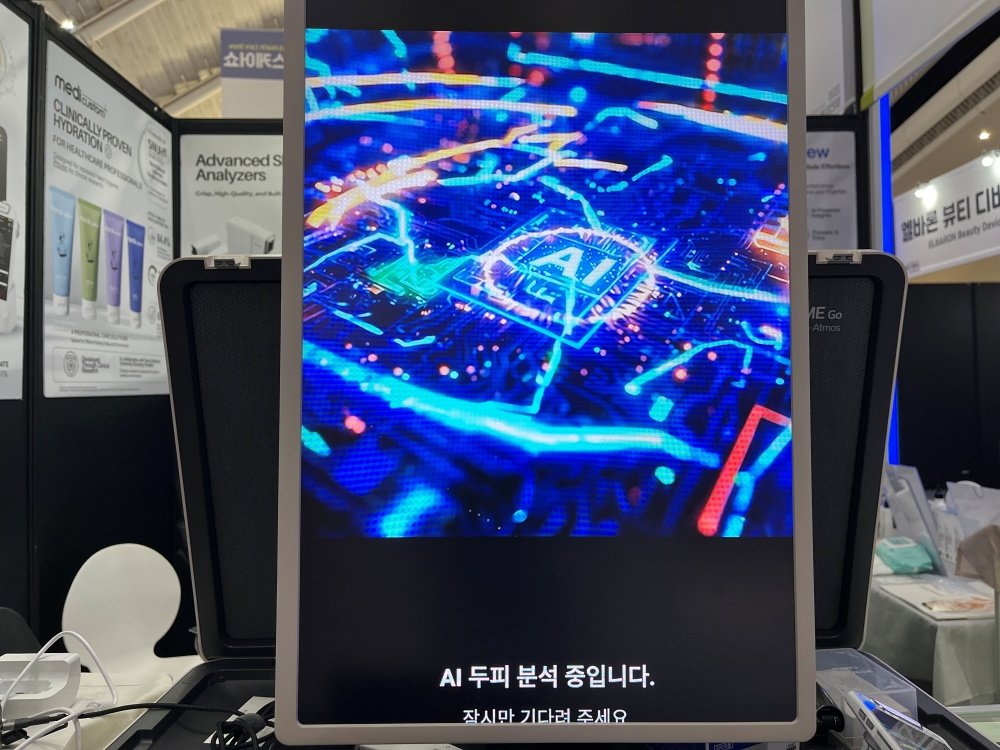
AI scalp analysis result: Sensitive type.
Arumhubis presented its AI scalp analysis system, 'AISG (AI Scalp Grader),' developed in collaboration with Bundang Seoul National University Hospital. This portable device uses a high-performance image sensor to capture scalp density, thickness, oiliness, and redness. Within seconds, AI analyzes the data, categorizing it into ten types and recommending personalized beauty products, such as shampoos and serums, to address specific concerns.
Alcanine's booth attracted considerable attention with its automated cervical traction device, 'Dr. Physio MC-9.' This product, registered with the Ministry of Food and Drug Safety as a medical device, uses three pistons to relax neck muscles and apply traction, with an AI weight-sensing system adjusting the intensity based on individual needs. Attendees reported feeling relief from neck and shoulder tension after a 20-minute trial.
It's a cervical correction device with an automatic traction method. Three pistons move to relax the neck bones, press the trapezius muscles to release tension, and then apply traction. The AI weight measurement sensor adjusts the traction intensity differently for each person.
Lavan showcased its 'Slaheap,' a pelvic floor muscle strengthening solution developed by trainer Jeon Yu-ri. Designed for ease of use, it allows users to strengthen inner thigh muscles by simply bringing their legs together while seated, a departure from traditional exercises. The device, made from 'Hybaglass,' a material used in helmet construction, can withstand over 100kg of weight. Lavan has already begun exporting Slaheap to Taiwan and Hong Kong, with discussions underway for entry into the Mexican market.
Unlike typical home training equipment, it automatically corrects posture with just the motion of bringing the legs together. It's designed so anyone can easily follow it by digitizing expert know-how.
Additionally, Waldin displayed its 'Tunerhip,' a massage device designed for core care. This chair-like device offers Kegel vibrations, pelvic pressure massage, and far-infrared heating, which can be used individually or simultaneously. One visitor commented that it felt more effective than premium massage chairs.
NuriEye, developed by Seodong Medical, claimed to improve vision in just 10 minutes. This eyeglass-shaped device has received official approval as a medical device for treating dry eye syndrome based on clinical trials and is exported internationally.
It feels more refreshing than famous premium massage chairs.
DistantNews Editorial
Originally published by Dong-A Ilbo in Korean. Translated, summarized, and contextualized by our editorial team with added local perspective. Read our editorial standards.
More Stories


From Our Blog

What Gets Lost (and Found) When News Is Translated

The Critical Role of Diaspora Media in Global News

What Travellers Should Know About Countries with Restricted Press

A Digital Nomad's Guide to Following Local News

How the Same Story Looks Different in Different Countries
