


AI Patrol Robots to Monitor Palaces and Royal Tombs, Detecting Fires and Intrusions
Translated from Korean, summarized and contextualized by DistantNews.
At a glance
News
Sources not specified
Ongoing story
- South Korea's Cultural Heritage Administration is deploying AI patrol robots in palaces and royal tombs starting May 24th to enhance safety and security.
- The robots will autonomously patrol designated areas, using cameras and sensors to detect real-time emergencies like fires, intrusions, or visitor collapses.
- Different robot types, including four-wheeled and bipedal models, will be tested in various environments like Deoksugung Palace and Seoorung Royal Tomb to assess their performance and suitability.
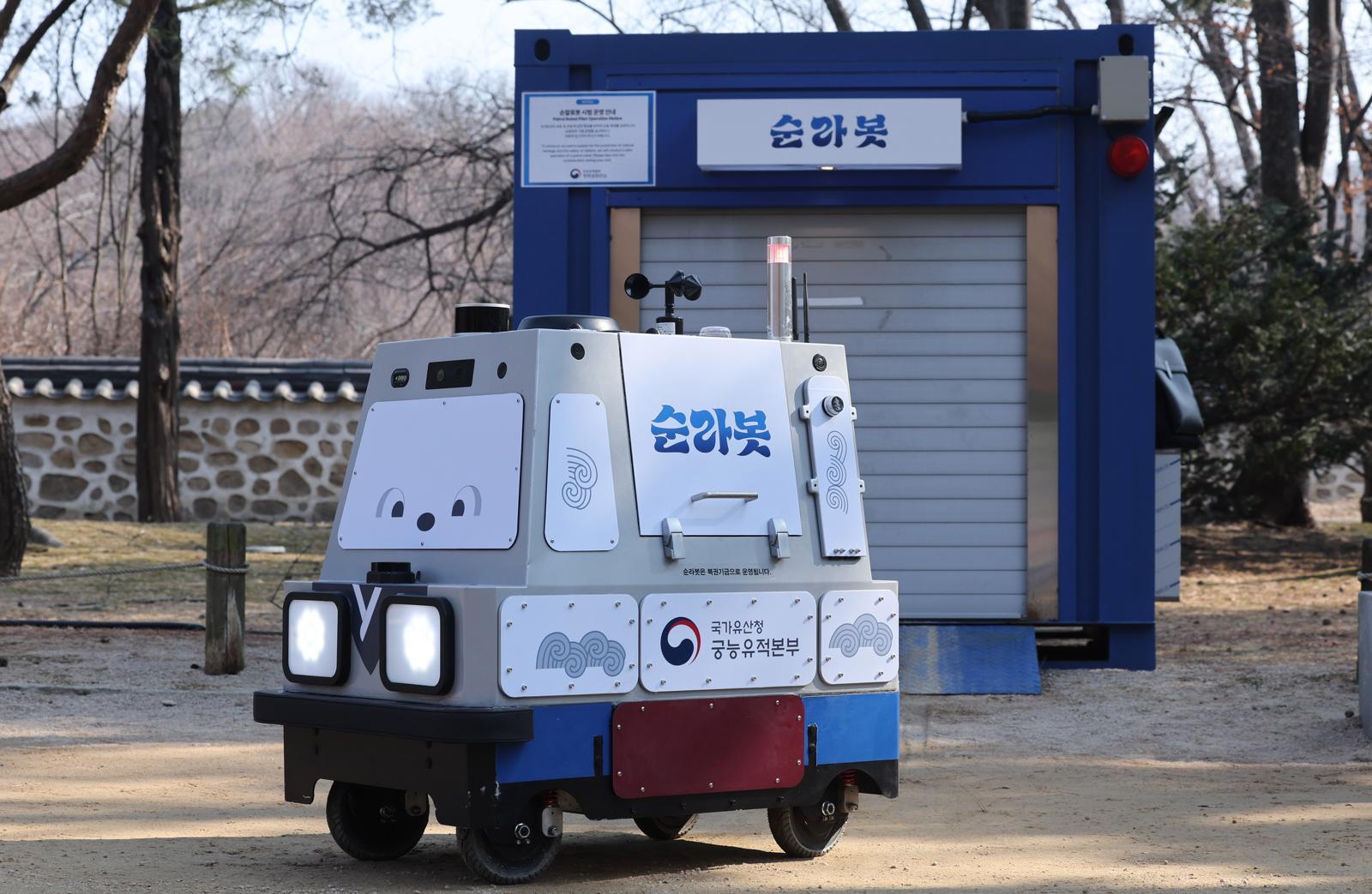
South Korea's Cultural Heritage Administration is set to enhance the safety and security of its historic palaces and royal tombs by deploying artificial intelligence (AI) patrol robots. The initiative, part of the Cultural Heritage Administration's Royal Tombs and Palaces Center, will begin a pilot operation from May 24th through November.
These AI robots are designed to autonomously patrol designated areas, supplementing existing human patrols. Equipped with advanced cameras and sensors, they will monitor for anomalies and potential emergencies, such as fires, unauthorized intrusions, or incidents involving visitors like collapses. The robots utilize LiDAR and vision AI for navigation and employ AI-powered video analysis to detect critical situations in real-time.
Palaces and royal tombs are distributed with various types of national heritage and facilities in a wide space, and the site conditions are also diverse, including narrow and winding routes, slopes and unpaved sections, and trees and cultural heritage facilities.
The pilot program will test robots with different mobility capabilities in varied terrains. A four-wheeled robot will patrol the relatively flat grounds of Deoksugung Palace, while a bipedal robot, capable of navigating more challenging landscapes, will be deployed at Seoorung Royal Tomb, known for its rugged terrain and slopes. This comparative approach aims to evaluate the robots' performance, obstacle-handling abilities, and surveillance functions in diverse environmental conditions.
In addition to detection, the robots will be integrated with a control center to issue guidance and warning broadcasts, thereby strengthening on-site monitoring and response efforts. This initiative follows a successful two-month trial of a single AI patrol robot at Changdeokgung Palace earlier this year, which provided valuable data for refining the technology for broader application.
It is important for patrol robots to have driving performance, obstacle response capabilities, and surveillance and detection functions that match the site characteristics.
DistantNews Editorial
Originally published by Dong-A Ilbo in Korean. Translated, summarized, and contextualized by our editorial team with added local perspective. Read our editorial standards.
More Stories


From Our Blog

What Gets Lost (and Found) When News Is Translated

The Critical Role of Diaspora Media in Global News

What Travellers Should Know About Countries with Restricted Press

A Digital Nomad's Guide to Following Local News

How the Same Story Looks Different in Different Countries
