


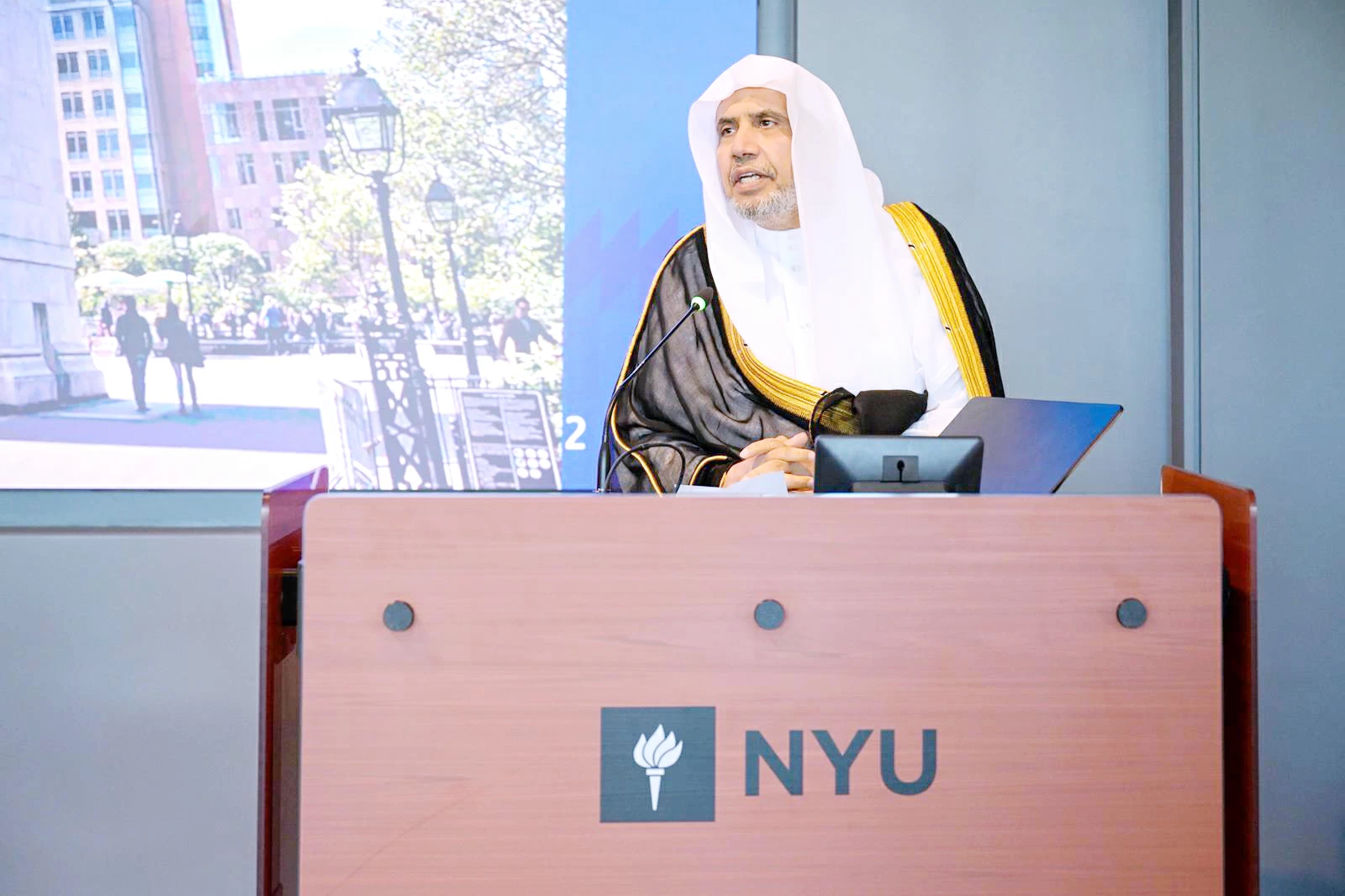
AI's Role in Hate Speech Discussed at NYU
Translated from Arabic and summarized by DistantNews. Read the original for the full story.
At a glance
News
Named sources
Context piece
- Sheikh Dr. Mohammed Abdulkarim Al-Issa addressed artificial intelligence's role in promoting hate speech at New York University.
- The discussion highlighted the responsibility of societal institutions, particularly religious ones, in combating online hate.
- Key topics included algorithmic targeting, digital amplification, and the risks of deepfake technology in spreading divisive content.
In a significant address at New York University, Sheikh Dr. Mohammed Abdulkarim Al-Issa, Secretary-General of the Muslim World League, tackled the increasingly urgent issue of artificial intelligence's role in amplifying hate speech. The lecture, followed by a robust dialogue with academics and guests, underscored the critical need for societal institutions, especially religious bodies, to confront this digital menace. Dr. Al-Issa presented a compelling analysis of the causes behind the rise of online hate and proposed practical solutions grounded in comprehensive research.
The discussion delved into the multifaceted challenges posed by AI, including the automatic generation of discriminatory or inciting content in text, images, and videos. A particular focus was placed on algorithmic targeting, where user behavior and interests are exploited to push divisive material to specific demographics, thereby increasing engagement. This manipulation of online spaces highlights the sophisticated methods used to spread harmful ideologies and sow discord.
Furthermore, the event addressed the phenomenon of digital amplification through coordinated networks and bots, which significantly expands the reach of hate speech and misinformation. The dangers of "deepfake" technology, capable of manipulating audio and visual content to defame individuals or groups and incite animosity, were also thoroughly examined. Dr. Al-Issa emphasized that the weaponization of AI in promoting hate speech necessitates a precise legal framework that balances freedom of expression with the imperative to protect society from incitement, while clearly defining legal responsibilities for digital actors and platforms.
The employment of artificial intelligence in promoting hate speech necessitates precise legal analysis based on achieving a balance between guaranteeing freedom of expression within its legitimate scope and protecting society from inciting content, while defining the legal responsibility of digital actors and technical platforms.
About this summary
Originally published by Okaz in Arabic. Translated, summarized, and contextualized automatically by DistantNews, with a note on how the source frames the story. Not individually reviewed before publishing. How this works.
More Stories



From Our Blog

What Gets Lost (and Found) When News Is Translated

The Critical Role of Diaspora Media in Global News

What Travellers Should Know About Countries with Restricted Press

A Digital Nomad's Guide to Following Local News

How the Same Story Looks Different in Different Countries
