


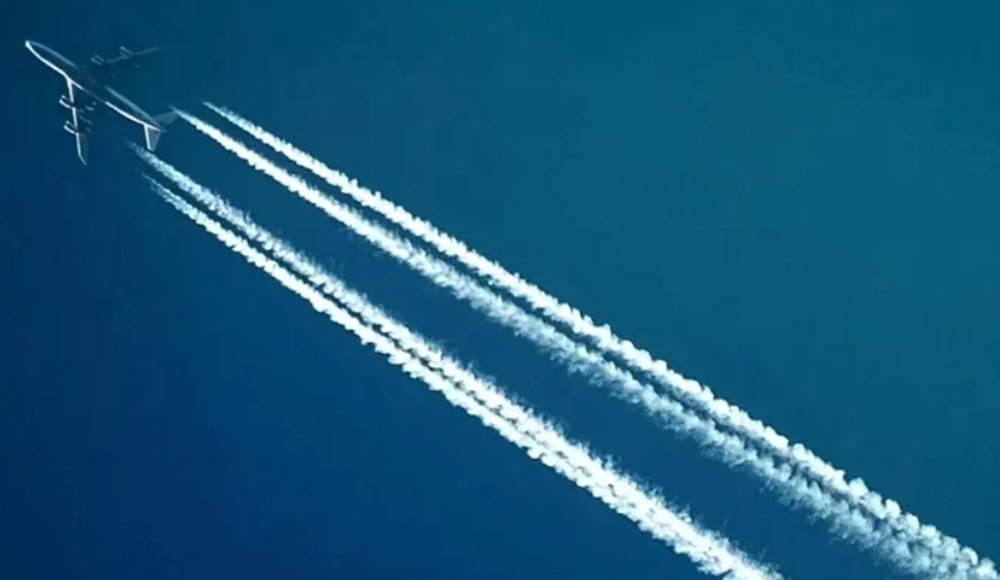
AI to Help Planes Avoid Climate-Warming Contrails Over North Atlantic
Translated from Romanian, summarized and contextualized by DistantNews.
At a glance
News
Sources not specified
Context piece
- A UK project will use AI to help planes avoid leaving persistent contrails that contribute to climate warming.
- The £5 million Operation Blue Skies initiative will test AI's ability to predict contrail formation zones.
- Flights over the North Atlantic's Shanwick airspace will have their altitudes adjusted to prevent heat-trapping contrails.
Planes leave white streaks across the sky, but some of these "contrails" can warm the climate. These ice crystal formations typically dissipate quickly. However, in very cold, humid air, they can expand into heat-trapping clouds. A new UK project, Operation Blue Skies, aims to use artificial intelligence to help planes avoid these warming contrails.
The £5 million program will use flight data, satellite imagery, and weather information to predict where warming contrails are likely to form. The tests will focus on Shanwick airspace over the North Atlantic, an area responsible for about 5% of the global warming effect from contrails. The project involves Google, the UK government, the Met Office, air traffic control service NATS, and researchers from Cambridge and Imperial College London.
During the 2026-2027 and 2027-2028 winters, about 10,000 flights are expected to cross the monitored airspace. A portion of these flights will adjust their altitude to avoid areas where contrails might form. The AI system will analyze atmospheric conditions and past contrail formation to anticipate future occurrences, allowing for proactive flight path adjustments.
DistantNews Editorial
Originally published by Adevărul in Romanian. Translated, summarized, and contextualized by our editorial team with added local perspective. Read our editorial standards.
More Stories

From Our Blog

What Gets Lost (and Found) When News Is Translated

The Critical Role of Diaspora Media in Global News

What Travellers Should Know About Countries with Restricted Press

A Digital Nomad's Guide to Following Local News

How the Same Story Looks Different in Different Countries
