


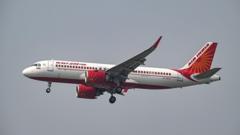
Air India pilot's reported cannabis test: What it can and can't tell investigators
Summarized and contextualized by DistantNews.
At a glance
News
Sources not specified
Under investigation
- Reports indicate an Air India pilot may have tested positive for cannabis after a flight where the plane lost altitude.
- The reported result has not been officially confirmed, and a positive test doesn't automatically prove impairment at the time of the incident.
- Investigations into the altitude loss are ongoing, examining multiple factors including technical, operational, and medical aspects.
Reports circulating in Indian media suggest that a pilot from Air India may have tested positive for cannabis following a flight on August 4, during which the aircraft experienced a sudden loss of altitude. The flight, an Airbus A320 traveling from Phuket to Delhi, dropped approximately 91 meters (300 feet), resulting in injuries to 13 passengers and four crew members. The plane, carrying 137 passengers and eight crew, landed safely in Delhi.
While the incident is under investigation by aviation authorities, the reported drug test result has not been officially confirmed by Air India or the aviation ministry. The ministry stated that the captain's initial screening produced a result requiring "confirmatory testing," and both pilots were removed from flying duties pending the inquiry. Even if a confirmatory test is positive, it does not automatically establish impairment at the specific time of the altitude loss.
Investigators are examining the incident broadly, considering technical, operational, medical, and human factors to determine the cause of the unexpected plunge. There is currently no official link established between the alleged drug test result and the aircraft's sudden descent. The complexity lies in interpreting a positive cannabis test, as the science of correlating a test result with impairment hours earlier is still developing.
Historical studies on cannabis and pilot performance, though dated, offer some insights. A 1976 simulator study found that pilots who smoked marijuana showed deteriorated performance for at least two to six hours. A 1986 study indicated significant performance declines even 24 hours after use, with pilots often unaware of their impairment. A 1991 study involving a controlled dose of THC also warned of cognitive and motor skill deficits.
DistantNews Editorial
Originally published by BBC News. Summarized and contextualized by our editorial team with added local perspective. Read our editorial standards.
More Stories



From Our Blog

What Gets Lost (and Found) When News Is Translated

The Critical Role of Diaspora Media in Global News

What Travellers Should Know About Countries with Restricted Press

A Digital Nomad's Guide to Following Local News

How the Same Story Looks Different in Different Countries
