

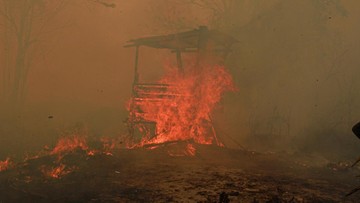
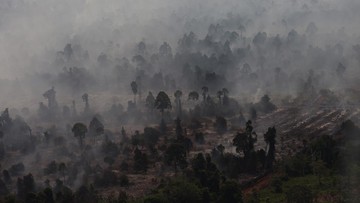
Air Quality in West Kalimantan Reaches Hazardous 'Black' Level Amidst Fires
Translated from Indonesian, summarized and contextualized by DistantNews.
At a glance
News
Sources not specified
Context piece
- Air quality in Kubu Raya, West Kalimantan, Indonesia, reached a hazardous 'black' category on Friday morning.
- The high concentration of PM2.5, measured at 276µg/m³, poses a significant health risk.
- This situation is linked to widespread forest and land fires, particularly in peatland areas, with other West Kalimantan regions also experiencing unhealthy air.
Air quality in Kubu Raya, West Kalimantan, Indonesia, has deteriorated to a dangerous 'black' or hazardous level, according to the Meteorology, Climatology, and Geophysics Agency (BMKG). As of Friday morning, August 21, the PM2.5 concentration reached 276µg/m³.
PM2.5 pollution, known for its small size that allows it to remain airborne for extended periods, is considered a major health threat. The elevated levels in Kubu Raya are strongly suspected to be a result of ongoing forest and land fires (karhutla), a recurring problem in the region due to its extensive peatland areas.
The Kubu Raya Regency government has activated its task force for forest and land fire prevention and management, extending efforts down to the village level. However, the air quality in other West Kalimantan regencies, such as Mempawah and Sintang, is also concerning, categorized as 'red' or very unhealthy.
Nationally, the Indonesian National Board for Disaster Management (BNPB) reported 1,487 hotspots across Kalimantan as of Thursday, August 20. West Kalimantan alone accounted for 560 of these hotspots, with Central Kalimantan having the largest share at 767.
DistantNews Editorial
Originally published by CNN Indonesia in Indonesian. Translated, summarized, and contextualized by our editorial team with added local perspective. Read our editorial standards.
More Stories


From Our Blog

What Gets Lost (and Found) When News Is Translated

The Critical Role of Diaspora Media in Global News

What Travellers Should Know About Countries with Restricted Press

A Digital Nomad's Guide to Following Local News

How the Same Story Looks Different in Different Countries
