


Alberta Counties Declare Agricultural Disaster Due to Heavy Rains
Translated from English, summarized and contextualized by DistantNews.
At a glance
News
Sources not specified
New plan
- Two rural counties north of Edmonton, Alberta, have declared a state of agricultural disaster due to relentless summer rainfall that has saturated farmland.
- Farmers in Westlock and Thorhild counties report significant crop losses, with some facing up to 50% damage to canola, wheat, barley, and peas.
- While the declarations raise awareness, they do not automatically trigger funding assistance, leaving farmers hoping for favorable weather or insurance payouts.
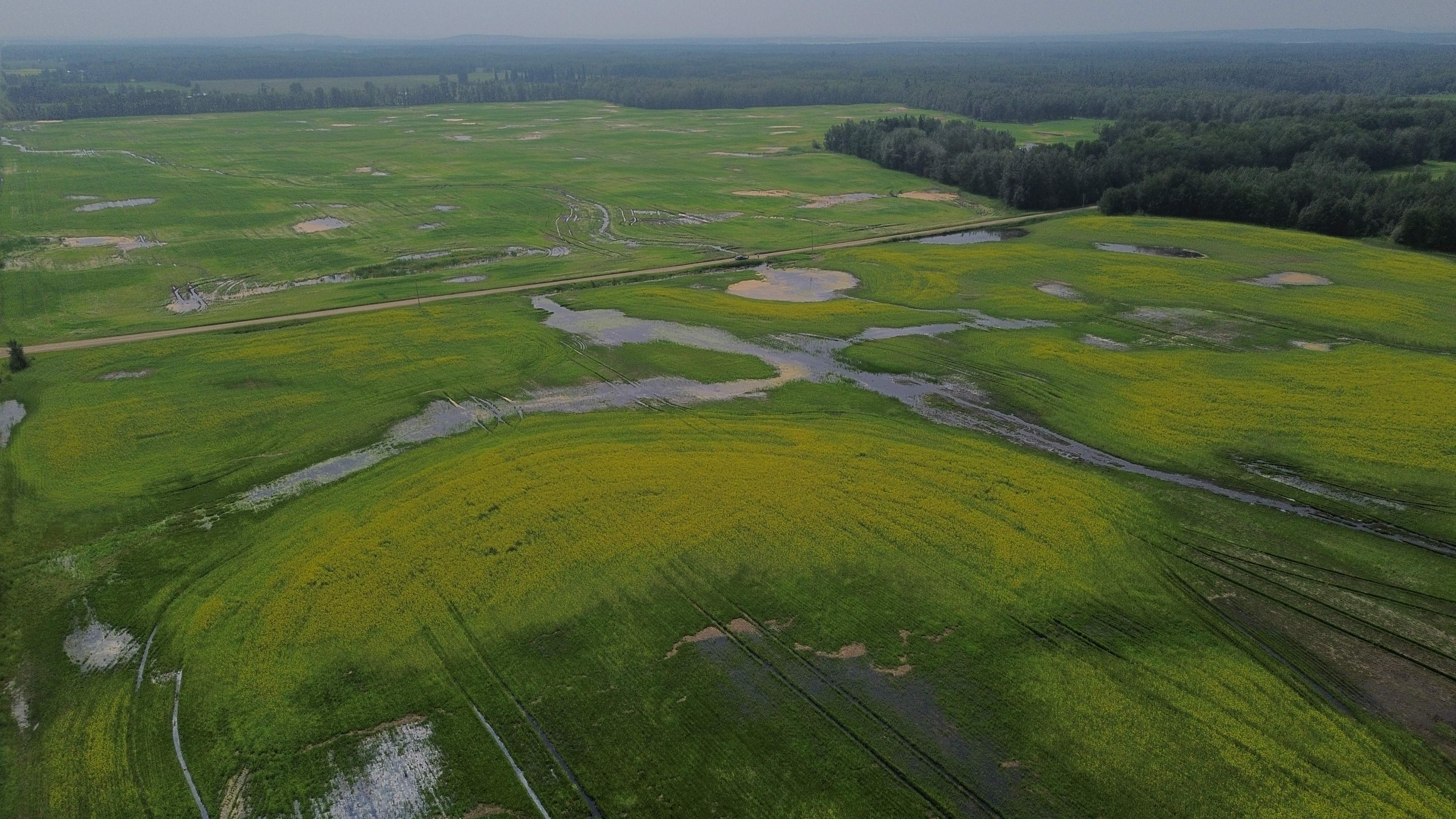
Westlock and Thorhild counties in Alberta have declared states of agricultural disaster, citing unprecedented summer rainfall that has left farmland drenched and crops struggling. The declarations acknowledge the severe impact of adverse weather on farming operations and aim to draw attention from provincial and federal governments to the challenges facing the agricultural community.
Once that ground is saturated, it’s like a sponge, you just can’t rid of it. It’s draining, but it’s so wet… it’s just unreal.
Harry DeWindt, a farmer near Thorhild for decades, described the current summer as the wettest he can recall. "Once that ground is saturated, it’s like a sponge, you just can’t rid of it," he said, noting the "unreal" conditions. Thorhild County officially declared its disaster status on July 17, following record rainfall in June and subsequent intense storms in July.
Westlock County council made a similar declaration on July 12, pointing to excessive moisture, saturated soils, drowned crop acres, premature grain crop heading, reduced yield potential, and below-average hay and silage production. While these declarations highlight the farmers' plight, they do not automatically unlock municipal, provincial, or federal funding.
The county said the declaration acknowledges the significant impacts adverse weather conditions have had on farming operations, and also serve to raise awareness with provincial and federal governments about the challenges the agricultural community is facing.
DeWindt estimates he has already lost 25 to 30 percent of his crops, including canola, wheat, barley, and peas. He anticipates a clearer picture of his total losses once harvest yields are assessed later in the year. The poor growing conditions are expected to impact the local economy, with farmers like DeWindt postponing purchases of new equipment.
Westlock also acknowledged the declaration does not automatically trigger municipal, provincial or federal funding assistance but does help raise awareness of the struggles farmers are experiencing.
Some farmers are reporting crop losses as high as 50 percent. Thorhild County Reeve Trevor Dafoe acknowledged the weather-dependent nature of farming, stating, "We just need some warm, dry weather for a few weeks to help get things back on track." In a stark illustration of the difficult situation, DeWindt even expressed a hope for hail, as it would trigger insurance payouts and cover his expenses.
This is farming right? It’s weather-dependent so we just need some warm, dry weather for a few weeks to help get things back on track.
DistantNews Editorial
Originally published by Global News in English. Translated, summarized, and contextualized by our editorial team with added local perspective. Read our editorial standards.
More Stories

From Our Blog

What Gets Lost (and Found) When News Is Translated

The Critical Role of Diaspora Media in Global News

What Travellers Should Know About Countries with Restricted Press

A Digital Nomad's Guide to Following Local News

How the Same Story Looks Different in Different Countries
