

Algeria's Election Crisis: Record Low Turnout Signals Party Failure
Translated from French, summarized and contextualized by DistantNews.
At a glance
Analysis
Sources not specified
Outcome reported
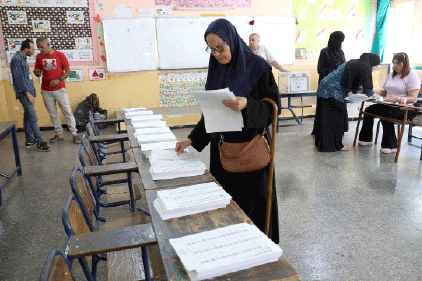
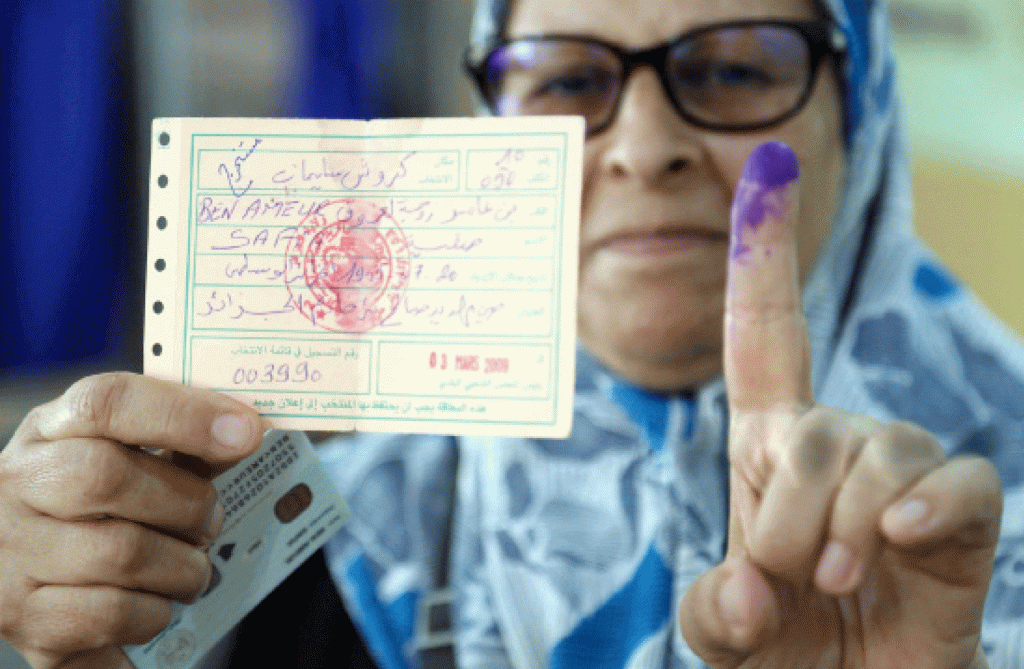
- Algeria's legislative election on July 2, 2026, saw a provisional national turnout of only 20.79%.
- This low participation rate is significantly lower than in previous Algerian elections, where such figures would typically trigger political maneuvering.
- The article suggests that traditional political parties are failing to connect with voters, leading to a crisis in the electoral process.
Algeria's legislative election on July 2, 2026, has concluded with a starkly low provisional national turnout of 20.79%. This figure represents a significant departure from past electoral cycles, where such a low participation rate would have historically prompted urgent responses from political leadership and electoral bodies.
The article suggests that the established political parties are facing a profound crisis, unable to engage the electorate or inspire confidence in the democratic process. The low turnout indicates a disconnect between the political establishment and the citizens, raising questions about the legitimacy and representativeness of the elected government.
In previous eras of Algerian politics, a participation rate this low would have triggered immediate concern and likely led to intense political strategizing or conventional electoral engineering. However, the current situation appears to reflect a deeper malaise, where the traditional mechanisms of political engagement have lost their efficacy. The end of political quotas, mentioned in the title, may also be a factor contributing to this electoral disengagement, leaving parties without their usual frameworks for success.
DistantNews Editorial
Originally published by El Watan in French. Translated, summarized, and contextualized by our editorial team with added local perspective. Read our editorial standards.
More Stories

From Our Blog

What Gets Lost (and Found) When News Is Translated

The Critical Role of Diaspora Media in Global News

What Travellers Should Know About Countries with Restricted Press

A Digital Nomad's Guide to Following Local News

How the Same Story Looks Different in Different Countries
