


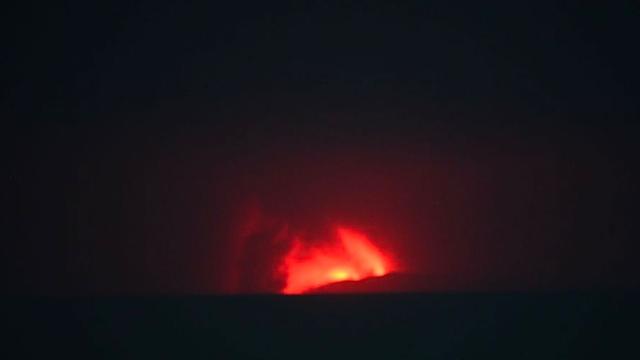

Anak Krakatau eruption partially halts flights in Jakarta
Translated from German and summarized by DistantNews. Read the original for the full story.
At a glance
Newswire
From a news agency
Ongoing story
- Ash from the erupting Anak Krakatau volcano forced Jakarta's Soekarno-Hatta International Airport to suspend operations until 9:30 a.m. local time, with more than 200 flights canceled, Indonesia's Transport Ministry said.
- The volcano erupted on Friday and sent ash up to 15,000 meters, prompting authorities to urge residents to remain alert and wear masks during ashfall.
- Anak Krakatau's past activity includes the 2018 tsunami that killed hundreds on Java and Sumatra, while the original Krakatau eruption in 1883 killed about 36,000 people.
Ash clouds from Indonesia's Anak Krakatau volcano brought Jakarta's air traffic to a partial standstill. More than 200 flights were canceled because of the ash, according to the Transport Ministry, and Soekarno-Hatta International Airport suspended operations until 9:30 a.m. local time.
The volcano erupted again on Friday, throwing ash as high as 15,000 meters. Indonesia's disaster management agency urged residents to stay alert and wear masks when ash falls. Local media reported that several schools canceled classes on Saturday after students and residents complained of eye irritation caused by the ash.
Anak Krakatau sits on a small island between Java, home to Jakarta, and Sumatra. Its history gives the latest eruption a particularly serious backdrop. In 2018, the volcano triggered a tsunami that killed hundreds of people on Java and Sumatra.
The present-day volcano, whose name means “Child of Krakatau” in Indonesian, emerged about 100 years ago after the original Krakatau was destroyed in the massive eruption of 1883. That eruption sent ash clouds up to 80 kilometers into the sky and triggered several tsunamis, killing about 36,000 people. Its final explosion is considered the loudest sound ever heard on Earth in modern history. The ash reduced sunlight worldwide and lowered global temperatures for several years.
About this summary
Originally published by Die Zeit in German. Translated, summarized, and contextualized automatically by DistantNews, with a note on how the source frames the story. Not individually reviewed before publishing. How this works.
More Stories


From Our Blog

News in Translation: What Gets Lost, and How We Keep the Framing

The Same Story, Different Countries: How Coverage Changes at the Border

Diaspora Media: How Communities Follow News From Home

Traveling Where the Press Is Not Free: How to Read the News There

The Digital Nomad's Guide to Local News
