


Ancient Korean dogs had wolf-like skulls, genetic links to modern breeds found
Translated from Korean and summarized by DistantNews. Read the original for the full story.
At a glance
News
Sources not specified
Context piece
- Researchers analyzed ancient dog skulls from Silla-related sites in South Korea, finding they had skull shapes closer to wolves than other ancient dogs.
- Genome analysis of dogs from sites like Sacheon Woldo revealed genetic links to ancient East Asian dog lineages, with similar traces found in modern Jindo, Donggyeongi, and Sapsal dogs.
- The study suggests ancient Korean dogs varied in size, with some being medium to large, and their movement might have been linked to human migration and trade routes.
Thousands of years ago, dogs on the Korean Peninsula shared their lives with humans, but their appearance and lineage remain a subject of study. Recent research analyzing ancient dog bones and genomes from historical sites has shed light on these ancient canine companions.
The dogs from Silla-related sites showed skull shapes closer to wolves than other ancient dogs.
Analysis of dog skulls excavated from Sungsansanseong and Gyeongju, sites linked to the Silla Kingdom, revealed that these ancient dogs possessed skull shapes relatively closer to wolves compared to other ancient dogs studied. Notably, a dog from Sungsansanseong exhibited a skull shape most similar to gray wolves among the analyzed ancient canines. Sungsansanseong is known to have been built after Silla's annexation of Gaya, with the dog bones dated to the late 6th century. One interpretation suggests that dogs with features closer to wolves might have been selectively bred for specific functions, such as military or hunting purposes.
The genome of dogs from Woldo and Bonghwangdong showed a close genetic relationship with ancient East Asian dog lineages.
Genetic analysis further connects ancient Korean dogs to their modern descendants. Genome sequencing of three dogs from Sacheon Woldo and one from Gimhae Bonghwangdong showed a close genetic relationship with ancient East Asian dog lineages, similar to modern New Guinea Singing Dogs and Dingoes. Intriguingly, modern Korean breeds like the Jindo, Donggyeongi, and Sapsal also carry genetic components derived from these ancient East Asian dogs. However, researchers caution that it's not yet possible to definitively state that the dogs from Woldo and Bonghwangdong are direct ancestors of these modern Korean breeds, due to a limited number of available genome data from ancient dogs across different periods.
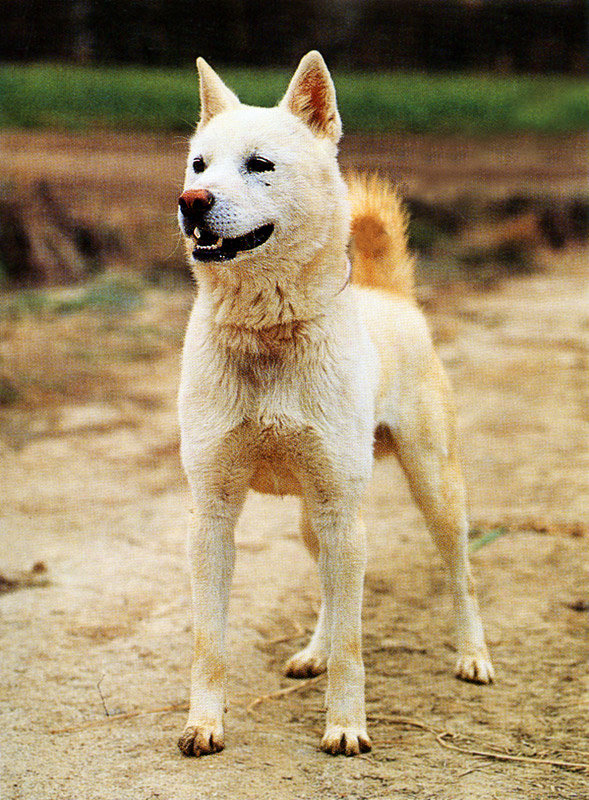
The genome components derived from ancient East Asian dogs were confirmed in today's Jindo dogs, Donggyeongi, and Sapsal dogs.
The size of ancient Korean dogs also varied. Excavations at Sacheon Woldo, a key site from the Early Iron Age to the Proto-Three Kingdoms period, have uncovered over 30 buried dogs. The estimated shoulder height of mature individuals ranged from 36.4 to 52.33 cm, with an average of 46.72 cm. Some of these dogs were medium to large, comparable to or larger than medium-sized dogs from Japan's Yayoi period during the same era. This indicates the coexistence of both medium and larger dog types on the Korean Peninsula in the Early Iron Age. The findings also align with Woldo's role as an ancient maritime trade hub, as some Yayoi period dogs in Japan show similarities to dogs found in Korea, while others retained characteristics of the older Jomon lineage. This suggests the potential introduction of new dog populations and the coexistence of existing ones after the Yayoi period, possibly indicating that dogs, like rice cultivation, moved with human migration.
The Yayoi period dogs showed similar forms to dogs excavated in Korea, while some retained the characteristics of the existing Jomon dogs, suggesting the possibility of new dog groups entering and coexisting with existing groups after the Yayoi period.
About this summary
Originally published by Dong-A Ilbo in Korean. Translated, summarized, and contextualized automatically by DistantNews, with a note on how the source frames the story. Not individually reviewed before publishing. How this works.
More Stories



From Our Blog

What Gets Lost (and Found) When News Is Translated

The Critical Role of Diaspora Media in Global News

What Travellers Should Know About Countries with Restricted Press

A Digital Nomad's Guide to Following Local News

How the Same Story Looks Different in Different Countries
