

/nginx/o/2026/08/11/17841484t1h49f5.jpg)
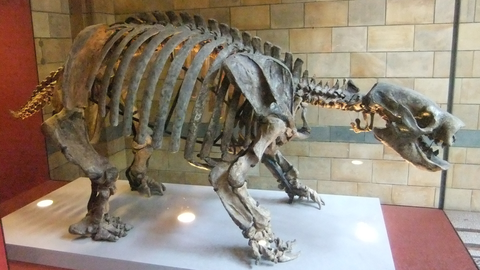
Ancient Sloth Bones Suggest Humans Arrived in South America Thousands of Years Earlier
Translated from Estonian, summarized and contextualized by DistantNews.
At a glance
News
Sources not specified
Context piece
- Archaeologists in Brazil have discovered 27,000-year-old giant sloth bone fragments with apparent cut marks.
- These findings suggest humans may have arrived in South America thousands of years earlier than previously believed.
- The discovery has sparked a debate among scientists regarding the origin of the marks, with some arguing they are evidence of early human activity and others suggesting natural causes.
Archaeologists in Brazil have unearthed giant sloth bone fragments dating back 27,000 years, bearing marks that suggest early human intervention. This discovery could potentially push back the timeline for human arrival in South America by thousands of years, igniting a significant scientific debate.
The bone fragments, found in a rock shelter in Brazil, exhibit holes that researchers interpret as evidence of human tool use. If confirmed, these marks would represent the oldest evidence of human presence on the continent. The findings challenge the established understanding of when and how the first humans populated South America.
However, the interpretation of these marks is contentious. While some scientists believe they were deliberately made by humans, possibly for crafting tools or ornaments, others propose that the marks could be the result of natural processes, such as animal activity or geological weathering. This disagreement pits archaeologists, geologists, and geneticists against each other, casting doubt on previously established dates for human migration.
The debate centers on re-evaluating evidence, including findings from the famous Monte Verde site in Chile. The controversy highlights the ongoing quest to understand the complex history of human settlement in the Americas and the challenges of interpreting ancient evidence. The implications of these findings, if validated, would reshape our understanding of early human migration patterns and capabilities.
DistantNews Editorial
Originally published by Postimees in Estonian. Translated, summarized, and contextualized by our editorial team with added local perspective. Read our editorial standards.
More Stories
/nginx/o/2025/04/13/16776514t1hfd2d.jpg)
/nginx/o/2026/08/11/17841582t1h61ae.jpg)

From Our Blog

What Gets Lost (and Found) When News Is Translated

The Critical Role of Diaspora Media in Global News

What Travellers Should Know About Countries with Restricted Press

A Digital Nomad's Guide to Following Local News

How the Same Story Looks Different in Different Countries
