


Ancient Societies of Up to 3 Million People Existed in Amazon 2,500 Years Ago
Translated from Korean, summarized and contextualized by DistantNews.
At a glance
News
Sources not specified
New plan
- Advanced ancient societies, numbering up to 3 million people, existed in the Amazon rainforest 2,500 years ago, according to new research.
- Archaeological evidence, including hundreds of earth structures, was discovered using advanced laser technology (LiDAR) in a remote region near the borders of Bolivia, Brazil, and Peru.
- These findings challenge previous notions about the Amazon's pre-Columbian inhabitants, revealing a complex and large-scale civilization that significantly altered the landscape.
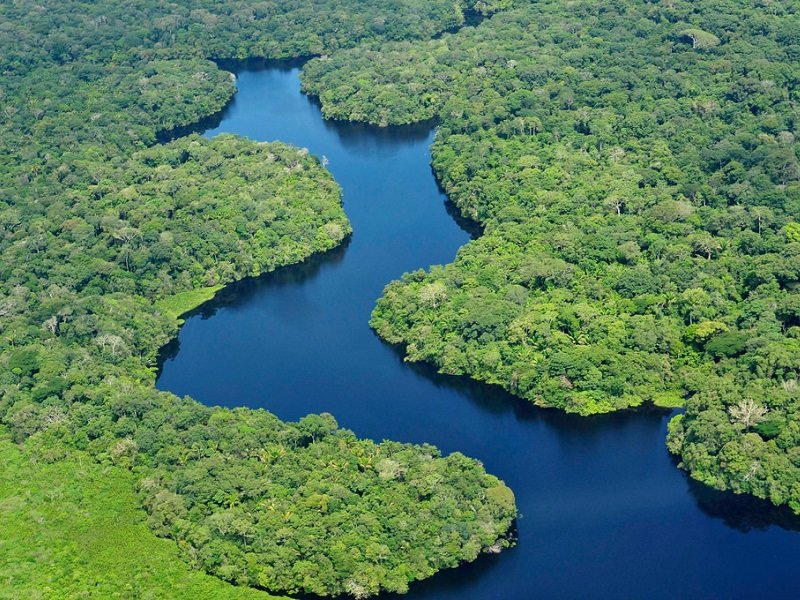
A groundbreaking study reveals that sophisticated societies, potentially housing up to 3 million people, thrived deep within the Amazon rainforest 2,500 years ago. This discovery, detailed in the journal Nature, challenges long-held assumptions about the region's pre-Columbian past.
Using advanced laser technology known as LiDAR, researchers scanned the dense forests near the borders of Bolivia, Brazil, and Peru. The technology penetrated the thick canopy to reveal hundreds of previously unknown man-made structures. These earthworks, including mounds, ditches, and embankments, are estimated to date between 600 BCE and 850 CE.
Many of these structures were substantial, with some covering approximately 8,500 square meters and featuring ditches up to 9 meters wide and 4.5 meters deep. The largest identified structure spanned over 147,000 square meters, indicating a significant scale of human engineering and settlement. Archaeologists describe these findings as clear evidence of how extensively the landscape was transformed by inhabitants in the pre-Columbian era.
"This is a clear example of how much the landscape was modified in southwestern Amazonia in the pre-Columbian period," said José Iriarte, a professor of archaeology at the University of Exeter. Martti Pärssinen, a professor emeritus at the University of Helsinki, noted the complexity and organization required to build such extensive settlements, suggesting a highly developed social structure.
The discovery paints a picture of a complex, interconnected civilization that actively shaped its environment. It suggests that the Amazon was not a pristine wilderness untouched by humans but a landscape managed and modified by large, organized populations for centuries before European arrival.
This is a clear example of how much the landscape was modified in southwestern Amazonia in the pre-Columbian period.
DistantNews Editorial
Originally published by Dong-A Ilbo in Korean. Translated, summarized, and contextualized by our editorial team with added local perspective. Read our editorial standards.
More Stories


From Our Blog

What Gets Lost (and Found) When News Is Translated

The Critical Role of Diaspora Media in Global News

What Travellers Should Know About Countries with Restricted Press

A Digital Nomad's Guide to Following Local News

How the Same Story Looks Different in Different Countries
