

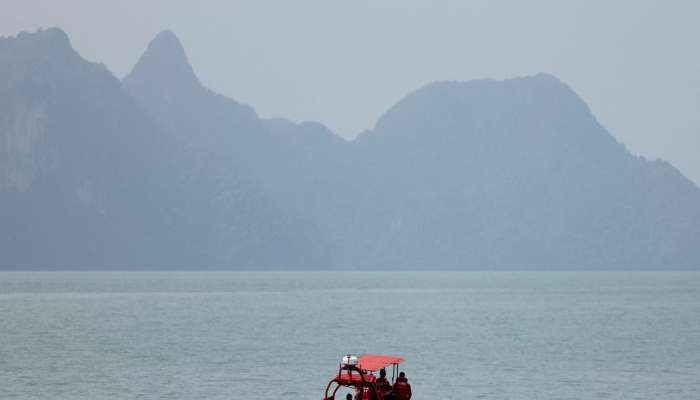
Andaman Sea tragedy: 250 feared dead as overcrowded trawler carrying refugees capsizes
Summarized and contextualized by DistantNews.
TLDR
- A search and rescue operation is underway in the Andaman Sea after a trawler carrying approximately 250 Rohingya refugees and Bangladeshi nationals capsized.
- The UN and IOM stated that violence in Rakhine State, shrinking humanitarian aid, and limited opportunities are pushing refugees to take dangerous sea journeys.
- The agencies urged international solidarity and funding to address the root causes of displacement and prevent further loss of life at sea.
The Andaman Sea has become a graveyard for desperate souls seeking a better life, a grim reality starkly highlighted by the capsizing of a trawler carrying an estimated 250 Rohingya refugees and Bangladeshi nationals. This tragedy, occurring as the region marks the Bengali New Year, serves as a somber reminder of the perilous journeys undertaken by those fleeing persecution and poverty.
This tragic incident reflects the dire consequences of protracted displacement and the absence of durable solutions for the Rohingya. Ongoing violence in Rakhine State has faded hopes of safe return in the near future, while shrinking humanitarian assistance, challenging living conditions in refugee camps, and limited access to education and livelihoods are pushing refugees to take such dangerous sea journeys in search of safety and opportunity.
The United Nations High Commissioner for Refugees (UNHCR) and the International Organisation for Migration (IOM) have voiced their deep sorrow, but their words carry a weight of urgency. They point to the ongoing violence in Myanmar's Rakhine State, the dwindling humanitarian assistance, and the challenging conditions in refugee camps as primary drivers pushing vulnerable people, including families, women, and children, to risk everything on overcrowded vessels. The allure of better wages abroad, often fueled by misinformation from smuggling networks, makes these dangerous voyages seem like the only viable option.
The promise of better wages abroad, often coupled with misinformation spread by smuggling networks, drives individuals, Rohingya and Bangladeshi nationals, to take significant risks. These factors create conditions in which smugglers and traffickers can exploit vulnerabilities, placing lives at grave risk. The Andaman Sea continues to claim the lives of people undertaking these perilous journeys.
This incident underscores a critical failure in providing durable solutions for the Rohingya crisis. While Bangladesh has shown immense generosity in hosting hundreds of thousands of refugees, the lack of progress in addressing the root causes of displacement in Myanmar leaves these communities in a state of protracted uncertainty. The international community's sustained funding and solidarity are not just desirable but essential to prevent more lives from being lost on these treacherous routes.
We urgently call on the international community to step up solidarity and sustain funding to support lifesaving assistance for Rohingya refugees in Bangladesh as well as support for the Bangladeshi host communities. As Bangladesh marks its new year, this tragedy is a reminder of the efforts urgently needed to address the root causes of displacement in Myanmar and create conditions that would allow Rohingya refugees to return home voluntarily, safely and with dignity.
From our perspective in Oman, this tragedy is a stark illustration of the human cost of unresolved conflicts and the desperation that can drive individuals to such extreme measures. While international news may focus on the statistics and the rescue efforts, we see the faces of families, the hopes dashed, and the urgent need for comprehensive solutions that go beyond temporary aid. The Andaman Sea's dark waters have once again claimed lives, a silent testament to the ongoing humanitarian crisis that demands a more robust and compassionate global response.
Without collective action, more lives will be lost at sea and on desperate journeys through deadly routes.
DistantNews Editorial
Originally published by Times of Oman. Summarized and contextualized by our editorial team with added local perspective. Read our editorial standards.
More Stories



From Our Blog

What Gets Lost (and Found) When News Is Translated

The Critical Role of Diaspora Media in Global News

What Travellers Should Know About Countries with Restricted Press

A Digital Nomad's Guide to Following Local News

How the Same Story Looks Different in Different Countries
