


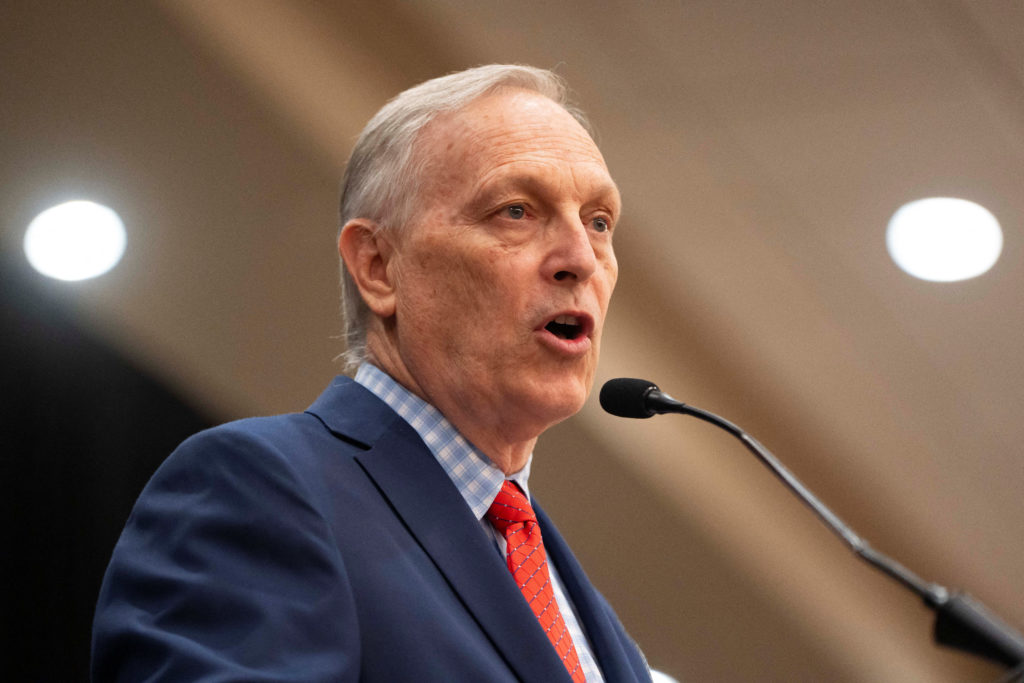
Andy Biggs and David Schweikert offer competing visions for Republican Party in Arizona governor primary
Summarized and contextualized by DistantNews.
At a glance
News
Named sources
Ongoing story
- U.S. Representatives Andy Biggs and David Schweikert are competing in Arizona's Republican gubernatorial primary.
- Their race highlights a clash between two visions for the state's Republican Party: Biggs' hard-line, Trump-aligned conservatism versus Schweikert's more pragmatic approach.
- Republicans in Arizona have struggled in recent statewide elections, with Trump's endorsement proving a double-edged sword since 2018.
In Arizona's Republican gubernatorial primary, U.S. Representatives Andy Biggs and David Schweikert are locked in a battle of competing visions for the state's GOP. Biggs, a staunch conservative and former head of the House Freedom Caucus, champions Donald Trump's agenda and has frustrated establishment leaders with his hard-line tactics.
Schweikert, however, argues that such uncompromising approaches are detrimental in Arizona, where Republicans have seen their power wane as voters reject nominees perceived as too extreme. He advocates for a more pragmatic strategy to revive the party and challenge Democratic Governor Katie Hobbs, who is considered vulnerable.
Biggs lives in a district where if he were a turtle running as a Republican, you're going to win it. Schweikert lives in a district that's very much like the state of Arizona, where he has to win the independents. And he's done it eight times in the last 16 years.
Biggs' alliance with Trump is his primary asset, yet it presents a challenge in Arizona. While no Republican candidate endorsed by Trump has lost a statewide primary in the state, only one, former Governor Doug Ducey, has won a subsequent general election since 2018. This trend has led to Democrats holding key statewide offices despite Republicans outnumbering Democrats and independents combined.
The race reflects a broader shift within the Republican Party. Biggs has attempted to moderate his image, downplaying his past support for challenging the 2020 election results and highlighting instances of bipartisan cooperation. However, some voters, like Kathy Babits, remain steadfast in their support for Biggs, believing his core message resonates with the base. Schweikert, meanwhile, is attempting to appeal to independents and moderate Republicans, a strategy that has proven successful for him in his own district.
As long as people get behind him and as long as things don't change too much, I'm in favor.
DistantNews Editorial
Originally published by PBS NewsHour. Summarized and contextualized by our editorial team with added local perspective. Read our editorial standards.
More Stories


From Our Blog

How the Same Story Looks Different in Different Countries

What Gets Lost (and Found) When News Is Translated

The Critical Role of Diaspora Media in Global News

What Travellers Should Know About Countries with Restricted Press

A Digital Nomad's Guide to Following Local News
