


Ankara, Riyadh, Cairo, Islamabad Forge New Regional Bloc Amid Shifting Alliances
Translated from English, summarized and contextualized by DistantNews.
At a glance
News
Sources not specified
Context piece
- Türkiye, Saudi Arabia, Egypt, and Pakistan have expanded security and diplomatic consultations into a broader regional framework.
- This realignment is driven by shared exposure to a regional order they cannot control independently, particularly after the Strait of Hormuz closure and U.S.-Iran conflict.
- The emerging bloc excludes the UAE, signaling Riyadh's willingness to reshape alliances based on threat perception rather than just shared geography.
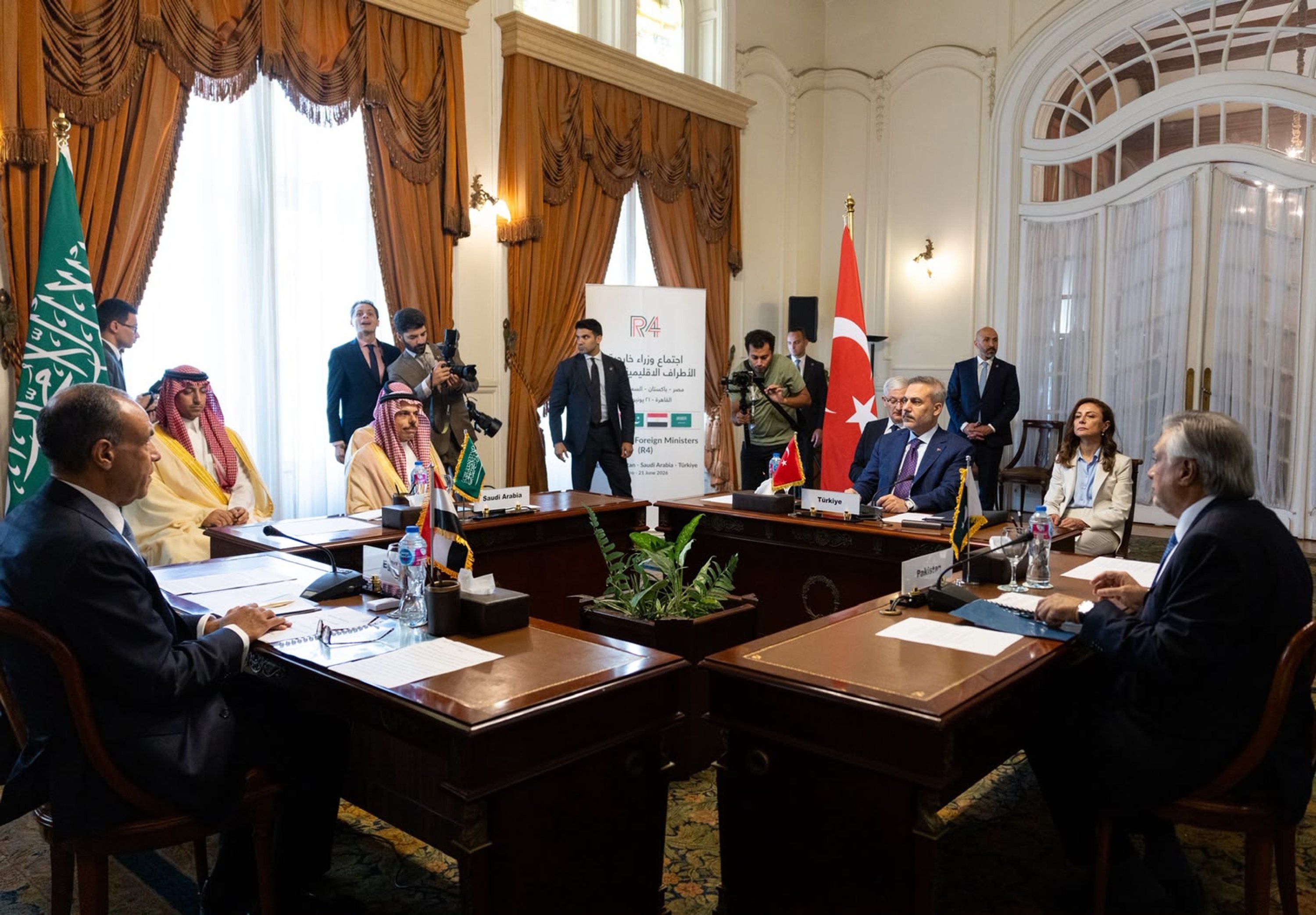
Relations between Türkiye, Saudi Arabia, and Egypt have seen steady improvement in recent years. This trilateral engagement has evolved into a broader framework, now including Pakistan, especially after the outbreak of the U.S.-Israeli war against Iran in late February 2026. The increased ministerial-level consultations and the platform involving these four countries are reshaping the region's security architecture.
The primary driver for this realignment is the shared vulnerability of Ankara, Riyadh, Cairo, and Islamabad to a regional order they cannot manage alone. This became starkly evident following Iran's closure of the Strait of Hormuz and a subsequent U.S. naval blockade. Attacks by the U.S. and Israel into areas previously considered secured by Washington prompted Riyadh to re-evaluate its reliance on American security guarantees. Saudi Arabia's mutual defense pact with Pakistan, signed in September, had already indicated a search for alternative security arrangements.
While formal joint defense commitments among the four states are still absent, the increasing frequency of their diplomatic engagements is lending significant institutional weight to their informal framework. Emboldened by their shared experience during the February war, the quartet has focused on consolidating a joint consultative mechanism. They convened three times between March 19 and April 18 alone, meeting in Riyadh, Pakistan, and on the sidelines of the Antalya Diplomacy Forum.
Notably, this grouping has emerged while pointedly excluding the United Arab Emirates, historically Riyadh's closest Gulf partner. This exclusion, particularly after Abu Dhabi's withdrawal from OPEC and its strategic divergence from Saudi and broader GCC positions, highlights Riyadh's readiness to recompose regional alliances around states that align with its threat perception, rather than solely those sharing geography and history. The axis appears to be working towards reducing dependence on a Washington-centered order perceived as failing to prevent regional escalation.
Recent developments have further clarified the axis's objectives. The convergence between Türkiye, Saudi Arabia, and Egypt, particularly after Ankara's decade-long rift with Cairo eased, has been significant. This rapprochement initially took shape through a military cooperation agreement in February, reinforced by a $350 million Turkish arms deal with Cairo.
DistantNews Editorial
Originally published by Daily Sabah in English. Translated, summarized, and contextualized by our editorial team with added local perspective. Read our editorial standards.
More Stories


From Our Blog

What Gets Lost (and Found) When News Is Translated

The Critical Role of Diaspora Media in Global News

What Travellers Should Know About Countries with Restricted Press

A Digital Nomad's Guide to Following Local News

How the Same Story Looks Different in Different Countries
