

/nginx/o/2022/06/05/14605563t1h5f73.jpg)
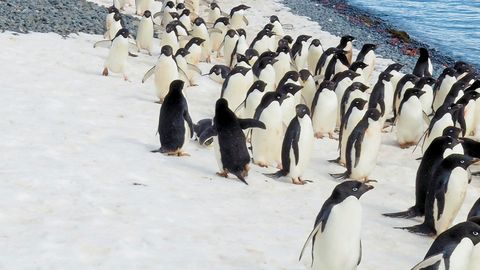
Antarctic guides resign: 'We can no longer be part of this deception!'
Translated from Estonian, summarized and contextualized by DistantNews.
At a glance
News
Sources not specified
Context piece
- Tourists visiting Antarctica are increasing annually, despite the region's vulnerability to climate change.
- Critics argue that the significant carbon emissions generated by travel to Antarctica contradict the need for climate awareness.
- There is a growing sentiment among some Antarctic guides that they can no longer endorse this perceived hypocrisy.
Antarctica, a vast and remote continent, is experiencing a surge in tourism, drawing an ever-increasing number of visitors each year. While the continent's stark beauty attracts global travelers, its delicate ecosystem is highly susceptible to the impacts of climate change, a reality that many believe should be evident to all who journey there.
However, a growing concern highlights the environmental paradox of Antarctic tourism. The very act of traveling to this pristine environment, often involving long-haul flights and specialized transport, generates substantial carbon dioxide emissions. Critics argue that this significant carbon footprint directly undermines the message of climate awareness that visitors are expected to absorb upon experiencing the region's environmental fragility.
This disconnect has led to a point of contention, with some individuals working as guides in Antarctica expressing their disillusionment. These guides reportedly feel they can no longer ethically support or participate in a system that, in their view, promotes a form of deception. Their stance suggests a moral conflict between the allure of Antarctic exploration and the urgent need for climate action, questioning the true impact of tourism on raising environmental consciousness.
DistantNews Editorial
Originally published by Postimees in Estonian. Translated, summarized, and contextualized by our editorial team with added local perspective. Read our editorial standards.
More Stories

/nginx/o/2026/08/05/17829920t1h2a2b.jpg)
From Our Blog

What Gets Lost (and Found) When News Is Translated

The Critical Role of Diaspora Media in Global News

What Travellers Should Know About Countries with Restricted Press

A Digital Nomad's Guide to Following Local News

How the Same Story Looks Different in Different Countries
