


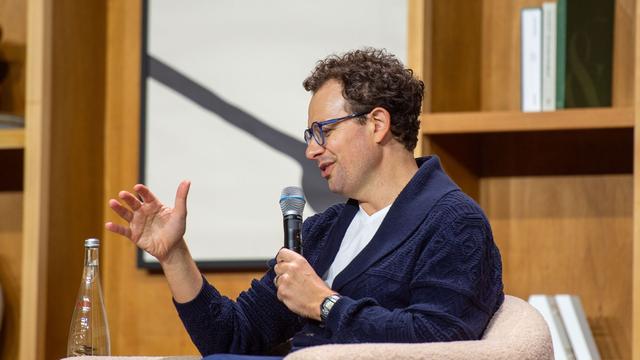
Anthropic CEO: Governments should be able to stop risky AI
Translated from German, summarized and contextualized by DistantNews.
At a glance
News
From a news agency
New plan
- Anthropic CEO Dario Amodei believes governments should have the power to halt dangerous artificial intelligence development.
- He argues that powerful AI models require rigorous risk assessments in areas like cybersecurity and bioweapons.
- Amodei suggests government oversight, similar to aviation authorities, could be implemented to manage AI risks.
Dario Amodei, the CEO of artificial intelligence firm Anthropic, has called for governments to possess the authority to stop the development of dangerous AI. He argues that advanced AI models must undergo thorough risk assessments, particularly concerning potential threats in cybersecurity, the creation of bioweapons, and the possibility of losing control over these complex systems.
Governments should be able to stop dangerous artificial intelligence.
Amodei proposed that a government-run organization, potentially modeled after aviation regulatory bodies, could be responsible for conducting these crucial safety checks. Alternatively, he suggested that such examinations could be carried out by private auditors commissioned by the government. This approach aims to establish a robust oversight mechanism for the rapidly evolving field of AI.
Powerful AI models must be tested for risks.
Anthropic has consistently advocated for stricter regulation within the AI industry, a stance that has drawn criticism from some within the tech sector and from the White House. The company, a key competitor to OpenAI, the developer of ChatGPT, recently gained attention for its AI model Mythos. This model demonstrated an ability to uncover previously undetected software vulnerabilities, some dating back decades, which heightened concerns about AI being exploited for malicious cyberattacks.
Such investigations could be carried out by a government organization, similar to an aviation authority, or by private auditors commissioned by the government.
DistantNews Editorial
Originally published by Die Zeit in German. Translated, summarized, and contextualized by our editorial team with added local perspective. Read our editorial standards.
More Stories


From Our Blog

What Gets Lost (and Found) When News Is Translated

How the Same Story Looks Different in Different Countries

The Critical Role of Diaspora Media in Global News

What Travellers Should Know About Countries with Restricted Press

A Digital Nomad's Guide to Following Local News
