


Anti-World Cup groups announce protests during opening, question event's impact on the city
Translated from Spanish, summarized and contextualized by DistantNews.
At a glance
News
Sources not specified
Ongoing story
- Anti-World Cup groups plan protests on June 10 and 11, coinciding with the tournament's opening, near the Estadio Ciudad de México.
- Protesters aim to raise awareness about the impact of the event on the city, highlighting issues faced by families searching for missing persons and residents affected by displacement.
- Activists have used artistic interventions, including painting over advertisements, and plan peaceful demonstrations to voice their demands for the city to prioritize residents' needs over tourism.
A coalition of anti-World Cup groups, organized under the Asamblea Anti-mundialista, has announced plans for protests on June 10 and 11, targeting the opening days of the World Cup tournament. The demonstrations are scheduled to take place in the vicinity of the Estadio Ciudad de México, aiming to draw attention to the perceived negative impacts of the event on the city.
For the next June 10 and 11, the day of the World Cup inauguration, they have planned protests in the vicinity of the Estadio Ciudad de México.
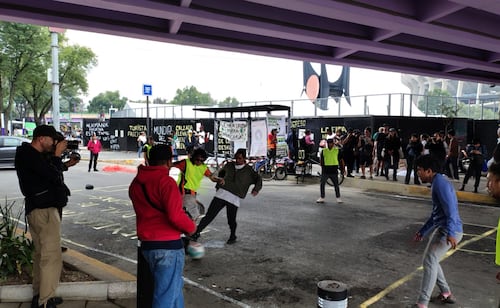
Natalia Lara, a representative of the organization and a resident of Santa Úrsula, detailed the planned activities. On June 10, a "cascarita" (informal football match) and a demonstration with families searching for missing persons and local residents will occur on Calzada de Tlalpan. The following day, June 11, the day of the World Cup inauguration, a peaceful march is planned at the intersection of Avenida del Imán and Gran Sur, an area designated as part of the stadium's security perimeter.
Protesters also intend to seek a meeting with Mexico's President Claudia Sheinbaum and attempt to approach the stadium during the opening ceremonies. In a pre-inauguration action, activists altered Coca-Cola advertisements near the stadium, painting over player faces with red and black colors and adding protest slogans. They also held a "cascarita" as part of their demonstration.
On June 11, the day the World Cup will be inaugurated, starting at 8:30 a.m., collectives will demonstrate peacefully at the intersection of Avenida del Imán and Gran Sur, a point where the security "first mile" that restricts access to the stadium for ticketless individuals begins.
Lara emphasized that the core message is a call for empathy towards families searching for loved ones and individuals displaced by city developments. "We don't deserve to have a city that is over-touristed and inhabit it as if we were strangers to it; we deserve a city that thinks about our needs before those of tourists," she stated, urging public participation in their organized activities.
We don't deserve to have a city that is over-touristed and inhabit it as if we were strangers to it; we deserve a city that thinks about our needs before those of tourists.
The protests also aim to highlight the daily struggles faced by residents due to urban mobility projects, such as the Metro Line 2 renovations and the elevated park construction. Lara noted the widespread frustration among residents regarding these infrastructure projects and their impact on daily life, including health issues from construction dust and difficulties caused by road closures.
We know that most people who live in the city are very angry about the issue of the Metro remodeling, about the issues of roads and mobility.
DistantNews Editorial
Originally published by El Universal in Spanish. Translated, summarized, and contextualized by our editorial team with added local perspective. Read our editorial standards.
More Stories

From Our Blog

What Press Freedom Means for the News You Read

What Gets Lost (and Found) When News Is Translated

The Critical Role of Diaspora Media in Global News

What Travellers Should Know About Countries with Restricted Press

A Digital Nomad's Guide to Following Local News
