


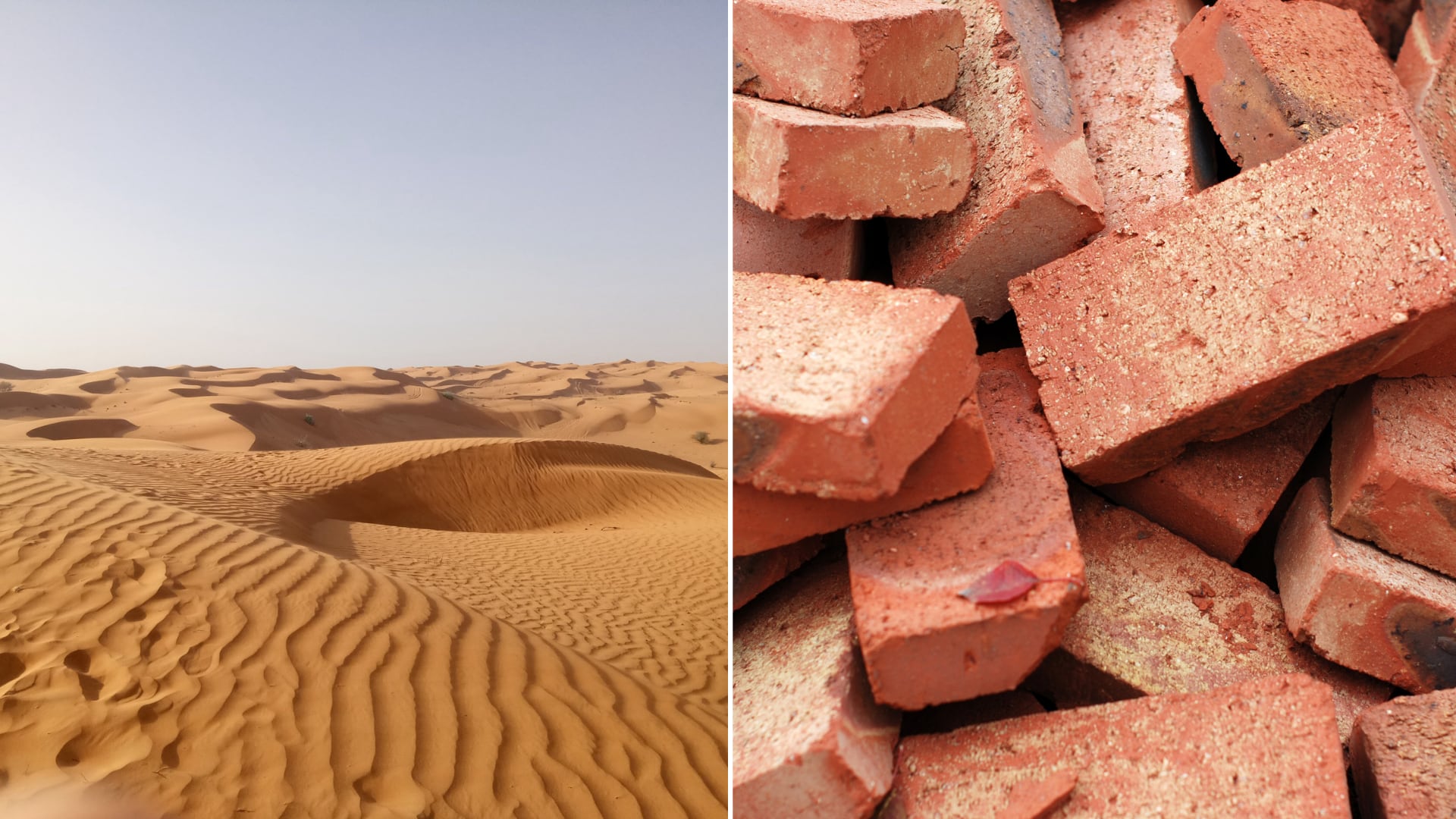
Architects Create Bricks from Desert Sand, Halving Cement Use
Translated from Spanish, summarized and contextualized by DistantNews.
At a glance
News
Sources not specified
Context piece
- Architects have developed a method to create bricks using desert sand, significantly reducing cement usage in construction.
- This innovation utilizes locally available resources previously considered useless, opening new avenues for sustainable building.
- The project, which began as a university thesis, has garnered international attention for its environmental impact.
An innovative project, initially conceived as a university thesis, has transformed desert sand into construction bricks, attracting international interest for its significant environmental benefits. This development offers a new pathway toward more sustainable building practices by leveraging local resources that were once deemed unusable.
The architectural innovation addresses the construction industry's heavy reliance on cement, a major contributor to carbon emissions. By utilizing desert sand, the architects have managed to halve the amount of cement required in the brick-making process. This not only reduces the environmental footprint but also offers a cost-effective solution, especially in regions where desert sand is abundant.
This initiative is part of a broader trend in sustainable architecture that seeks to minimize environmental impact through material innovation and resource efficiency. The project's success underscores the potential for creative solutions to address global challenges like climate change and resource depletion, demonstrating how scientific ingenuity can lead to practical applications with far-reaching positive consequences.
DistantNews Editorial
Originally published by La Nación in Spanish. Translated, summarized, and contextualized by our editorial team with added local perspective. Read our editorial standards.
More Stories



From Our Blog

What Gets Lost (and Found) When News Is Translated

The Critical Role of Diaspora Media in Global News

What Travellers Should Know About Countries with Restricted Press

A Digital Nomad's Guide to Following Local News

How the Same Story Looks Different in Different Countries
