


Argentina's industry and construction sectors fall again in April after March rebound
Translated from Spanish, summarized and contextualized by DistantNews.
At a glance
News
Sources not specified
Context piece
- Argentina's industrial and construction sectors experienced monthly declines in April, falling 2.1% and 4% respectively.
- Year-on-year, both sectors contracted by 2.8%, though the first four months show mixed results with industry down 2.4% and construction up 2.1%.
- Analysts caution against drawing firm conclusions due to volatility, emphasizing that short-term fluctuations do not yet indicate a clear trend.
Argentina's industrial and construction sectors are exhibiting persistent volatility, failing to establish a clear recovery trend. In April, both sectors saw monthly decreases, with industry production falling by 2.1% and construction activity dropping by 4%. This follows a pattern of oscillation observed over recent months, where February saw declines and March registered growth.
This marks that there is no clear trend so far. In short, the February drop was not as representative, nor was the brutal rise in March.
Year-on-year comparisons reveal a broader contraction, with manufacturing activity and construction works both down by 2.8%. However, the first four months of the year present a more nuanced picture: the industrial sector shows a cumulative decrease of 2.4%, while construction has seen a modest increase of 2.1%. Economy Minister Luis Caputo acknowledged these figures on social media, while also highlighting positive trends in the "trend-cycle" indicator, which suggests sustained, albeit slow, growth over the past five to six months for both sectors.
Digging into the industrial data, 12 out of 16 divisions reported year-on-year declines. Significant drops were observed in "Machinery and equipment" (-20.2%), "Basic metallic industries" (-11.2%), and "Wearing apparel, leather, and footwear" (-15.9%). Conversely, "Chemical substances and products" (16.7%) and "Wood, paper, printing, and publishing" (4.1%) showed positive growth. Analysts like Camilo Tiscornia of C&T Asesores Económicos note that the current industrial levels are similar to those in December, indicating a lack of a clear trend and suggesting that neither the February dip nor the March surge were definitively representative.
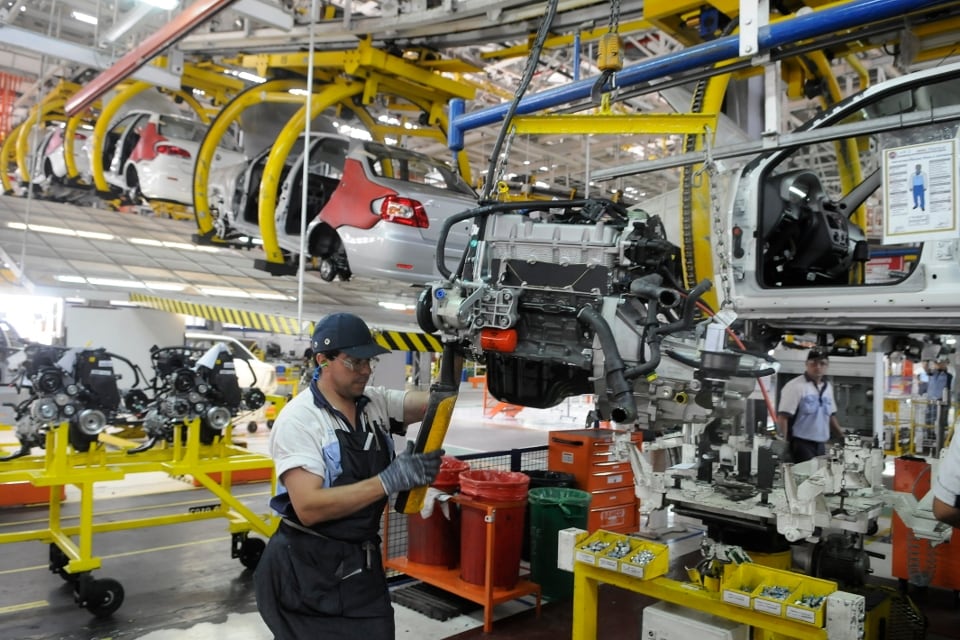
For example, automotive grew 10% month-on-month seasonally adjusted, after having fallen 21.6% the previous month. On the other hand, food and beverages had risen in March and now fell.
Economist Federico González Rouco described the April data as "very bad" but expected, given the preceding month's performance. The sector's performance remains unpredictable, with some sub-sectors rebounding in April after March declines, while others that grew in March have now contracted. For instance, the automotive sector experienced a 10% seasonally adjusted monthly increase in April, recovering from a 21.6% fall in March, while food and beverages, which grew in March, declined in April.
the data is very bad, but it was to be expected after...
DistantNews Editorial
Originally published by La Nación in Spanish. Translated, summarized, and contextualized by our editorial team with added local perspective. Read our editorial standards.
More Stories



From Our Blog

What Gets Lost (and Found) When News Is Translated

The Critical Role of Diaspora Media in Global News

What Travellers Should Know About Countries with Restricted Press

A Digital Nomad's Guide to Following Local News

How the Same Story Looks Different in Different Countries
