


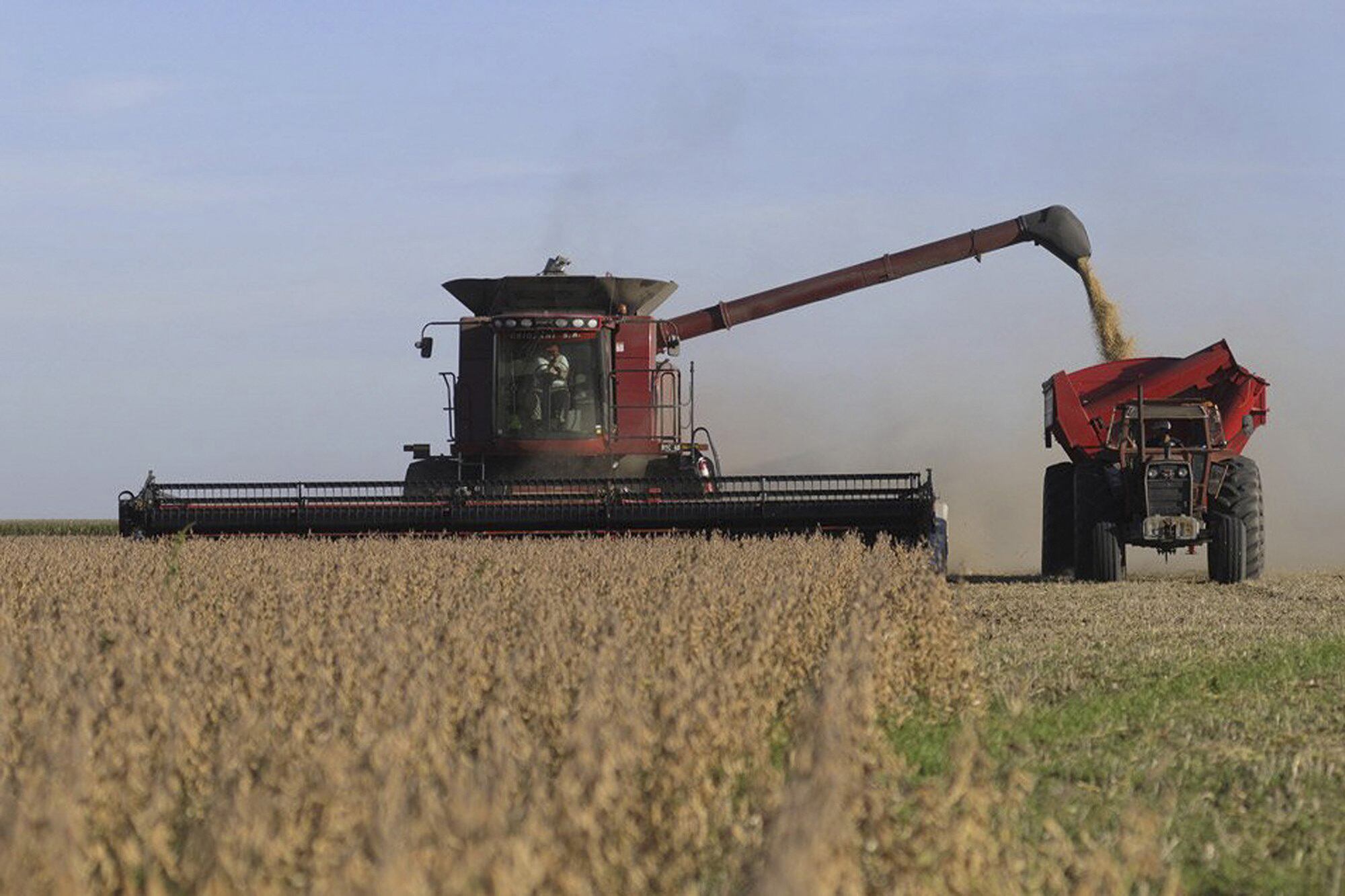
Argentina's soybean harvest strong, but farmer sales lag
Translated from Spanish, summarized and contextualized by DistantNews.
At a glance
News
Official statement
Outcome reported
- Argentina's 2025/26 soybean harvest concluded with 50.1 million tons, slightly below the previous year but significantly above the five-year average.
- Yields averaged 31.3 quintals per hectare, a 5% increase from the prior campaign and 21% higher than the five-year average.
- Despite strong production, farmers are selling soybeans at a record slow pace due to factors including prices and marketing strategies.
Argentina's 2025/26 soybean harvest has wrapped up, yielding a total of 50.1 million tons. This figure, reported by the Buenos Aires Grain Exchange, falls just 0.4% short of the previous cycle's output. However, it represents a substantial 19% increase over the average of the last five campaigns, driven by improved yields across much of the agricultural regions.
The national average yield reached 31.3 quintals per hectare, marking a 5% rise from the 2024/25 campaign and a significant 21% jump compared to the five-year average. Certain areas, like the Northern and Southern Cores, saw yields slightly above their historical averages, with some locations in La Pampa and western Buenos Aires achieving record highs. These regions, along with the Northwest (NOA), recorded their best-ever yields according to the Grain Exchange's historical data.
It was a somewhat extraordinary campaign. In western Buenos Aires, for example, they had a record campaign; in northern Córdoba too, while in central and southern Buenos Aires it was a bit more complex. What drove the increase in production throughout the campaign were the very good yields that occurred in many areas.
Despite the robust production figures, private sector analysts highlight a "record lag" in farmers' sales. This slow pace is attributed to a combination of factors, including current market prices and the producers' own commercialization strategies. While the harvest itself was strong, the economic conditions are prompting farmers to hold onto their crops, impacting the usual flow of sales.
We didn't reach a record production due to a matter of surface area.
DistantNews Editorial
Originally published by La Nación in Spanish. Translated, summarized, and contextualized by our editorial team with added local perspective. Read our editorial standards.
More Stories



From Our Blog

What Gets Lost (and Found) When News Is Translated

The Critical Role of Diaspora Media in Global News

What Travellers Should Know About Countries with Restricted Press

A Digital Nomad's Guide to Following Local News

How the Same Story Looks Different in Different Countries
